
Torre Guaceto
"Torre Guaceto is what the whole Adriatic coast probably looked like before anyone built a road to it."
A protected coastline of dune, macchia, and clear shallow water between Brindisi and Ostuni — one of the few stretches of Puglia's Adriatic that development never reached.
Lia found Torre Guaceto on a map before I did, tracing the coast between Brindisi and Ostuni with her finger and asking why there was a blank green patch where every other stretch of that shoreline had little resort icons stacked on top of each other. The answer turned out to be a marine and coastal nature reserve, established in the early nineties after decades of a much less scenic identity — the land was used as an artillery testing range for years, which is part of why it never got developed, and which now feels like the strangest possible origin story for one of the most unspoiled beaches in the region.
We parked at the edge of the reserve and walked in — cars aren’t allowed past the entrance — along a sandy track through low macchia scrub, wild fennel, and juniper, the air thick with resin and salt. The reserve protects both a stretch of dune coastline and, further inland, a wetland fed by natural springs where flamingos show up some winters. The sixteenth-century watchtower that gives the place its name stands at the point where the dunes give way to the sea, a squat defensive stump built to watch for Ottoman raiders, now watching over kayakers and snorkelers instead.
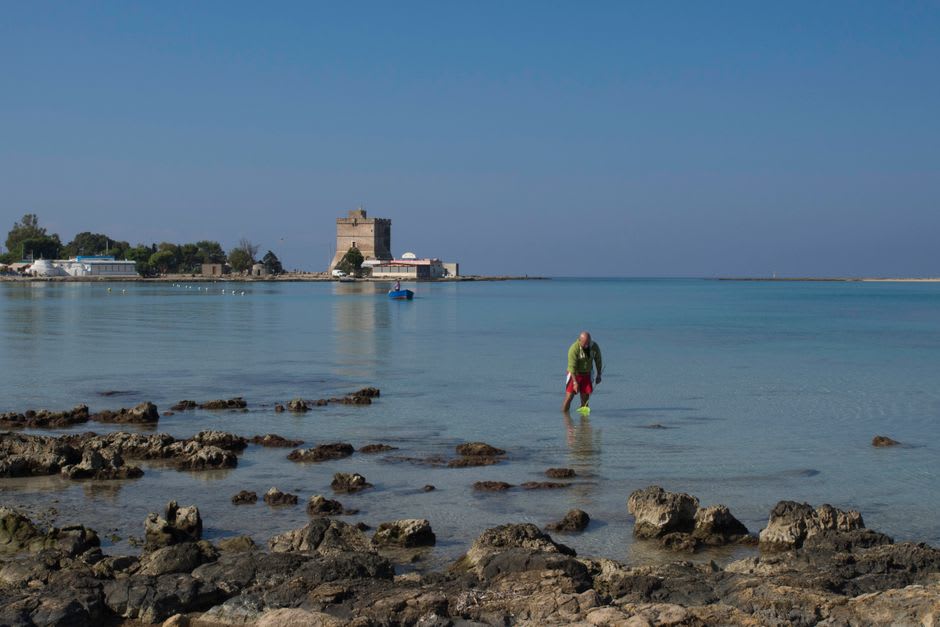
The water here is the reason people make the walk. It is shallow for a long way out, a pale green-blue over sand and seagrass, cold in a way that felt genuinely refreshing rather than punishing after a July walk in the sun. The marine protected area extends offshore and limits boat traffic and fishing, which is presumably why the water stays this clear and why we saw more fish snorkeling off the beach here than anywhere else on this coast — small schools moving over the seagrass beds, visible from a standing position without a mask.
There’s a working organic farm inside the reserve, part of the same protection cooperative, growing tomatoes and produce sold under the Torre Guaceto name in shops around the region — we bought a jar of their tomato passata on the way out and it was, unfairly, better than anything from a supermarket. The whole place runs on a logic of restraint: limited beach access points, no beach clubs, no permanent structures beyond the tower itself. It requires more effort than pulling up to a lido with a credit card, and that effort is exactly what keeps it this way.
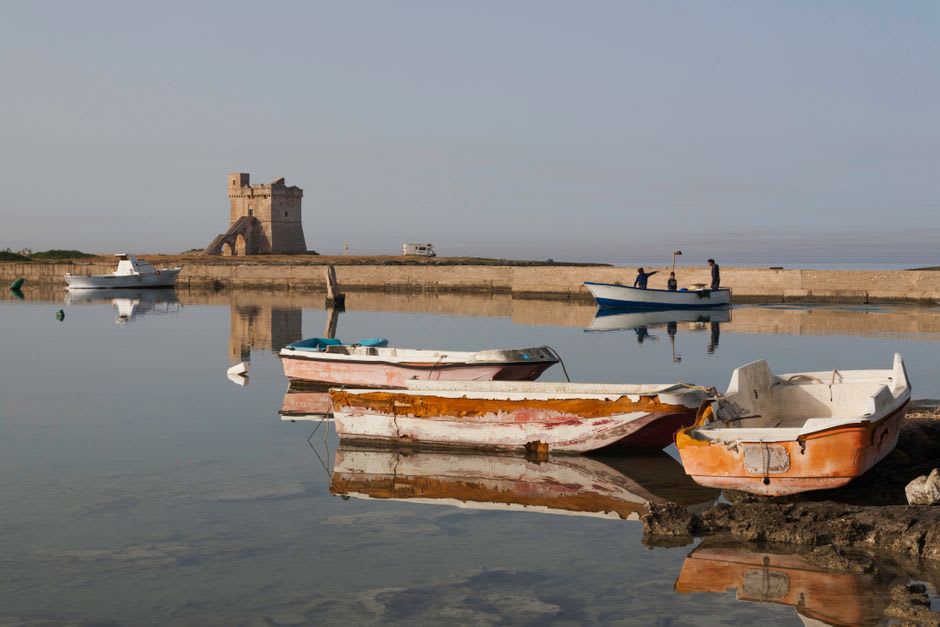
When to go: June and September give you warm water without peak crowding — access is sometimes capped in high summer to protect the dunes, so arriving early in the day matters in July and August. Spring is good for the wetland birdlife. Bring water and shade; there is very little of either once you’re past the entrance.