Torre dell'Orso
"The Two Sisters at Torre dell'Orso are the most photographed rocks in Salento, and the first time you see them in person you understand immediately why."
An Adriatic cove famous for its twin sea stacks known as the Two Sisters, backed by an Aragonese watchtower and a pine-shaded beach.
We set an alarm we did not want to obey to reach Torre dell’Orso before sunrise, on the recommendation of a woman at our masseria near Otranto who insisted, with the specific conviction of someone who has clearly had this argument before, that the Due Sorelle — the Two Sisters — are a different beach entirely at that hour. She was right. The two limestone sea stacks rise just offshore from a curved bay of pale sand, close enough together and similar enough in shape that local legend explains them as two sisters turned to stone rather than see the other drown alone in a storm. At six in the morning, with the light still low and gold and almost nobody else on the sand, the stacks looked less like a photograph opportunity and more like something genuinely strange that the sea had simply left there.
The bay itself curves gently between two headlands, backed by a dense pine forest that runs almost to the sand — unusual for this stretch of Adriatic coast, where the vegetation is more often scrub and rock than actual shade. The pines mean Torre dell’Orso keeps a portion of its beach genuinely cool even at midday in August, and we retreated under them for a couple of hours once the sun climbed and the sand began to fill with the day’s arrivals from nearby Melendugno.
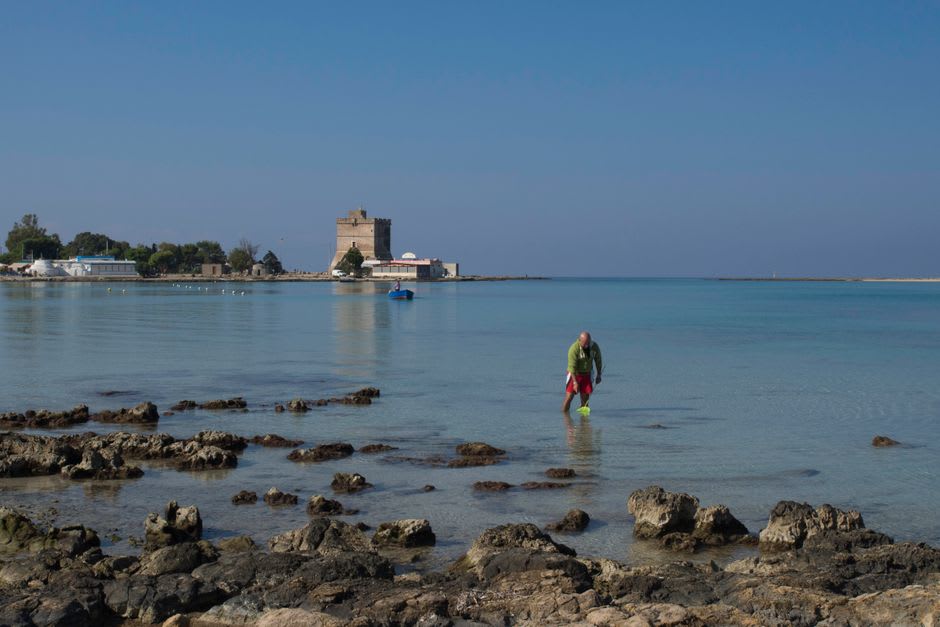
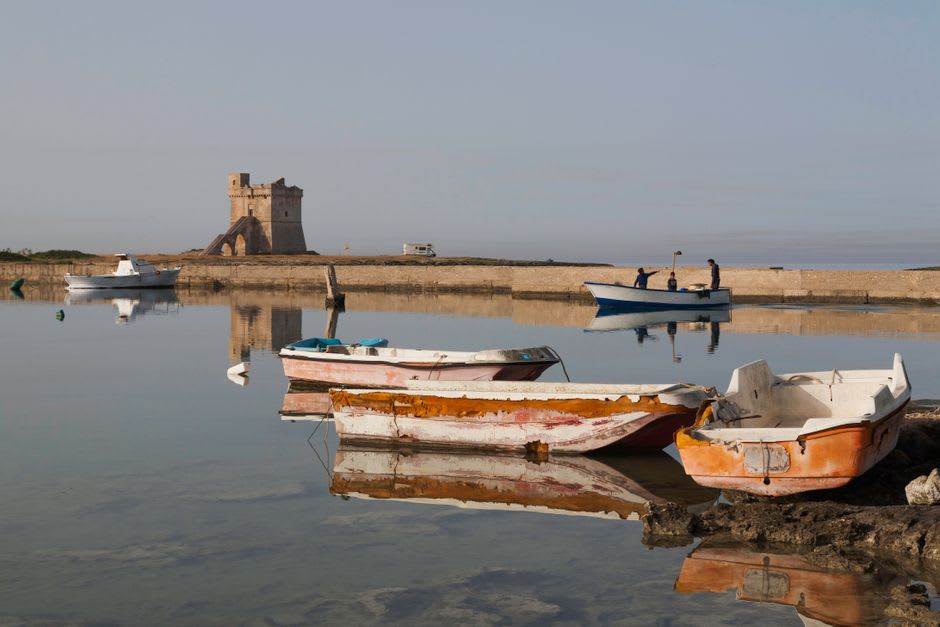
The Aragonese watchtower that gives the beach its name stands at the northern end, one of the chain of coastal defense towers built along Puglia’s shoreline in the sixteenth century to watch for Ottoman raiders — you find their siblings all along this coast, at Otranto, at San Foca, at a dozen other points, each one originally built to be visible from the next so a fire signal could travel the whole coastline in relay. This one has been left mostly to itself, weathered and closed to entry, standing over the bay as a reminder of how recently — in the arc of this region’s history — this coastline was a genuine frontier rather than a holiday destination.
We swam out toward the Due Sorelle in the early afternoon, close enough to see the layered limestone strata in the rock and the small colony of gulls that had claimed the flatter of the two stacks as a perch. The swim back felt longer than the swim out, the way it always does, and we lay on towels afterward eating peaches we’d bought that morning from a roadside stand near Melendugno, unbothered for a while by any need to be anywhere else.
When to go: June and September give the clearest water with manageable crowds; arrive at sunrise in July or August if you want the beach and the Two Sisters without the full midday density that this stretch of coast attracts from Lecce and the surrounding towns.
Keep exploring
More from Puglia
 puglia
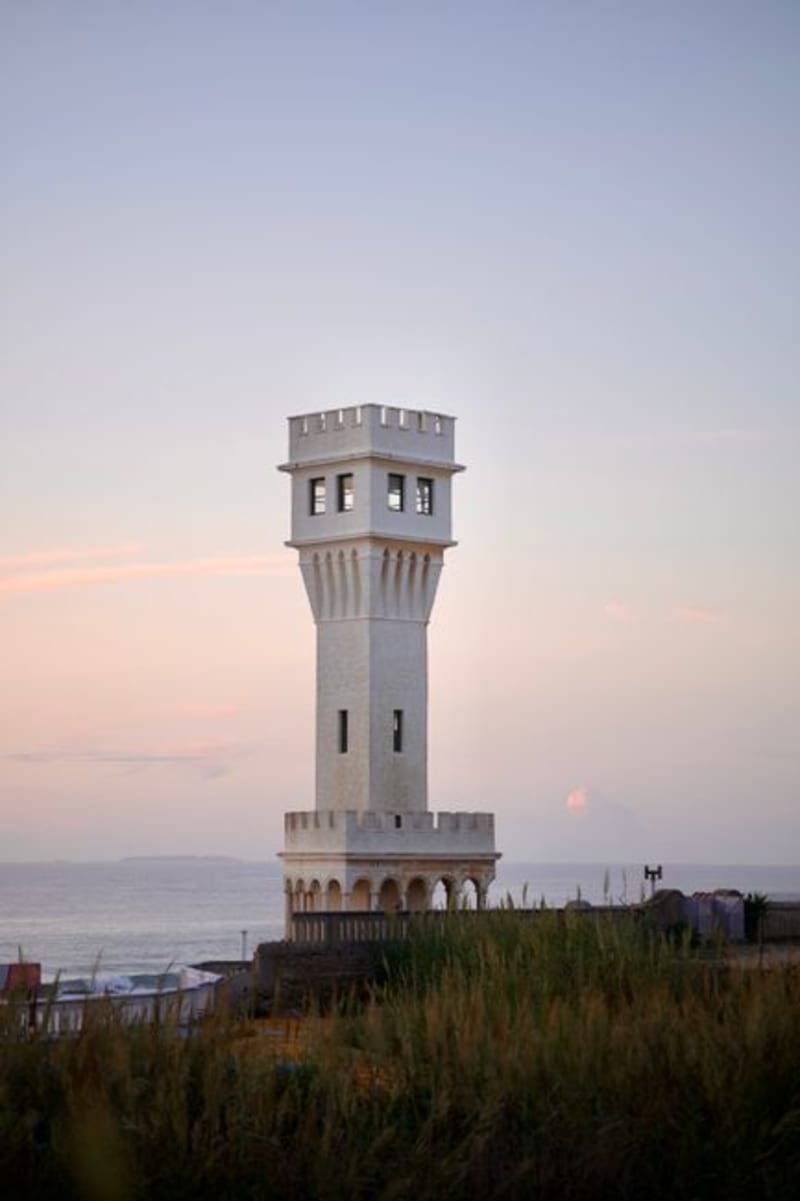
 Torre Guaceto
A protected coastline of dune, macchia, and clear shallow water between Brindisi and Ostuni — one of the few stretches of Puglia's Adriatic that development never reached.
Explore puglia
 Torre San Giovanni
A low-key Ionian beach town near Ugento, marked by its sixteenth-century watchtower and lighthouse, and by some of the calmest, most swimmable water in southern Salento.
Explore puglia
 Torremaggiore
A Tavoliere farm town built around the ruins of Fiorentino, the vanished imperial city where Frederick II died — a ghost settlement now marked only by a single standing arch in an empty field.
Explore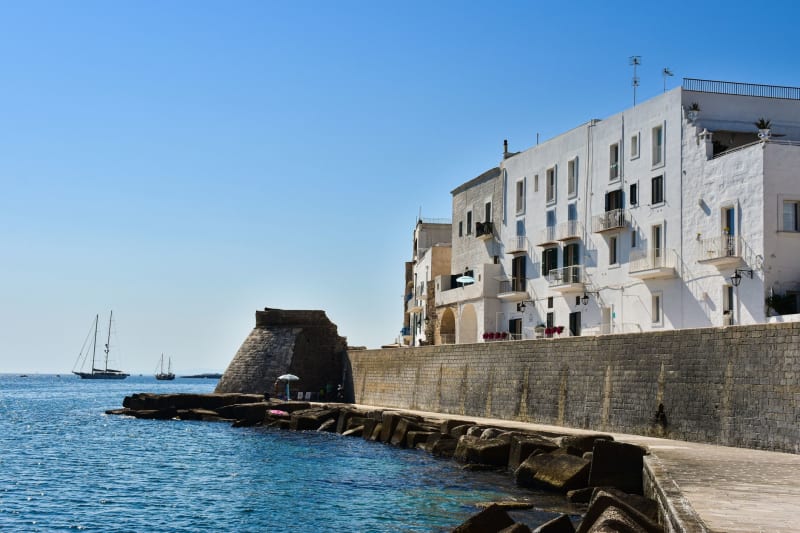 puglia
 Trani
A port city with a Romanesque cathedral built directly on the sea — one of the most quietly perfect architectural scenes in southern Italy.
Explore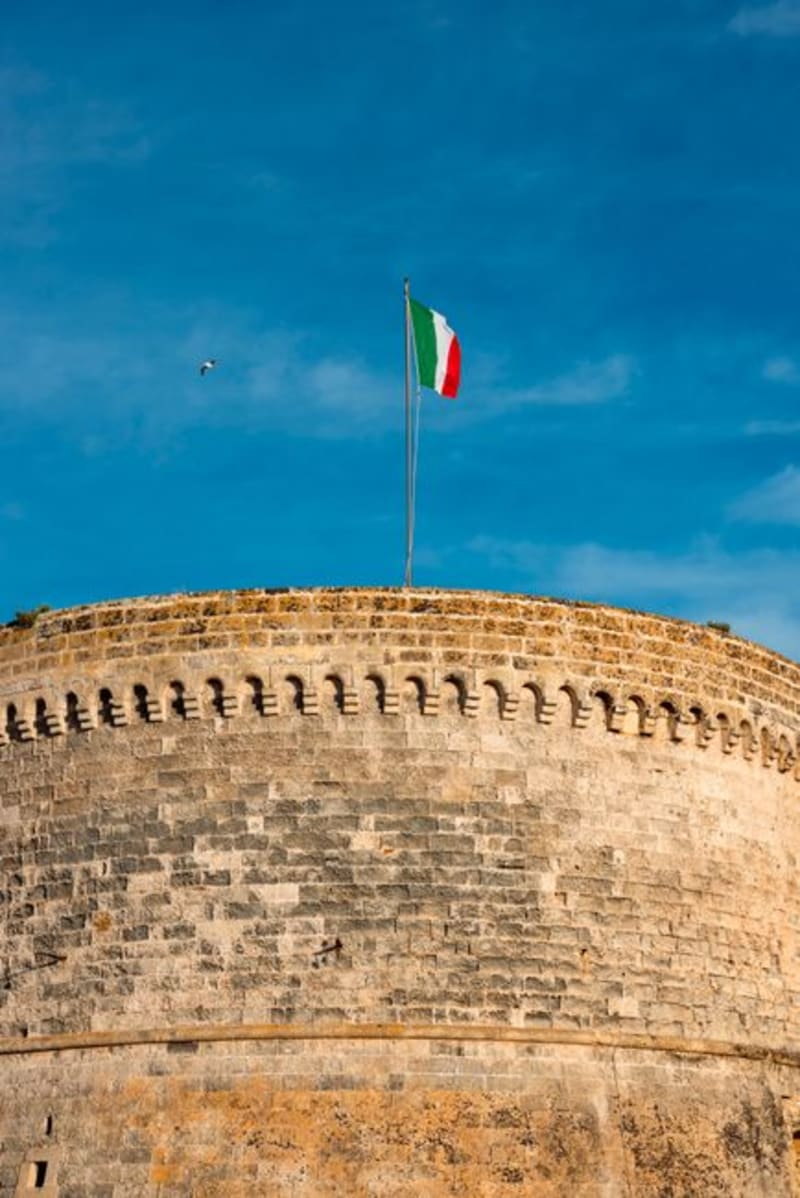 puglia
 Troia
A small Tavoliere town built around one of the finest Romanesque cathedral facades in southern Italy, its rose window carved like lace out of solid stone.
Explore puglia
 Turi
A quiet cherry-growing town in the Terra di Bari countryside, surrounded by orchards and masserie, with a historic center built almost entirely from the region's pale local stone.
Explore