Taranto
"Taranto is a city arguing with itself between two seas, and I found I liked it more for the argument."
The city of two seas, where mussel farms fill an inland saltwater lagoon and a Spartan colony's old town sits crumbling and gorgeous on its own island.
Nobody had told me Taranto was two cities stacked on top of each other, and I mean that almost literally. The Città Vecchia sits on a small island between the Mar Grande, the open gulf, and the Mar Piccolo, an almost-enclosed inland sea that has been farmed for shellfish since the Greeks founded the place as Taras in the seventh century BC. A swing bridge connects the island to the newer city, and it still opens for ship traffic, stopping cars in both directions while a supply vessel eases through the gap. I stood at the railing waiting for it to close again and felt like I had wandered into a piece of civic machinery nobody bothers to explain to visitors because everybody who lives there has simply always known it works this way.
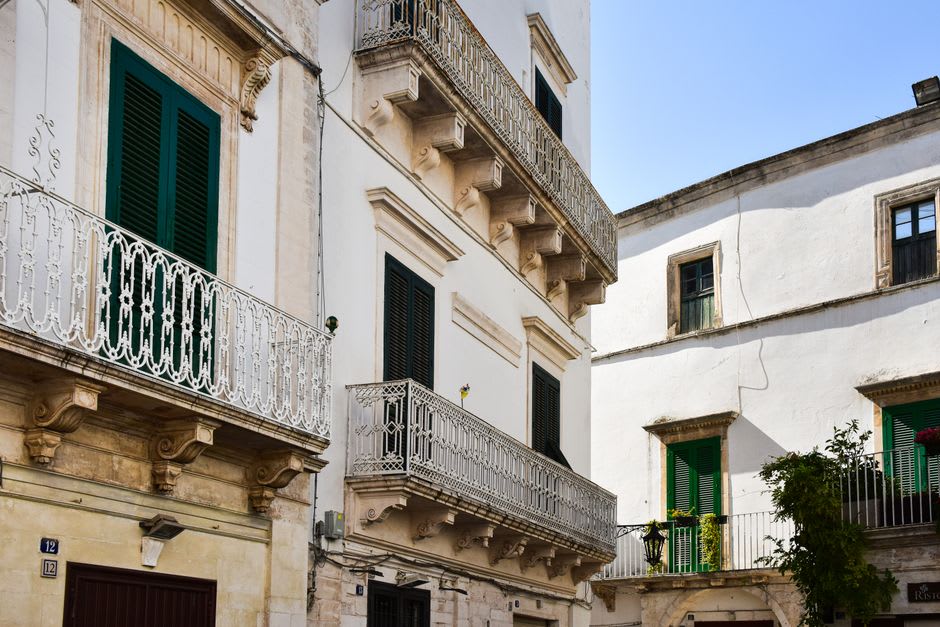
The old town itself is in rough shape — half-restored, half-collapsing, laundry strung across alleys too narrow for two people to pass without turning sideways — and I mean that as a compliment. Unlike Lecce or Ostuni, Taranto has not been smoothed into a version of itself designed for tourists. Cats outnumbered people on some streets. An elderly woman lowered a basket on a rope from her third-floor window to collect bread from a delivery boy below, a transaction that looked completely unremarkable to both of them and completely remarkable to me.
The Mar Piccolo is the real reason to come, though. This inner lagoon is one of the most productive mussel-farming waters in Italy — the cozze tarantine have their own name and their own devoted following — and the farming method is centuries old: ropes suspended from floating platforms called pergolari, the mussels growing in clusters along the length of the line, harvested by hand from small flat boats. I took a boat out with a farmer named Cosimo who has worked the same stretch of water his family has worked for three generations, and he pulled up a rope dripping with mussels the size of my thumb and shucked one open on the spot for me to eat raw, straight from the lagoon, sweeter and more mineral than any mussel I’ve had since. Lia, who claims not to like shellfish, ate four more after that first one and did not mention her position again.
Dinner that night was at a trattoria near the fish market, where the cozze arrived four ways — raw, gratinated, in a soup called zuppa di cozze thick with tomato and chili, and stuffed with breadcrumbs and pecorino — and none of it cost what it should have, given the quality. The MArTA archaeological museum in the new town holds one of the best collections of Magna Graecia gold jewelry anywhere, a reminder that this rough-edged industrial city was once one of the wealthiest in the ancient Greek world, before the harbor silted, before the steelworks arrived in the twentieth century and gave Taranto its current, complicated reputation as a place people drive past rather than toward.
When to go: Spring and autumn keep the heat manageable for walking the old town, and the mussel season runs essentially year-round, though late spring gives the freshest, plumpest cozze. Avoid the peak of summer if you want the old town without the added weight of humidity off the two seas.
Keep exploring
More from Puglia
 puglia
 Torre dell'Orso
An Adriatic cove famous for its twin sea stacks known as the Two Sisters, backed by an Aragonese watchtower and a pine-shaded beach.
Explore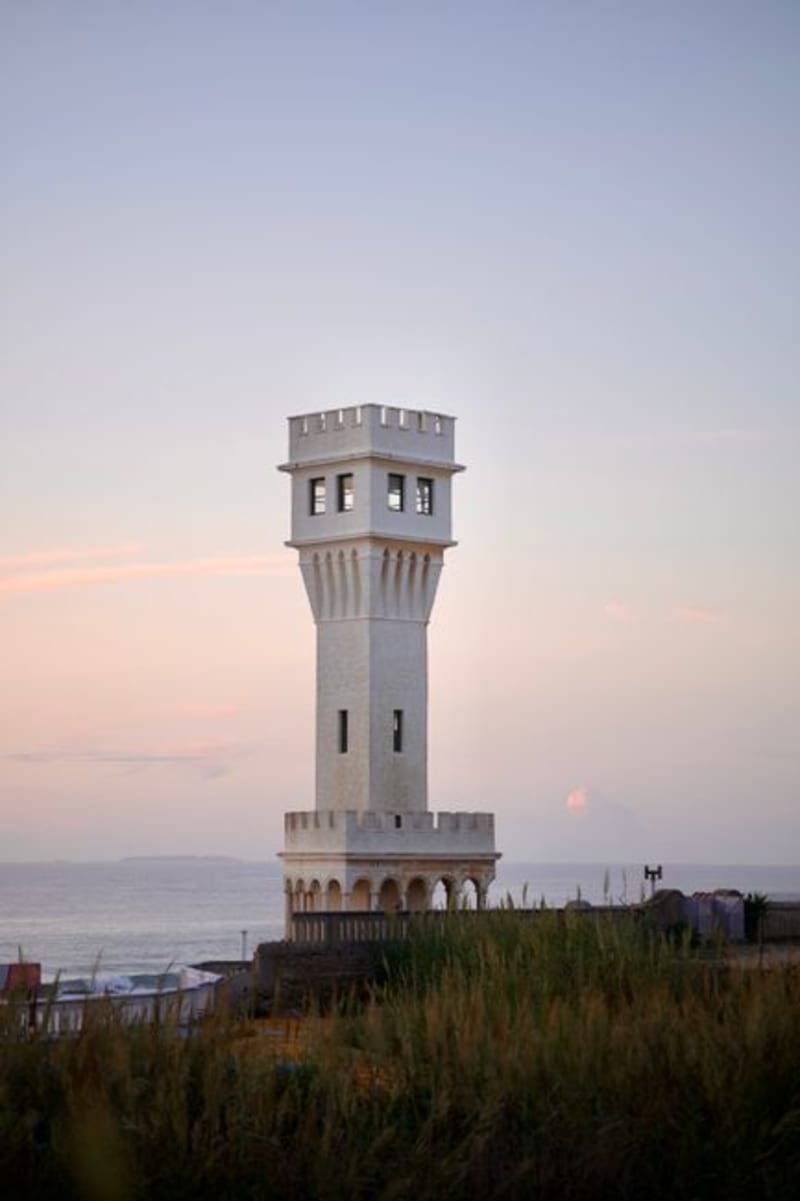 puglia
 Torre Guaceto
A protected coastline of dune, macchia, and clear shallow water between Brindisi and Ostuni — one of the few stretches of Puglia's Adriatic that development never reached.
Explore puglia
 Torre San Giovanni
A low-key Ionian beach town near Ugento, marked by its sixteenth-century watchtower and lighthouse, and by some of the calmest, most swimmable water in southern Salento.
Explore puglia
 Torremaggiore
A Tavoliere farm town built around the ruins of Fiorentino, the vanished imperial city where Frederick II died — a ghost settlement now marked only by a single standing arch in an empty field.
Explore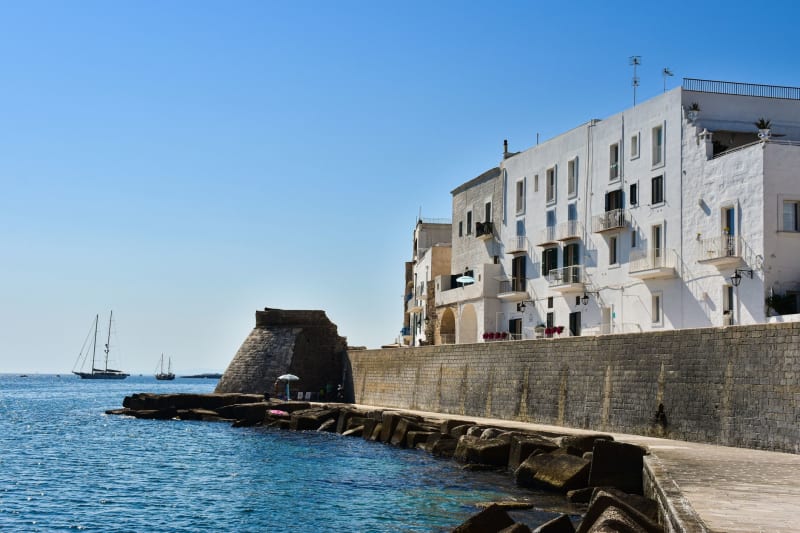 puglia
 Trani
A port city with a Romanesque cathedral built directly on the sea — one of the most quietly perfect architectural scenes in southern Italy.
Explore puglia
 Troia
A small Tavoliere town built around one of the finest Romanesque cathedral facades in southern Italy, its rose window carved like lace out of solid stone.
Explore