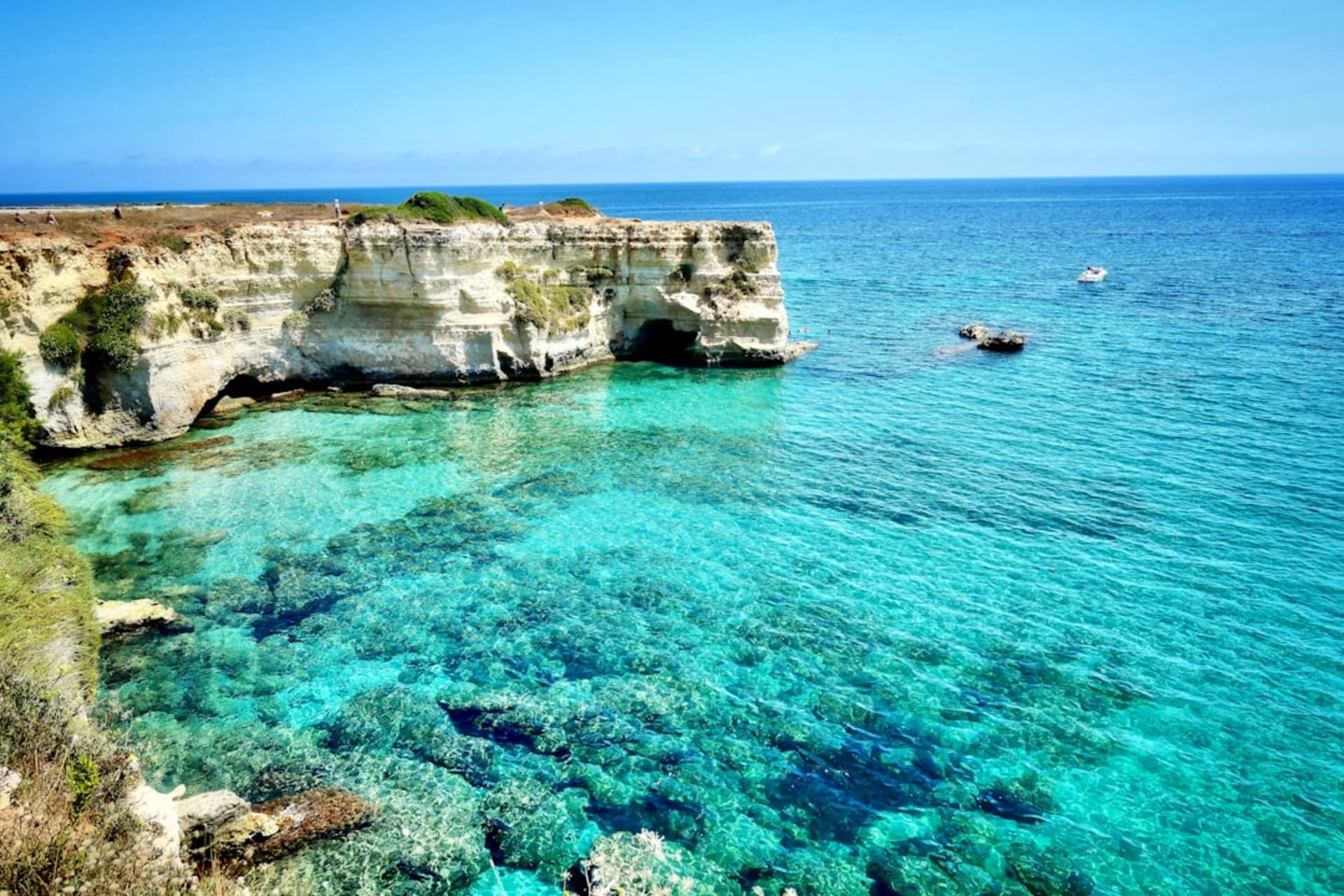
Saturo
"At Saturo you can lay your towel down about thirty meters from the spot where Greek colonists are believed to have first stepped ashore in Puglia."
A quiet stretch of the Ionian coast near Leporano where Greek colonists first landed millennia before Taranto existed, and the ruins now sit yards from a public beach.
Saturo doesn’t appear on most maps of Puglia’s must-see coast, which is part of why I liked it. This small bay near the town of Leporano, just south of Taranto, is generally considered the site where Greek settlers first landed on this stretch of coast in the eighth century BC, before they went on to found Taras, the city that became Taranto. The Parco Archeologico di Saturo preserves the remains of that long occupation — a Bronze Age settlement beneath Greek and later Roman layers, foundations of a temple to Athena, cisterns, walls — all sitting quietly on a low headland with the sea on three sides.
What struck me most was the proximity of ancient and ordinary. The archaeological area borders directly onto a public beach, so a family setting up beach umbrellas is doing so within sight of foundation stones that predate the Roman Republic, and nobody seems to find this remarkable except visitors like me. I walked the fenced perimeter of the excavated area in the late morning, a site custodian explaining that new sections are still being uncovered, that the settlement’s continuous occupation across nearly three thousand years makes it one of the more layered archaeological sites in the region despite its modest size.
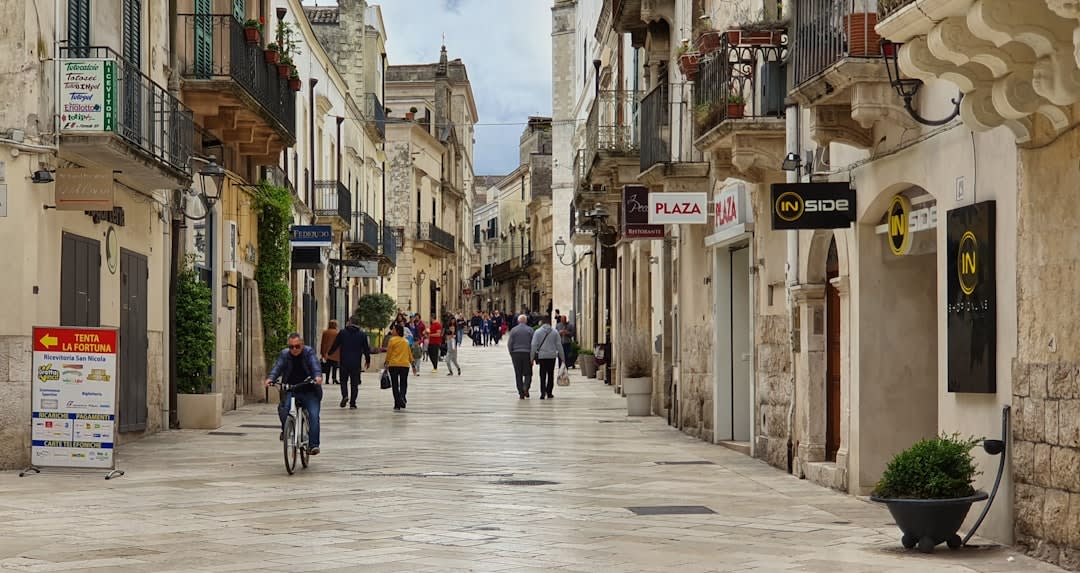
The bay itself is small, sheltered, and genuinely lovely — sandy in patches, rocky in others, the water clear and calm because of the headland’s natural protection from the open gulf. It has none of the scale of Punta Prosciutto or the marine-reserve status of Porto Cesareo, but its size keeps it intimate, and I found myself swimming laps between two rock outcrops while looking up at the excavation on the low bluff above, feeling the strange doubled sense of a place being simultaneously an ordinary local beach and a three-thousand-year-old landing site.
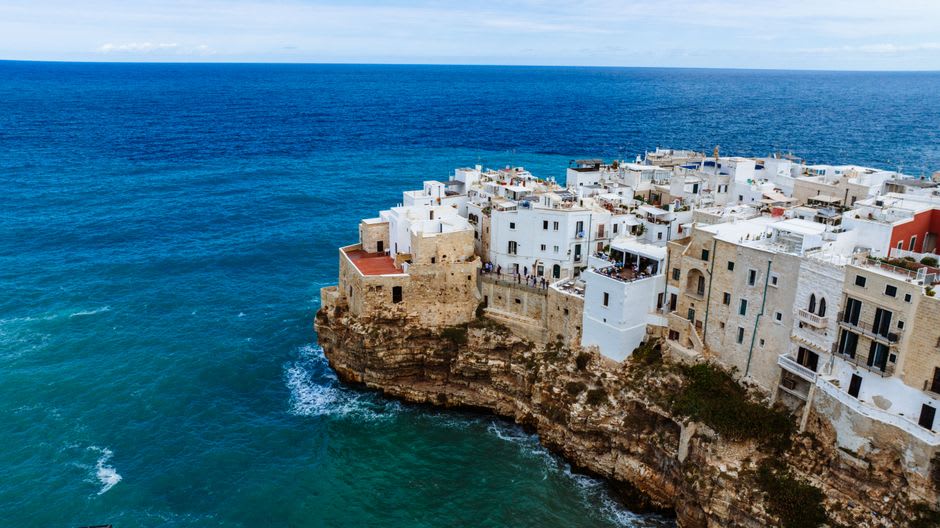
Leporano itself, the small inland town the beach belongs to, has little to detain you beyond a pleasant central piazza and a gelateria that Lia rated, after considerable and self-appointed research across this trip, among the best of the whole coast. We ate our cones sitting on the harbor wall as the sun dropped behind Taranto’s industrial skyline in the distance, an unglamorous backdrop that somehow didn’t ruin the moment at all.
When to go: Late spring through early autumn for swimming, with the added benefit of comfortable temperatures for exploring the archaeological area, which has little shade. Weekday mornings are quietest for having the ruins largely to yourself.