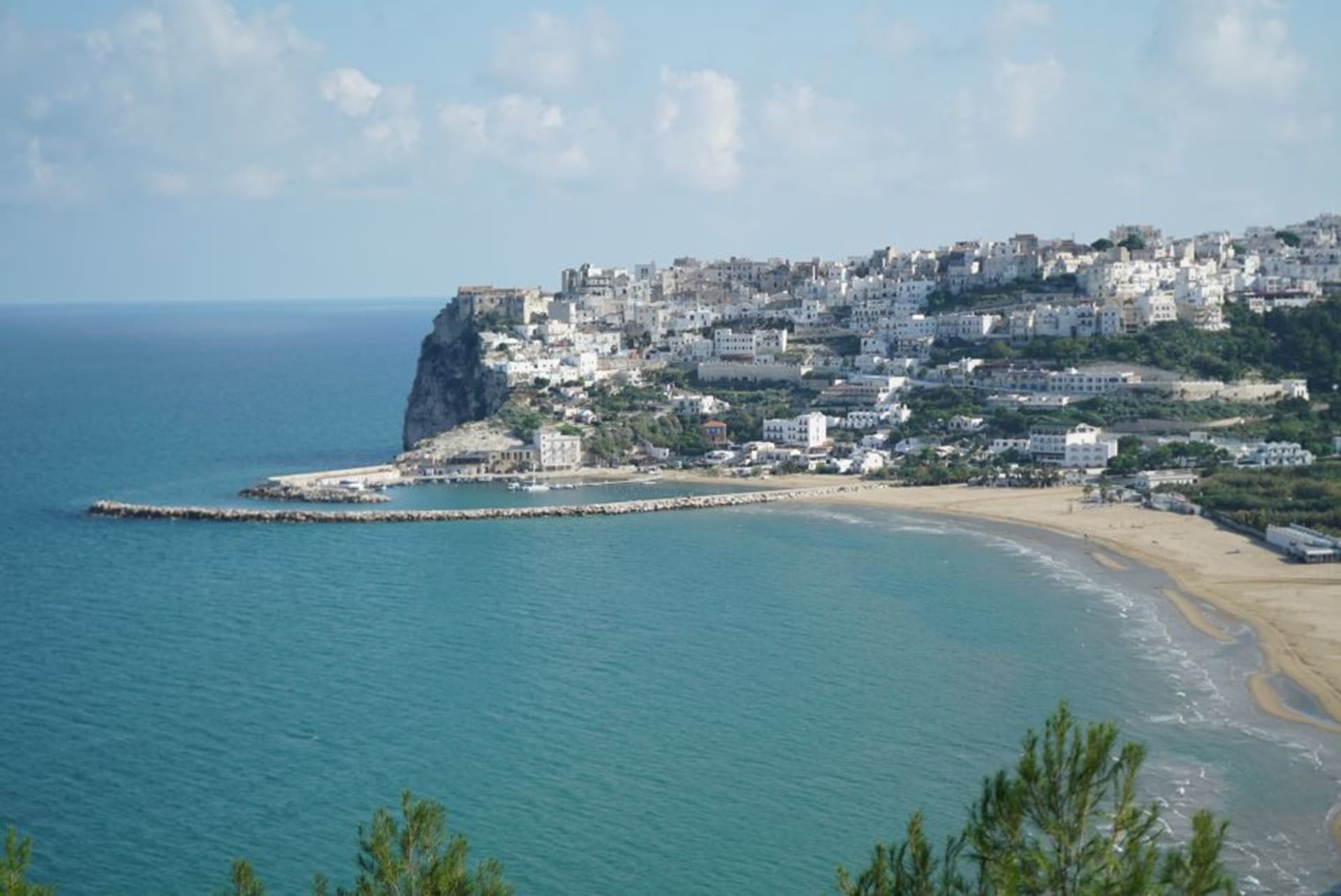
Noicàttaro
"Noicattaro doesn't try to be a destination. It just happens to make some of the best wine in the province, in near total anonymity."
A quiet wine town in the Terra di Bari countryside, ringed by vineyards growing the local Nero di Troia grape and dotted with the low white masserie that define this stretch of inland Puglia.
We came to Noicattaro — locals just say Noi, dropping the suffix the way you’d drop a formal title among friends — because a wine importer Lia met at a market in Bari kept insisting we visit the cantina his family has run for three generations. We nearly didn’t; it’s the kind of town that doesn’t show up on the standard Puglia circuit, a working agricultural center a short drive south of Bari with none of the postcard architecture of the hill towns further inland. But the wine turned out to be reason enough on its own.
The countryside around Noicattaro is flatter than the Valle d’Itria, given over almost entirely to vineyards growing Nero di Troia, a grape indigenous to this stretch of Puglia and largely unknown outside it — dense, tannic, aged in ways that range from simple and food-friendly to genuinely serious. We spent an afternoon at the cantina walking between rows of vines with the owner, a man in his sixties who talked about soil composition with the intensity most people reserve for their children, before a tasting that started at eleven in the morning and, through some accumulation of small pours and long conversation, did not end until well past two.
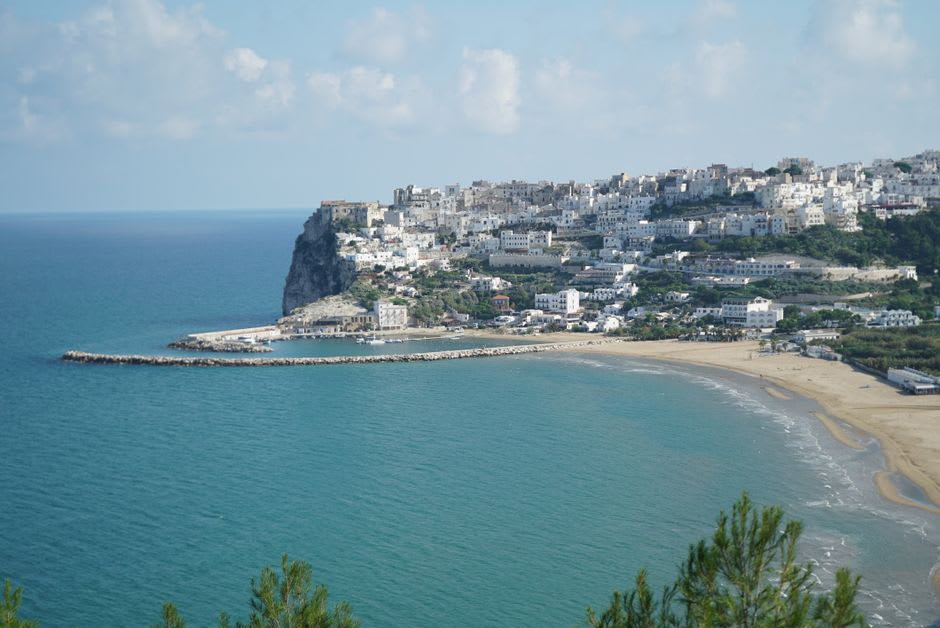
The town itself is modest — a compact historic center with a handful of churches, a market square that comes alive at dawn with growers selling produce straight off flatbed trucks, and very little concession to tourism, which after a week of trulli photographs and Baroque facades I found genuinely restful. We ate lunch at a trattoria that had no menu, just what the kitchen had bought that morning: fava bean puree with wild chicory, a plate of grilled lamb, bread so dense it needed no butter. The owner’s daughter did the serving and seemed faintly amused that anyone had found the place at all.
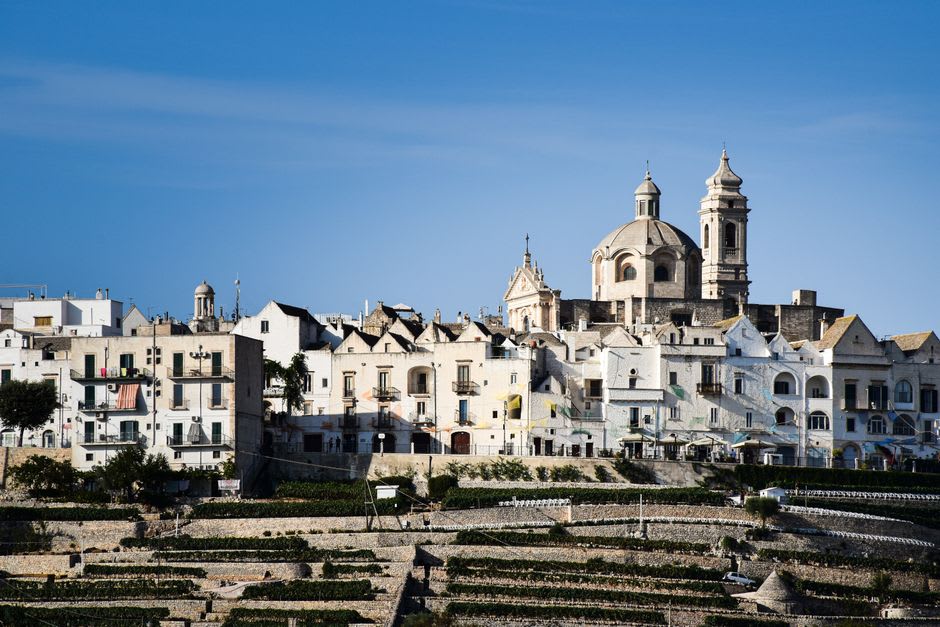
Driving out at dusk, the vineyards turned gold in that specific late Puglia light, and I understood why the wine importer had been so insistent. Some places are worth visiting for a single reason, as long as the reason is good enough.
When to go: September, during the wine harvest, when the cantine are at their most active and often open for informal tastings. Spring is pleasant too, with the vines newly leafed and the countryside green rather than dusty.