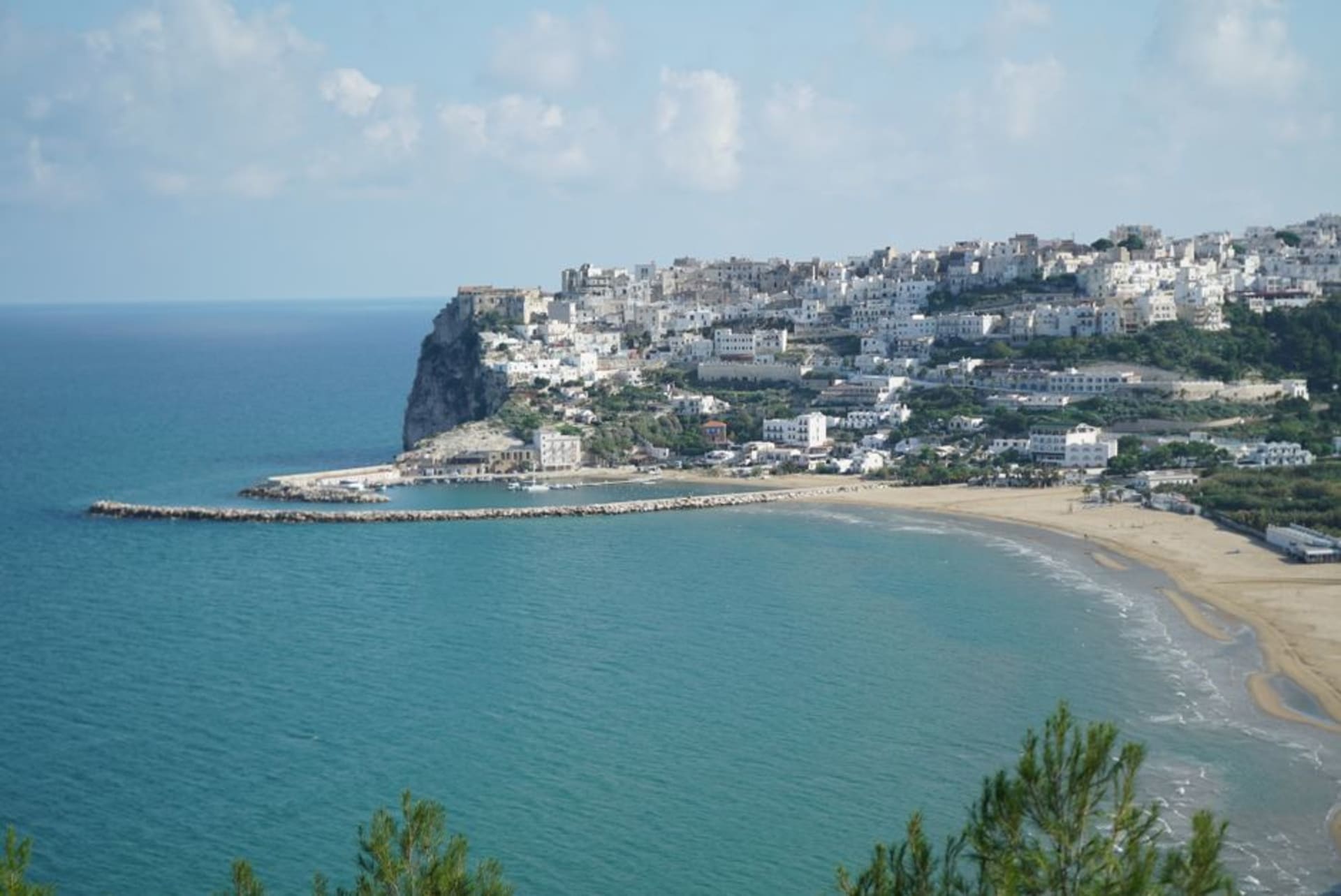
Mottola
"They call Mottola the balcony of the Murgia, and standing at the edge of town at sunset, you understand it isn't a marketing phrase."
Known as the balcony of the Murgia — a hill town with a view stretching from the plateau to the Gulf of Taranto, and a cluster of rock churches even the guidebooks skip.
Mottola sits at the edge of the Murgia plateau where the land finally drops toward the coastal plain and the Gulf of Taranto, and the locals’ nickname for it — il balcone della Murgia — turns out to be exactly literal rather than the usual tourism-board exaggeration. We arrived in the late afternoon after a day spent in Massafra’s ravines nearby, climbed to the edge of the old town near the Chiesa Madre, and the whole plain opened up below us: olive groves running flat to the horizon, the sea a silver line in the distance, the light doing something gold and slow that neither of us had the good sense to photograph properly before it changed.
The town itself is workmanlike and lived-in rather than restored for visitors — Mottola has none of Alberobello’s polish or Ostuni’s whitewash-for-photographs quality, and I mean that as a compliment. We wandered the centro storico past buildings in various states of repair, a couple of elderly residents sitting outside their doors in the early evening in the specific way that towns still lived in by their original population tend to look, rather than towns that have been converted mostly into short-term rentals.
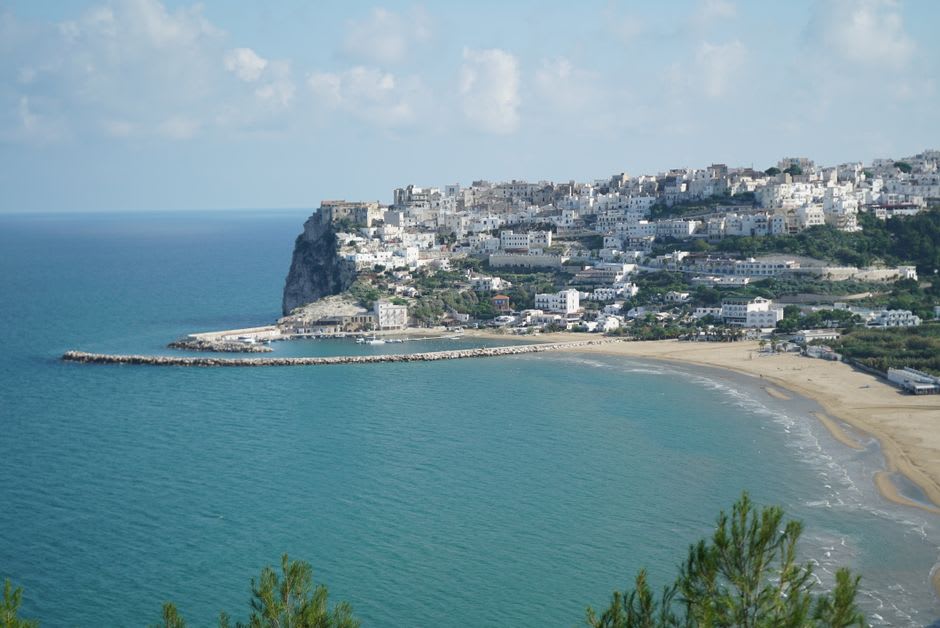
The real draw, though, is scattered outside the town in the countryside below — a network of chiese rupestri carved into the ravine walls that rival Massafra’s for historical depth, including the Cripta di San Nicola, its frescoes among the best preserved rupestrian paintings in the region, held in near-total obscurity because almost nobody outside archaeological circles seems to know they exist. We needed directions from a farmer to find the access track, and once there had the entire site to ourselves — a Byzantine fresco cycle from the twelfth century, undisturbed except by the swallows nesting in the crevices above it.
We ended the evening back on the belvedere as the sun dropped fully behind the plain, the lights of the coastal towns starting to flicker on in the distance, and neither of us said much for a while. Some views earn the silence.
When to go: Late afternoon into sunset is the essential window for the belvedere view. Spring and autumn are best for visiting the rupestrian churches in the surrounding countryside, when the tracks are dry and the heat isn’t working against you.