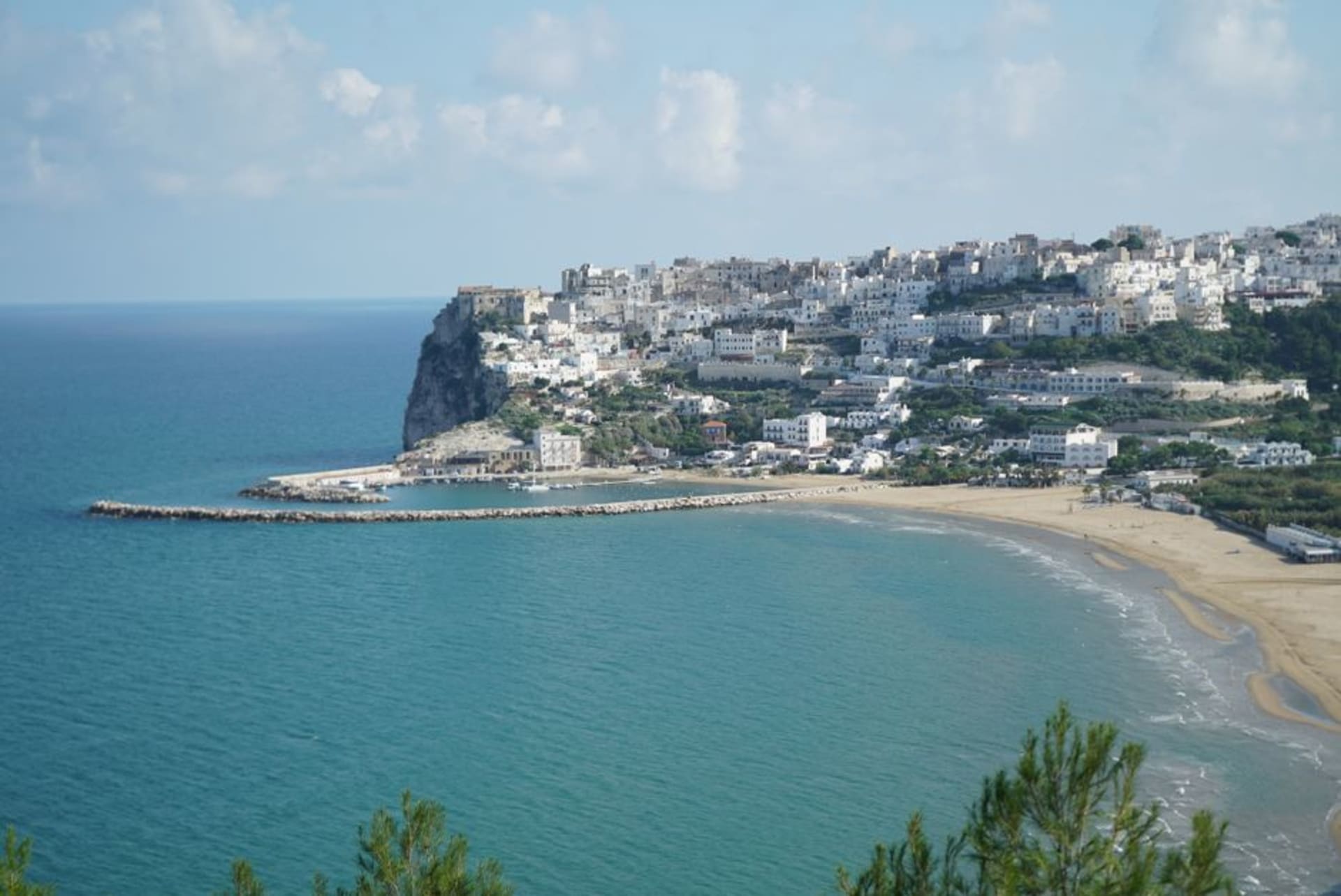
Lucera
"Frederick II built a fortress in Lucera big enough to hold an army. Standing inside its walls, you believe he needed every meter of it."
A hill town with a Roman amphitheater buried under a football pitch and a Swabian fortress the size of a small kingdom — the strangest, most layered history lesson in the Tavoliere.
I knew Lucera had a fortress before I arrived. I did not know the fortress was nearly a kilometer of curtain wall enclosing an entire hilltop, built by Frederick II — the Holy Roman Emperor the locals still call stupor mundi, wonder of the world — as the seat for the colony of Sicilian Muslims he relocated here in the thirteenth century after crushing a rebellion in Sicily. That single historical fact rearranges how you read the whole town: a Christian Puglia hill town built on the deliberate, controversial decision of a medieval emperor to plant a Muslim garrison-city in the middle of it, complete with mosque, souk, and their own laws, which lasted until Charles II of Anjou expelled and enslaved the community sixty years later. Walking the fortress walls at dusk, Lia and I kept stopping mid-sentence, trying to reconcile the scale of what we were standing in with how little either of us had heard of it before.
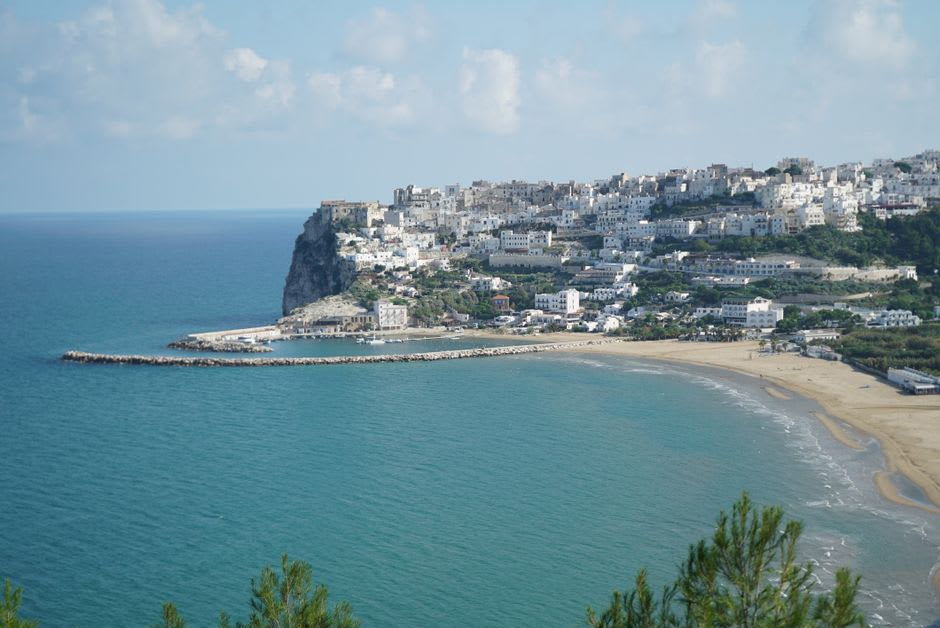
Below the fortress, in the modern town, sits the second layer of the strangeness: a Roman amphitheater from the age of Augustus, one of the largest in southern Italy, excavated only in the twentieth century after centuries of being forgotten under later construction — including, for a time, part of it sitting beneath a soccer field, which is either an insult to history or the most Italian thing imaginable, and I have not decided which. It hosts a summer festival now, actors performing on the same stone where gladiators once did, the tiers of seating still legible enough that you can picture the crowd.
The cathedral in the center of town was itself built, deliberately and pointedly, on the site of the mosque that had served Lucera’s Muslim colony — a piece of architectural propaganda from the fourteenth century that still reads clearly if you know the history going in. I stood in the nave, cool and Gothic and quiet, thinking about how many Puglia towns layer their conquests directly on top of each other rather than beside them.

We had dinner at a small osteria off the main corso, troccoli pasta — a thick, hand-cut Lucera specialty, rougher than tagliatelle, holding a ragù the way it’s supposed to — and the owner, once he clocked that we’d actually walked the whole fortress circuit rather than just photographing the gate, brought out a bottle of Cacc’e Mmitte, the local red-and-white blend, unasked, and told us more Lucera history than any plaque in town had managed.
When to go: May through early July for the summer festival season at the amphitheater, or September when the heat breaks and the fortress walk at golden hour becomes genuinely spectacular. The fortress has almost no shade, so avoid the midday hours in high summer.