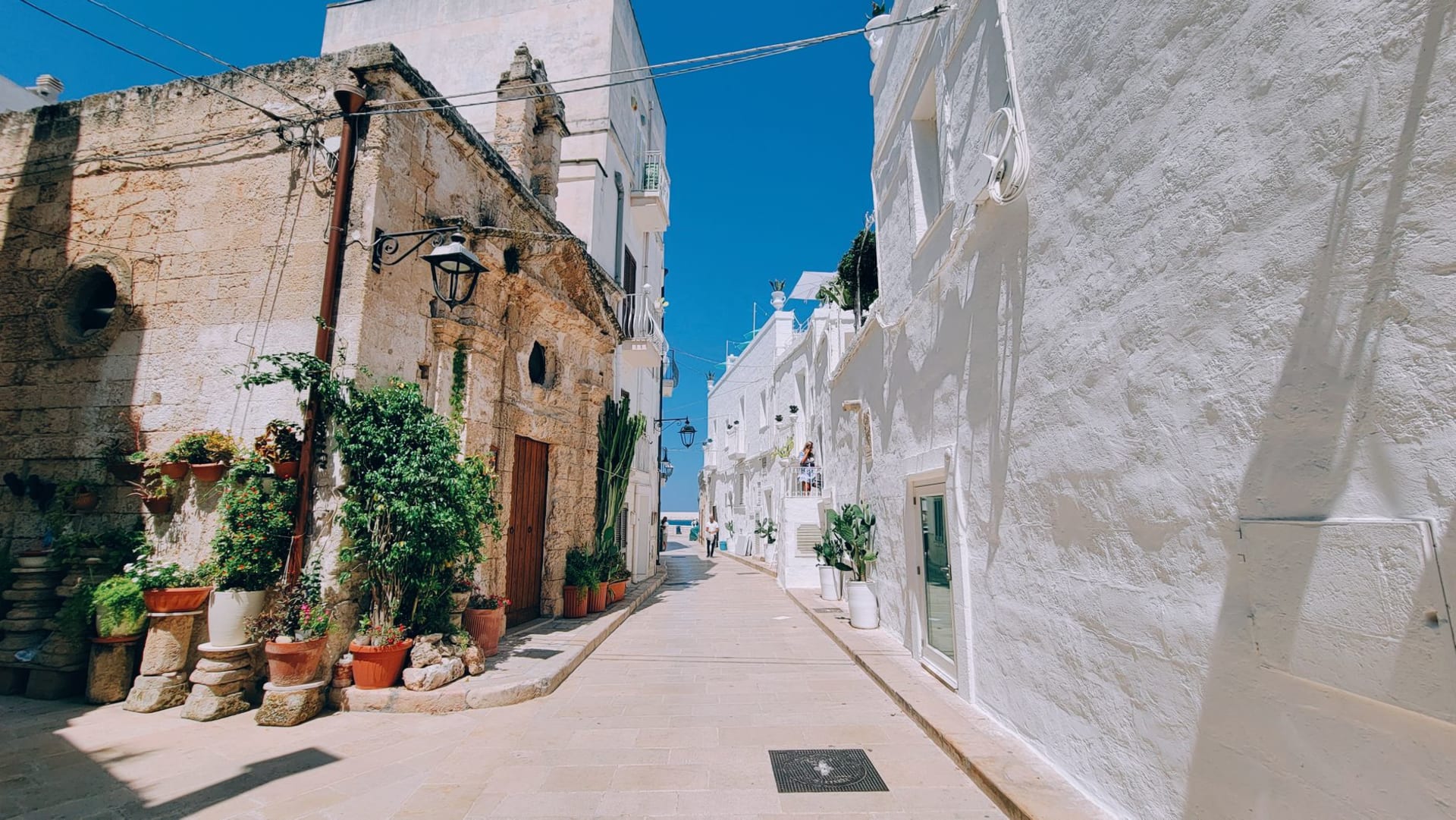
Cisternino
"In Cisternino you order your dinner from a butcher and eat it at a table in his shop — this is either primitive or brilliant, and I think it's brilliant."
The thing about Cisternino is the fornelli. These are butcher shops — macellerie — that also cook what they sell, and the custom is older than any food trend I can name: you walk in, you point at what you want in the case, the butcher cuts it or portions it and hands it to someone in the back, and fifteen minutes later it arrives at your table. The choices are pork-forward — bombette are the signature, thin sheets of meat wrapped around cheese and cured meats and rolled into small parcels and grilled over wood — but there are also lamb chops, sausages made with fennel, cuts of veal, horse meat for those not deterred by the concept. The tables are rough and close together and the noise from the open grill drifts over everything, and the wine is from the local valley in an unlabelled carafe, and I have not eaten better in Puglia than I have in these shops, which cost almost nothing.
I reached Cisternino late afternoon after a day on the coast, driving up through olive groves on a road that winds up the escarpment before the valley opens below. The approach from the valley floor shows you the village on its hilltop, a concentration of white above the grey-green of the olive trees, and it has the compactness of a settlement that grew on its hill not because of the view but because the hill was defensible. The view, from the belvedere near the Torre Normanno, is a consequence of the logic of survival — but it is a magnificent consequence: the Valle d’Itria spread below, trulli scattered across its floor like stopped thoughts, the hills of Locorotondo and Alberobello visible on opposite ridges.

The centro storico is the kind of place where the lines between a walking street and a lane someone lives in are not very clear. I turned a corner and found myself in what was clearly a private courtyard before realising it was a public piazza, distinguished from the surrounding space only by a small plaque and a coat of arms above a doorway. An elderly man sitting in a folding chair looked at me with the equanimity of someone used to tourists taking wrong turns in his living room. The Norman tower at the highest point of the village offers a rough view of the compass rose of the landscape — the sea is not visible but you can feel that the light is coastal, the particular quality of illumination that comes when there is a large body of water within thirty kilometres.
The village has changed less than its neighbours. Alberobello is a UNESCO site with souvenir shops; Locorotondo has been discovered by the design-minded food crowd; Cisternino retains a slightly uncombed quality, a sense that the economy here is still primarily agricultural and that the butcher shops are restaurants because they were always butcher shops first. This is not quite accurate — tourism has found Cisternino too — but the proportions still feel right, the core of local life visible behind the overlay.

I ate at a fornello on a narrow lane off the main piazza, squeezed between a young couple from Bari who were regulars and brought their own wine, and a family of four from Germany who were consulting a guidebook about what to order and then ignoring the guidebook and pointing at the case like everyone else. The bombette arrived crispy and bursting with cheese. The sausage was the kind that snaps when you bite it. The wine was cold and rough and exactly right. Outside, the evening passeggiata was assembling on the piazza, the same ritual that has been performed here at the same hour for centuries, the village doing the thing it has always done.
When to go: The fornelli operate year-round, which gives Cisternino more appeal in the off-season than most Pugliese towns. Spring and autumn are the best for combining the village with the surrounding Valle d’Itria. The village is small enough that even August remains tolerable — it lacks the beach crowd infrastructure and keeps its own rhythms.