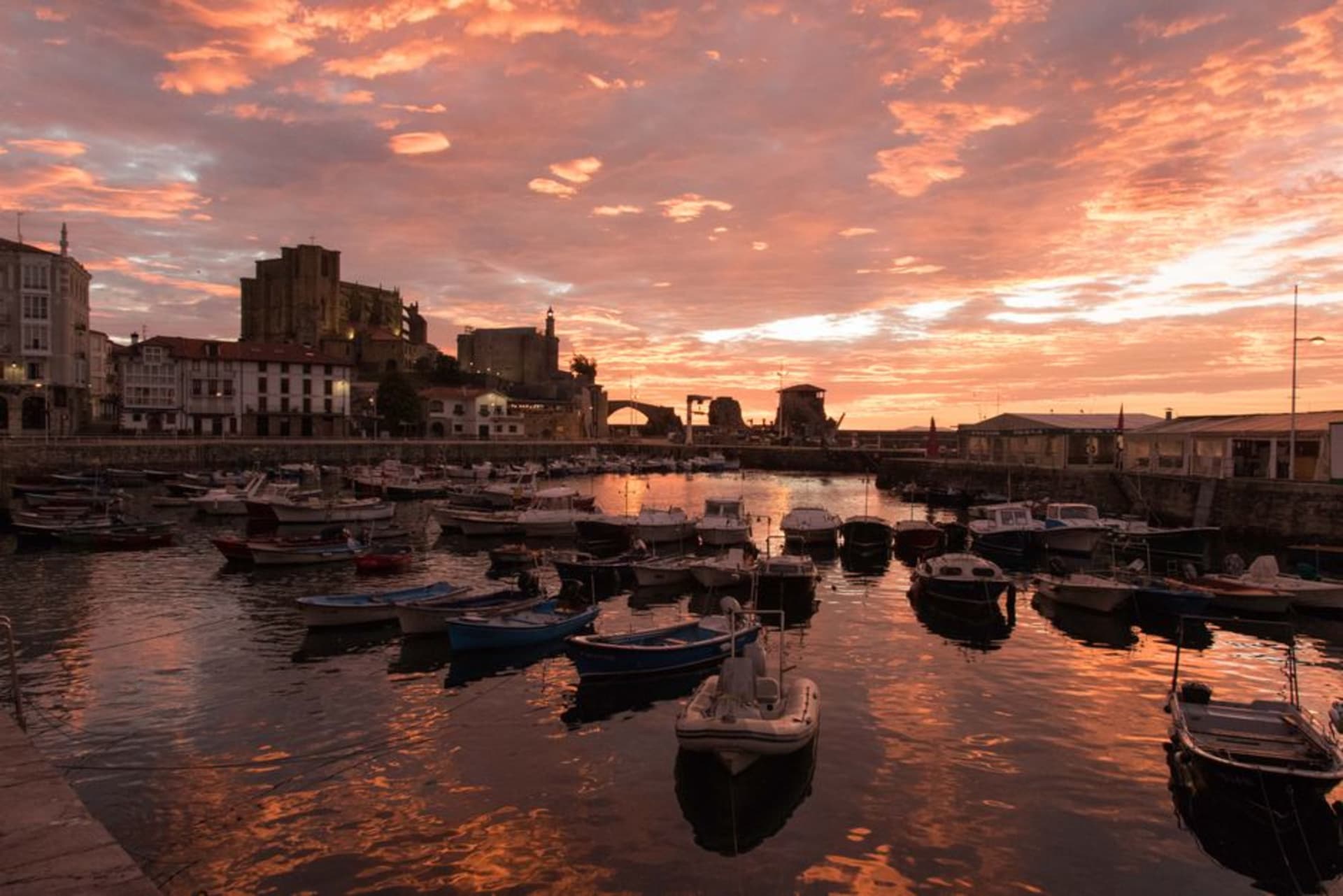
Castro Marina
"Half of Castro is a village on a cliff. The other half is a cave system underneath it that nobody has fully mapped."
A cliffside Adriatic village whose real attraction lies underneath it — the Zinzulusa cave, a limestone grotto of stalactites, blind fish, and passages still being explored.
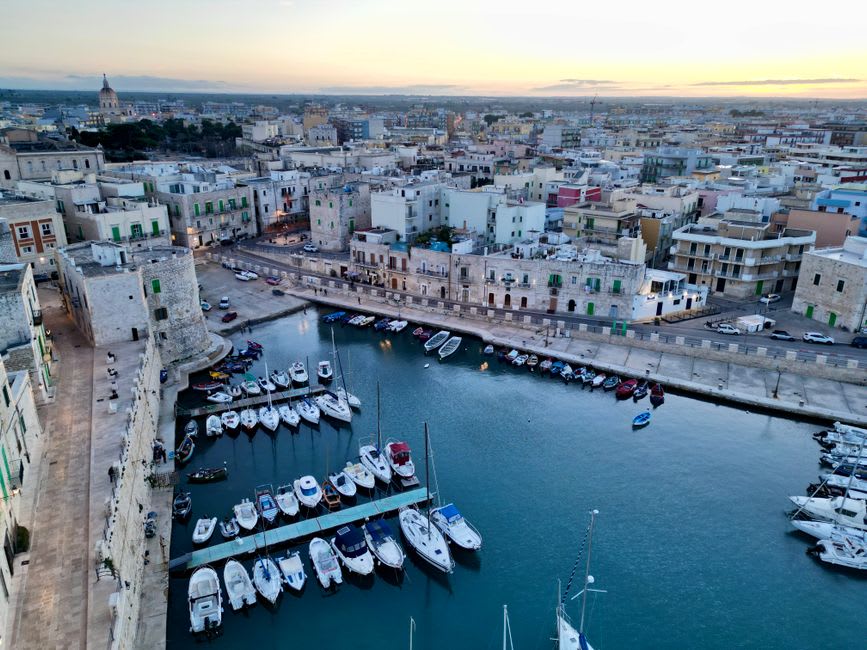
Castro sits in two layers: a fortified medieval hill town above, with a castle and a cathedral and views that stretch to Albania on the clearest days, and Castro Marina below it, a small harbour village at sea level connected by a switchback road that drops fast enough to make your ears pop. We stayed down at the marina, in a small guesthouse two minutes from the water, and used the upper town mostly for evening walks and dinner with a view.
The reason most people come down to the marina, though, is the Zinzulusa cave, a few minutes’ walk along the coast from the harbour. The name comes from the local dialect word for rags, describing the way the stalactites hang in ragged, dripping formations from the ceiling — and once you’re inside on the guided walkway, lit dimly to preserve the ecosystem, the comparison makes immediate sense. The cave was carved by seawater over millennia and contains several chambers, including a lake area where a blind, colourless crustacean and cave-adapted fish species live, found almost nowhere else on Earth. Divers have mapped extensive underwater passages beyond the public walkway that are still being explored.
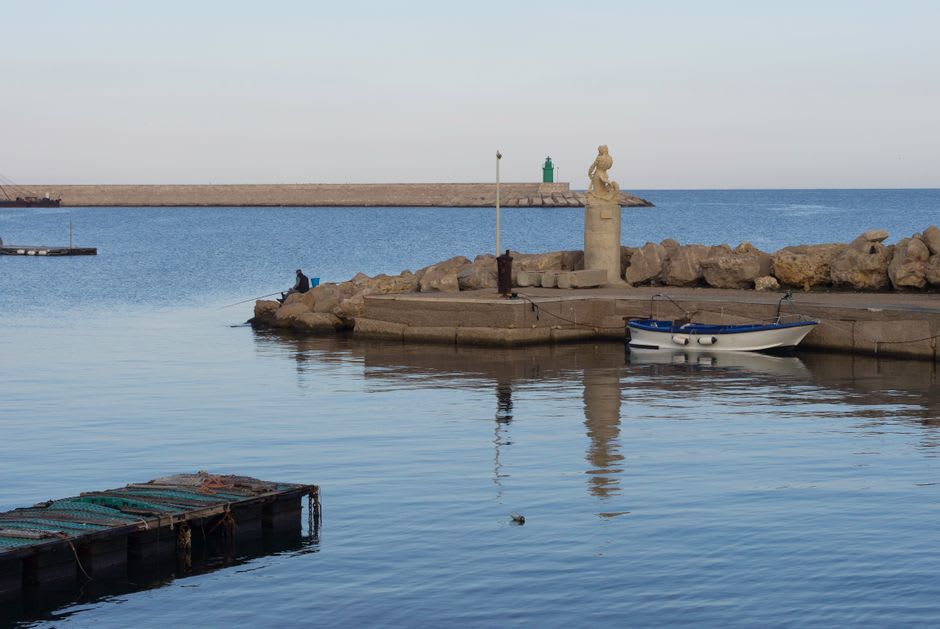
Outside the cave, the coast around Castro Marina is rugged limestone rather than sand — swimming happens off flat rocks and small concrete platforms built into the cliff face, with ladders down into deep, extremely clear water. I jumped in from one of these platforms on a still July morning and could see the bottom clearly at a depth that made me briefly reconsider the jump. The harbour itself is tiny, more decorative than functional these days, with a scattering of small boats and a promenade that fills up in the evening with people walking off dinner.
Up in the old town, the small cathedral has a set of carved wooden doors depicting the town’s history including a 1537 Ottoman raid that devastated the population — a recurring theme along this stretch of coast, this collective folk memory of watching the sea for danger. We climbed the castle walls at sunset for the view down over the marina and the cave entrance below, the water shifting through three shades of blue as the light dropped, and it was one of the better fifteen minutes of the whole Salento leg of the trip.
When to go: June through September for swimming off the rocks and comfortable cave-walkway conditions; the cave itself is a year-round visit, cool and stable in temperature regardless of season. Weekday mornings avoid the worst of the day-tripper coach groups at the cave entrance.