Grotte di Castellana
"There is a moment on the two-hour route where the guide turns off the lights for ten seconds. Nobody makes a sound. There is nothing to see, and that is the point."
Italy's largest show cave system, ninety metres underground, where a passage called the Grave opens into a cavern big enough to make you whisper without meaning to.
I had driven past the turnoff for Castellana Grotte twice before I finally stopped, mostly because Lia insisted a karst cave system couldn’t possibly justify an entire afternoon. She was wrong, and she said so herself about forty minutes into the tour, somewhere past the enormous doline entrance called the Grave, a sinkhole sixty metres deep that swallows the light within a few strides of the surface. You descend through a natural collapse crater into darkness that has nothing in common with the ordinary sunlit Puglia above — cool, mineral-smelling, silent in a way that presses on your ears.
The full route runs about three kilometres and takes two hours, threading through chambers with names that oversell nothing: the Grotta Bianca, the White Cave, is the finale, and it earns its reputation. Pure white alabaster formations, some of them impossibly thin and translucent, lit to look like something between coral and frost. It is the whitest natural cave interior I have seen anywhere, and after ninety minutes of grey-brown stalactite formations in the earlier chambers, the shift in colour actually made Lia gasp audibly, which she later denied.
There is a shorter one-hour route if the full two hours feels like too much cave for one visit, but I would push back on that instinct. The caves were only discovered in 1938 — a speleologist named Franco Anelli rappelled into the Grave on a rope, found the system extended far beyond the visible sinkhole, and effectively created one of southern Italy’s most important natural attractions almost by accident. The temperature underground sits around 18°C year-round, which in August makes this one of the only genuinely cool places in the entire region, and in January it feels almost warm by comparison.
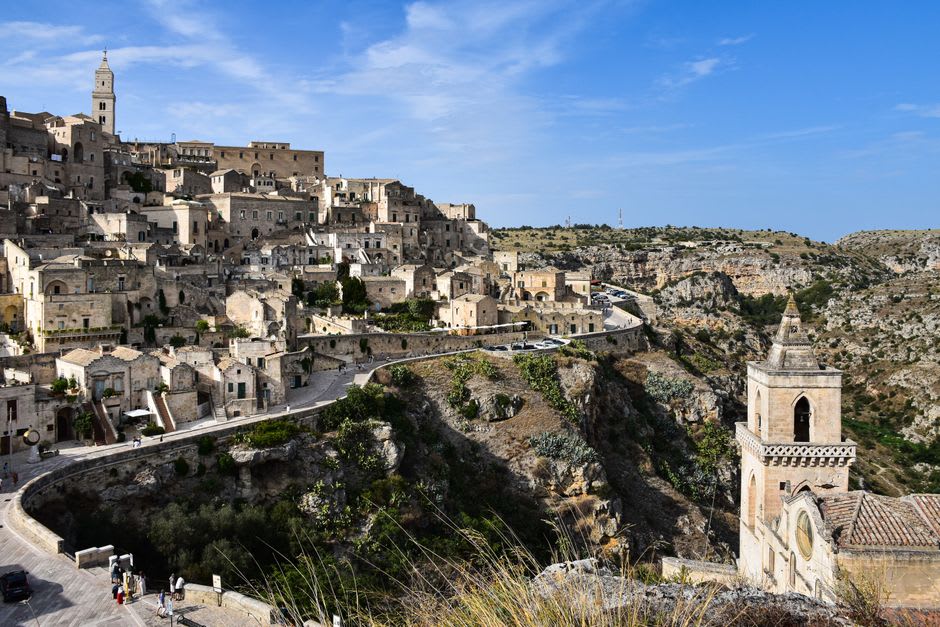
The town of Castellana Grotte itself, above ground, is a pleasant if unremarkable Pugliese hill town, and most visitors — us included — treat it purely as the gateway to the caves rather than a destination in its own right. There’s a decent lunch to be had in the centro after you resurface, blinking, back into the sun, your eyes needing a minute to recalibrate to actual daylight after two hours of engineered darkness.
When to go: Year-round, since the caves maintain a constant temperature regardless of season. Summer weekends get busy with families and tour groups, so a weekday morning visit, ideally the first tour of the day, gives you a quieter passage through the chambers.
Keep exploring
More from Puglia
 puglia
 Castro Marina
A cliffside Adriatic village whose real attraction lies underneath it — the Zinzulusa cave, a limestone grotto of stalactites, blind fish, and passages still being explored.
Explore puglia
 Ceglie Messapica
A quiet whitewashed town between Ostuni and Martina Franca that Pugliesi quietly call the region's best table — no coastline, no crowds, just extraordinary food.
Explore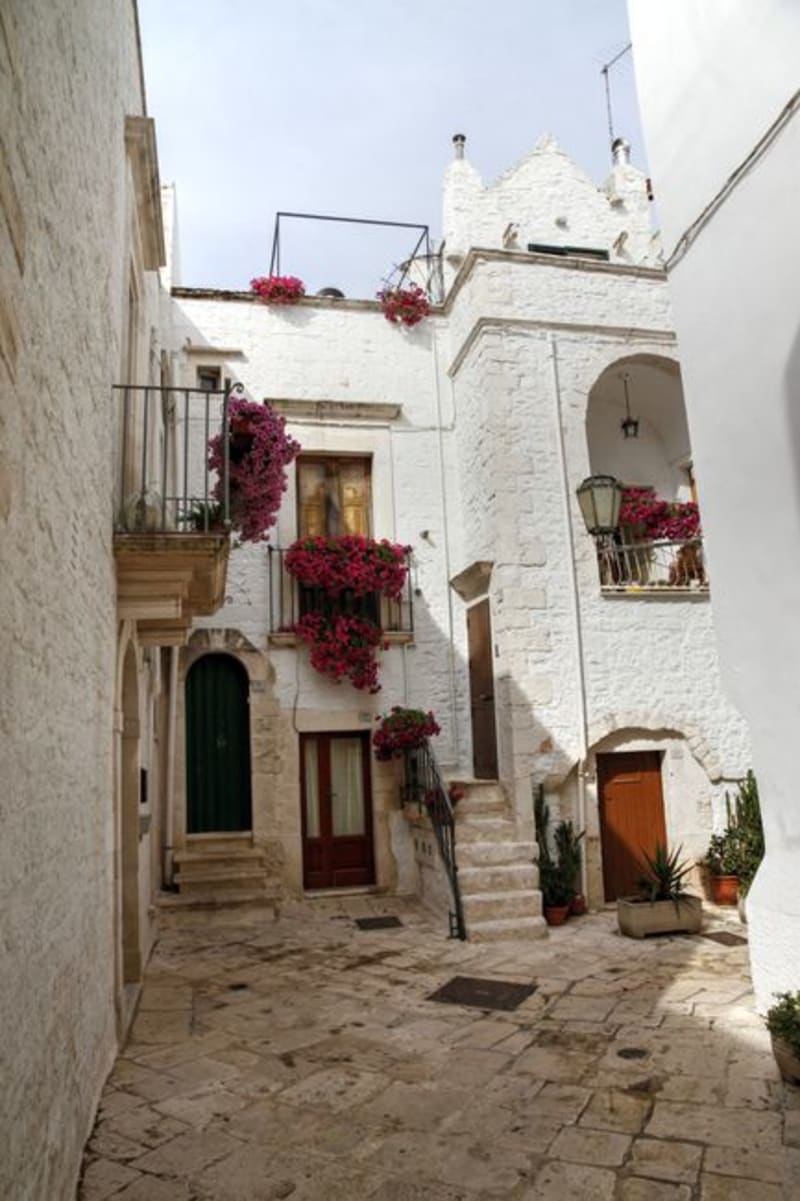 puglia
 Cerignola
The self-declared olive capital of Italy, a sprawling agrotown on the Tavoliere built almost entirely on giant green Bella di Cerignola olives and a fiercely local, unglamorous pride.
Explore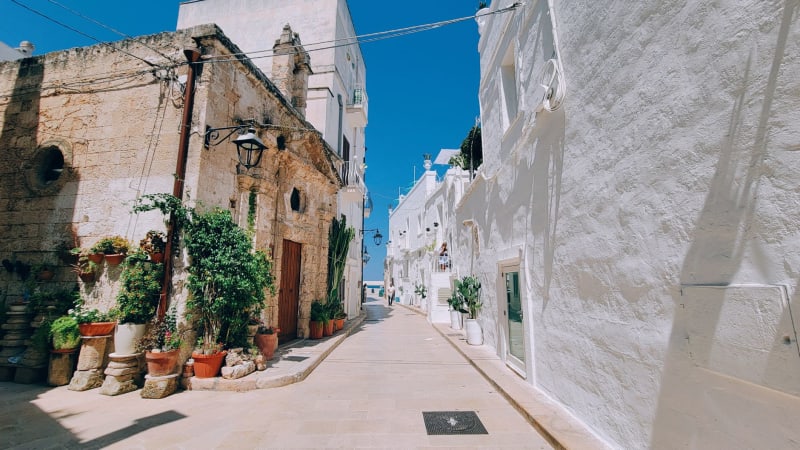 puglia
 Cisternino
A whitewashed hilltop village in the Valle d'Itria where the butcher shops cook to order and the view into the trulli valley below is worth the climb.
Explore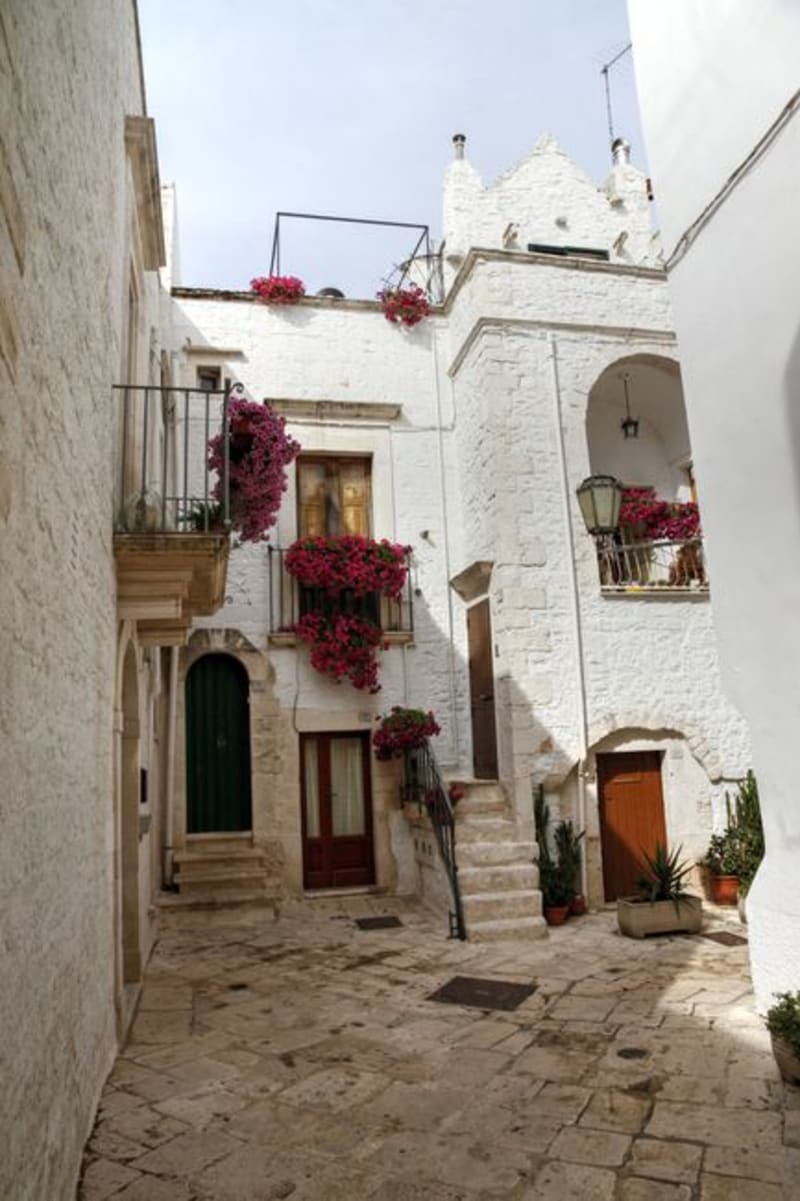 puglia
 Conversano
A hilltop town in the Terra di Bari crowned by a Norman-Aragonese castle, surrounded by drystone walls, almond orchards, and the countryside masserie that supply half of Bari's markets.
Explore puglia
 Copertino
A Salento wine town beneath a moated Aragonese fortress, home to one of Puglia's oldest DOC appellations and a Negroamaro built for the table, not the cellar.
Explore