Casamassima
"Every Pugliese hill town is white. Casamassima decided, at some point nobody can quite date, to paint its entire old centre a deep cobalt blue instead."
A small town outside Bari painted almost entirely blue — the Borgo Blu — for reasons nobody can fully agree on, and one of the strangest, most photogenic surprises in the region.
I saw a single photo of Casamassima on someone’s feed — an alley entirely blue, walls and doorframes and even parts of the cobblestones, looking more like a corner of Chefchaouen than anywhere in Puglia — and assumed it had to be a filter. It wasn’t. The Borgo Blu, the town’s old centro storico, really is painted almost entirely in shades of blue, floor to roofline, in a tradition whose origin nobody in town could explain to us with total confidence: one shopkeeper said it dated to a plague outbreak, when blue was believed to ward off disease; another insisted it was simply an aesthetic choice made by a mayor decades ago that residents kept up out of loyalty and habit. Both explanations get repeated locally with equal conviction.
Whatever the truth, the effect walking through it is disorienting in the best way — every other Pugliese old town we’d visited that month had trained our eyes to expect whitewash, and turning a corner into a lane of doorframes, window shutters, flowerpots, and even entire building facades in blue felt like stepping into a different country. Some residents lean into it with deep cobalt; others go lighter, almost turquoise; a few have painted patterns and Puglia’s traditional decorative motifs directly onto the blue in white, making each lane subtly different from the last.
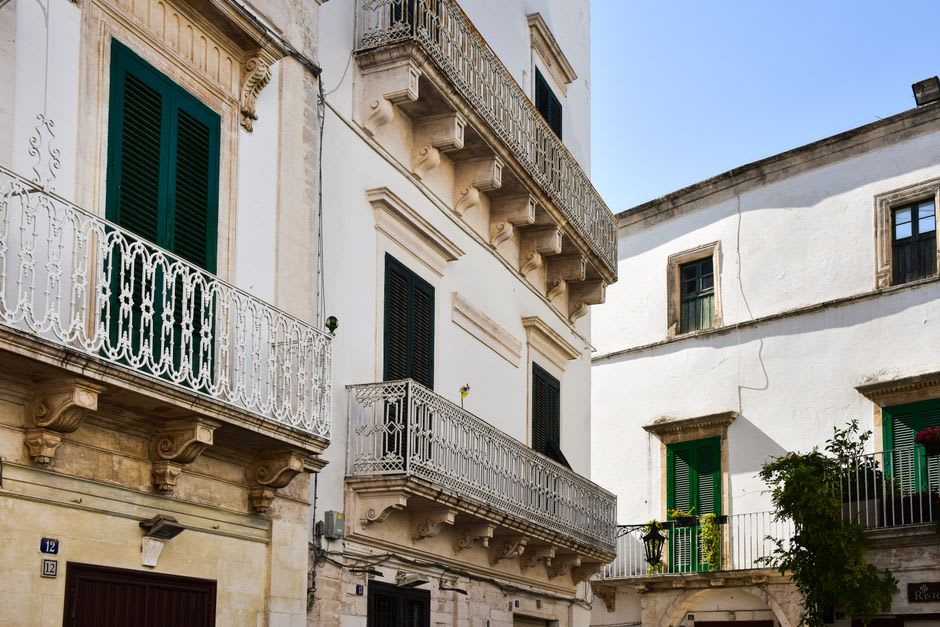
We spent an hour just wandering without any destination, Lia stopping every few metres to photograph a doorway or a stairwell, and locals seemed entirely unbothered by our staring — clearly used to visitors doing exactly this, though the town gets nowhere near the crowds of Ostuni’s white old town, its more famous cousin an hour south. An elderly woman sweeping her blue front step told us, unprompted, that she repaints her section every spring, a small unglamorous ritual that keeps the whole effect from fading into something patchier and less deliberate.
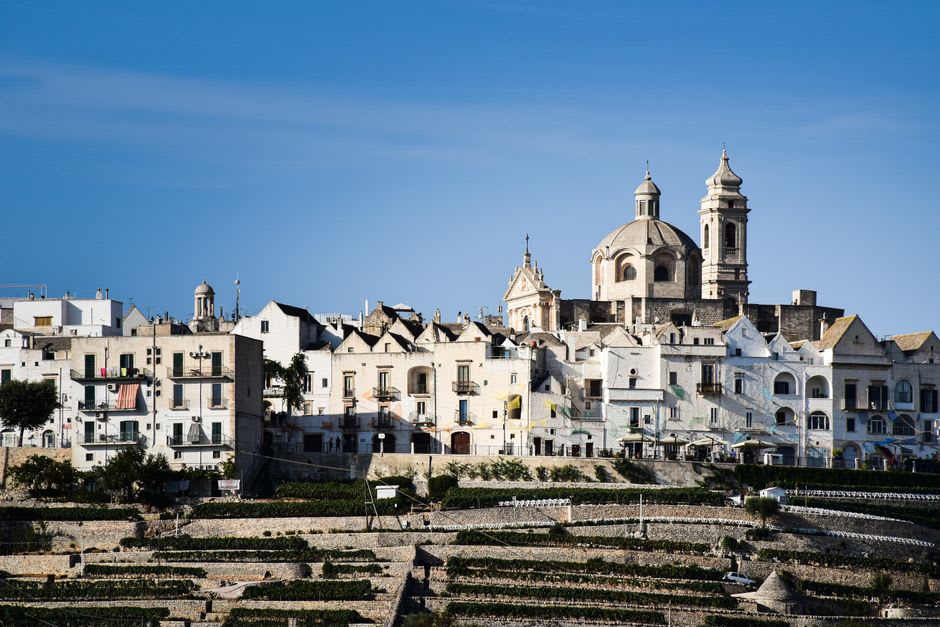
We had a coffee at a bar on the edge of the Borgo Blu where the colour gives way back to ordinary stone, and I found myself already trying to describe the place to friends back home and failing to make it sound as strange and good as it actually was.
When to go: Spring is best, right after the annual repainting, when the blue is at its most saturated. The Borgo Blu is compact enough for a short detour from Bari or Conversano rather than requiring a dedicated day.
Keep exploring
More from Puglia
 puglia
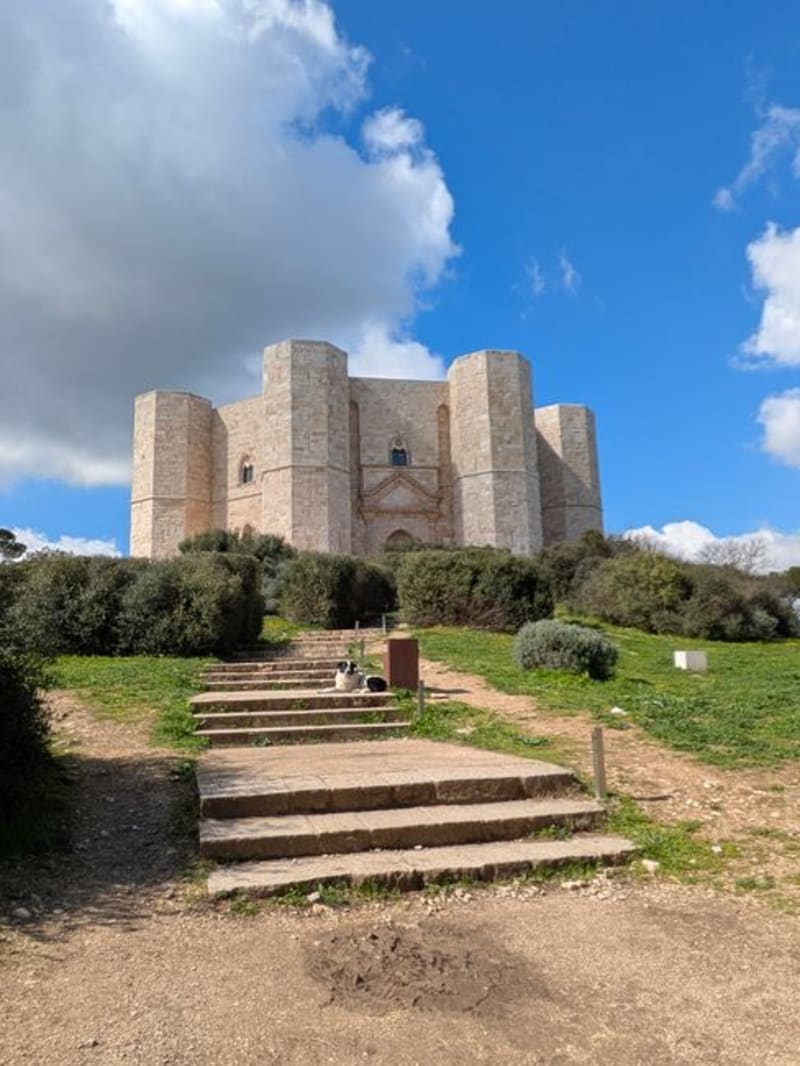
 Castel del Monte
Frederick II's octagonal riddle of a castle, alone on a hilltop in the Murge with no moat, no defensive purpose anyone can quite agree on, and a geometry that still unsettles mathematicians.
Explore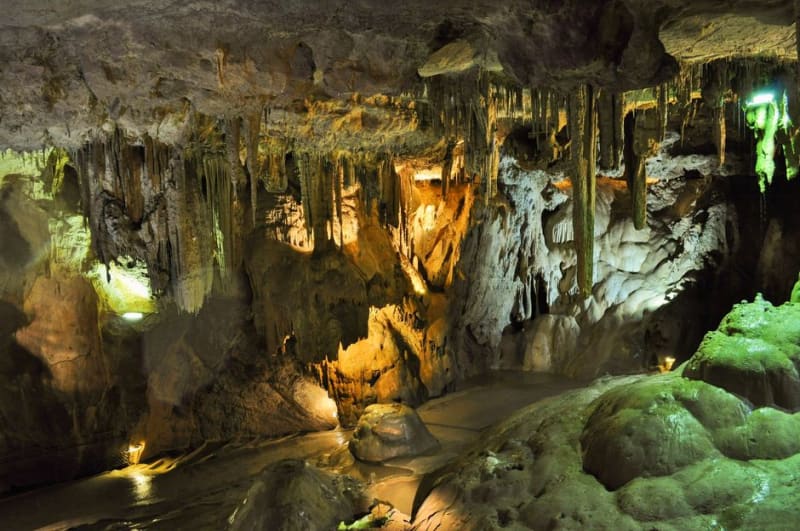 puglia
 Grotte di Castellana
Italy's largest show cave system, ninety metres underground, where a passage called the Grave opens into a cavern big enough to make you whisper without meaning to.
Explore puglia
 Castro Marina
A cliffside Adriatic village whose real attraction lies underneath it — the Zinzulusa cave, a limestone grotto of stalactites, blind fish, and passages still being explored.
Explore puglia
 Ceglie Messapica
A quiet whitewashed town between Ostuni and Martina Franca that Pugliesi quietly call the region's best table — no coastline, no crowds, just extraordinary food.
Explore puglia
 Cerignola
The self-declared olive capital of Italy, a sprawling agrotown on the Tavoliere built almost entirely on giant green Bella di Cerignola olives and a fiercely local, unglamorous pride.
Explore puglia
 Cisternino
A whitewashed hilltop village in the Valle d'Itria where the butcher shops cook to order and the view into the trulli valley below is worth the climb.
Explore