Campomarino
"Campomarino is where families from Taranto have been spending August for two generations, and almost nobody from outside the region seems to know it exists."
A low-rise Ionian beach town near Maruggio built almost entirely around summer, with pine-backed sand and a laid-back crowd that skews heavily local.
Campomarino di Maruggio — not to be confused with the town of the same name up in Molise, a mix-up that cost me ten confusing minutes with a rental car GPS — is a summer beach town on the Ionian coast that exists almost entirely for the season. Outside of June through September it is quiet to the point of feeling abandoned, shutters down on half the buildings, restaurants closed until further notice scrawled on handwritten signs. In August it becomes something else entirely: a dense, cheerful, unmistakably local resort where families from Taranto and the surrounding towns have kept summer houses for two or three generations, and where I heard almost no language other than Italian the entire time I was there.
That local skew is the town’s real character. This isn’t a place calibrated for international visitors, and it shows in small, likeable ways — the beach clubs play Italian pop rather than generic house music, the gelato flavors lean traditional rather than trendy, and the aperitivo hour empties out not toward a curated cocktail bar but toward whichever bar has the best view of that evening’s particularly good sunset. I found a rhythm here within about two days that felt less like tourism and more like borrowing someone else’s family vacation.
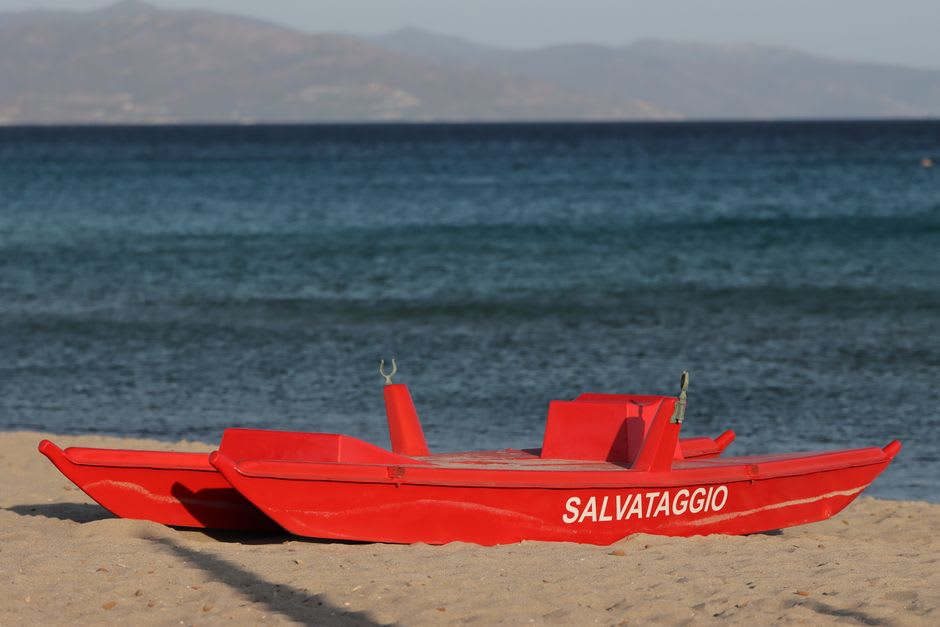
The beach itself is long, flat, and sandy, backed by a strip of umbrella pines that provide genuine shade rather than the sparse relief you get from younger plantings elsewhere on this coast, and the sea shelves gradually enough that small children can wade out a good distance under close supervision. Beach clubs alternate with free public stretches, and the water carries the same pale, clear quality that defines this whole run of Ionian coastline between Taranto and Gallipoli, though the crowd density in peak August is a noticeable step up from quieter Maruggio proper.
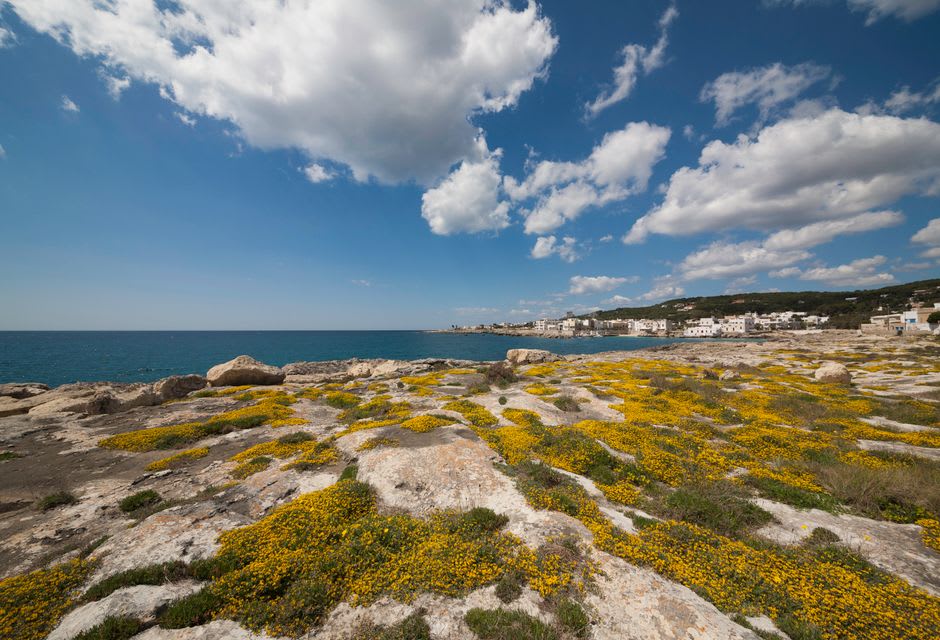
We ate dinner one night at a beachfront place where the owner’s teenage daughter took our order in fluent but visibly bored English before switching, relieved, back to Italian once she confirmed we could manage the menu ourselves. The fritto misto was excellent and the house wine unlabeled and cold, and the whole meal had the unforced, slightly chaotic energy of a place that has never needed to perform for an outside audience.
When to go: This is a genuinely seasonal town — come in July or August for the full local beach-town experience, understanding it will be crowded and loud in the most cheerful sense, or June and September for a quieter version with fewer amenities open. Outside summer, there is very little reason to stop here at all.
Keep exploring
More from Puglia
 puglia
 Casamassima
A small town outside Bari painted almost entirely blue — the Borgo Blu — for reasons nobody can fully agree on, and one of the strangest, most photogenic surprises in the region.
Explore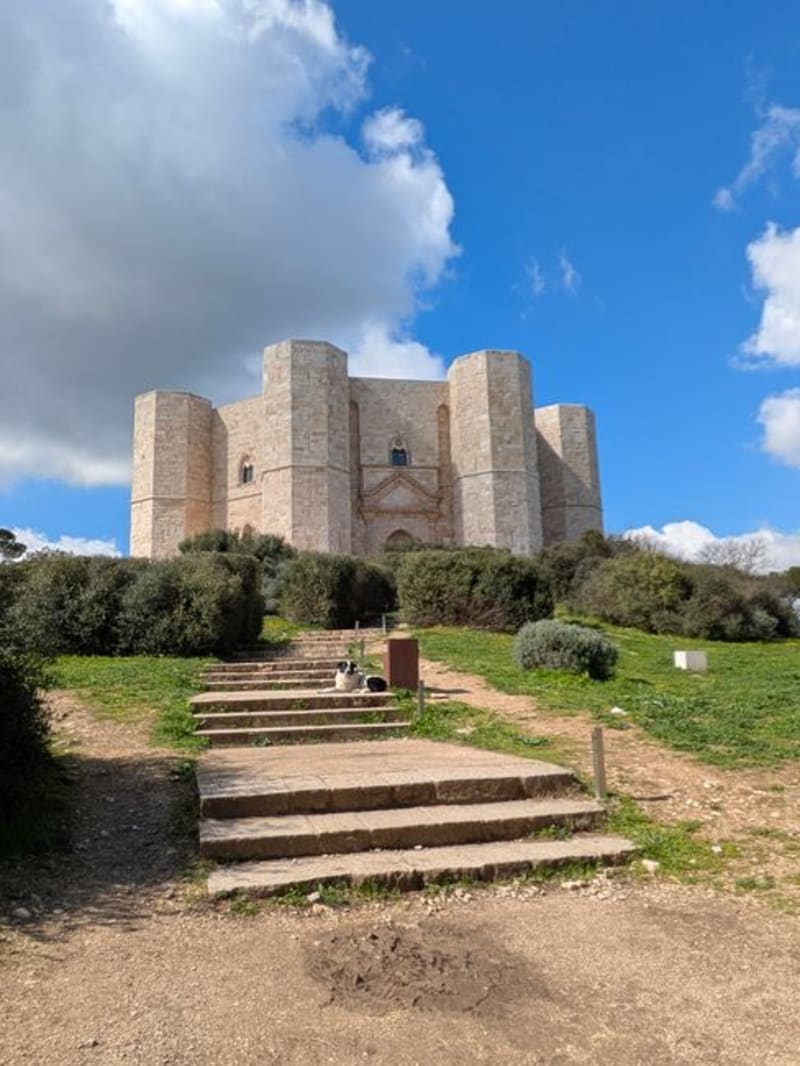 puglia
 Castel del Monte
Frederick II's octagonal riddle of a castle, alone on a hilltop in the Murge with no moat, no defensive purpose anyone can quite agree on, and a geometry that still unsettles mathematicians.
Explore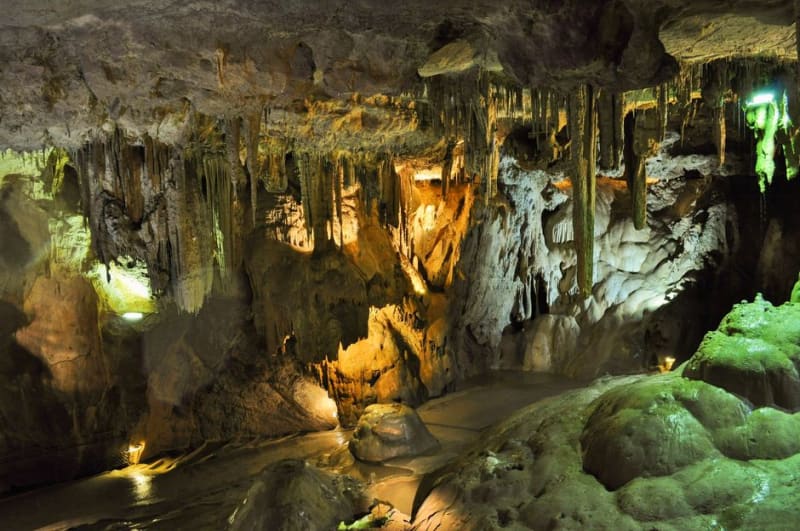 puglia
 Grotte di Castellana
Italy's largest show cave system, ninety metres underground, where a passage called the Grave opens into a cavern big enough to make you whisper without meaning to.
Explore puglia
 Castro Marina
A cliffside Adriatic village whose real attraction lies underneath it — the Zinzulusa cave, a limestone grotto of stalactites, blind fish, and passages still being explored.
Explore puglia
 Ceglie Messapica
A quiet whitewashed town between Ostuni and Martina Franca that Pugliesi quietly call the region's best table — no coastline, no crowds, just extraordinary food.
Explore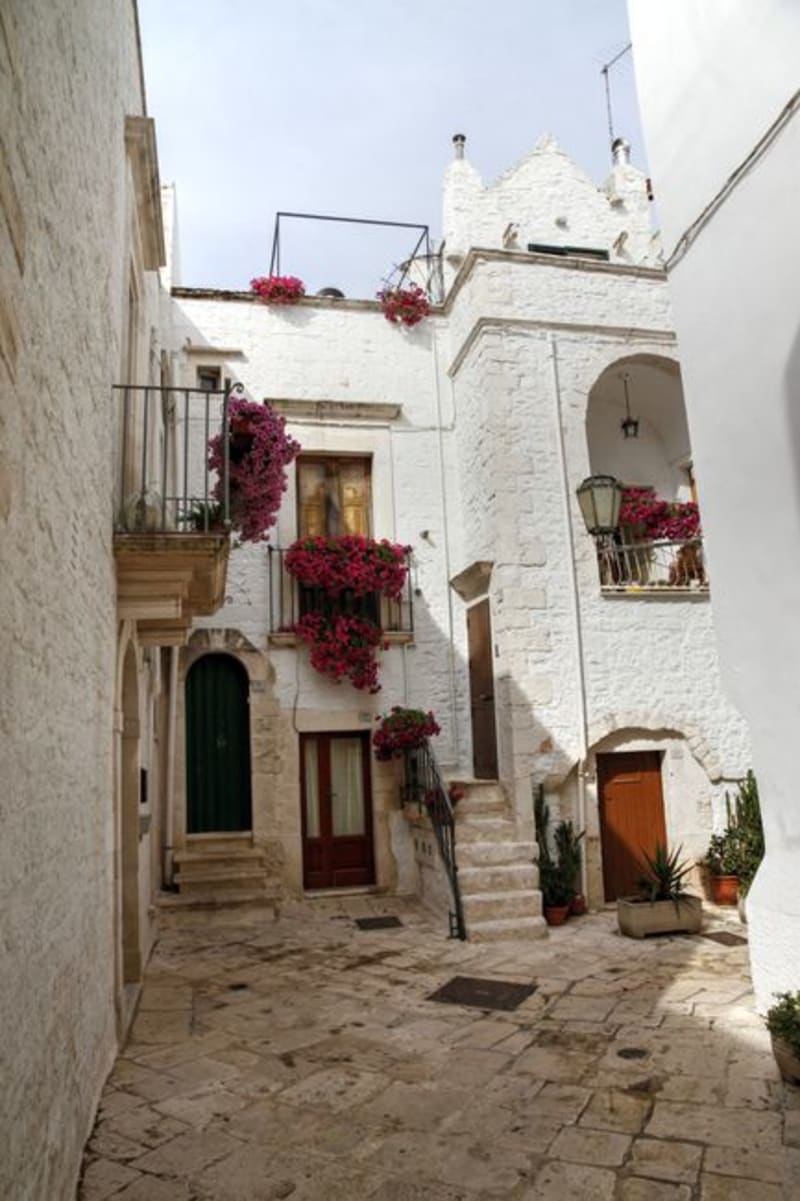 puglia
 Cerignola
The self-declared olive capital of Italy, a sprawling agrotown on the Tavoliere built almost entirely on giant green Bella di Cerignola olives and a fiercely local, unglamorous pride.
Explore