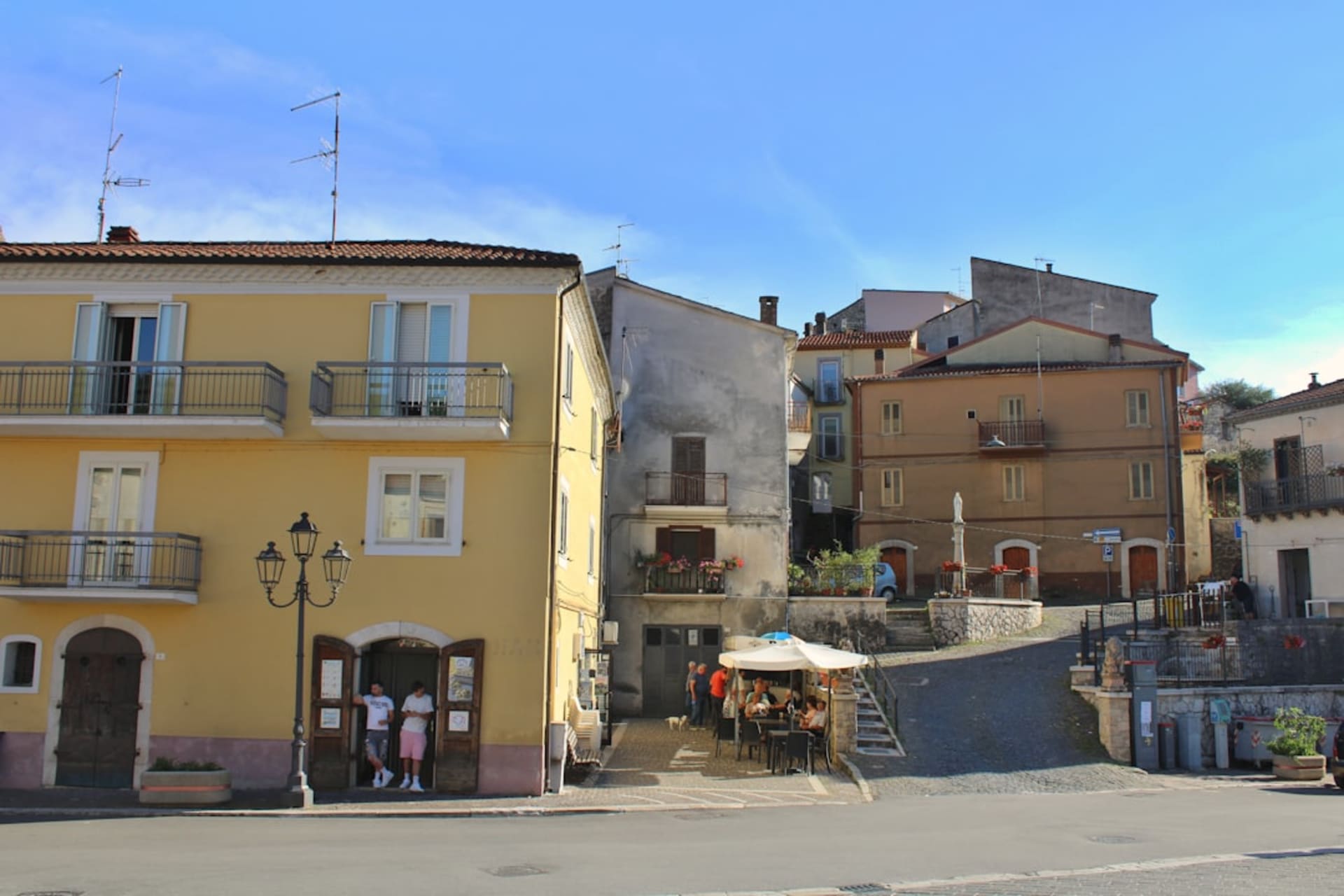
Bari Vecchia
"Bari Vecchia doesn't perform for visitors. You just happen to be allowed to walk through it."
The tangled old town of Bari, where nonnas dry orecchiette on tables in the street and every alley seems designed to make you lose your phone signal and your sense of direction at once.
Lia and I landed in Bari with a plan to stay one night before pushing on to the Valle d’Itria, and we stayed three, mostly because of a fifteen-minute walk into Bari Vecchia on our first evening that neither of us wanted to end. The old town sits on a promontory between the modern city and the harbour, a compressed knot of alleys so narrow and interconnected that GPS gives up almost immediately, and this is by design — the layout dates to when Bari needed to confuse invaders, and it still confuses delivery scooters and tourists with equal efficiency.
What you notice first is the orecchiette. Women — always women, always older, always working with a speed that makes you feel apologetic for your own slowness at anything — sit at folding tables set up directly in the street, pressing little discs of durum wheat dough into their distinctive ear shapes with a butter knife, then laying them out on wooden boards to dry in the sun. Via Arco Basso is the famous strip for this, thick with tourists by midday, but wander two streets over and you find the same scene without the audience: a woman working alone in a doorway, a radio playing low, sacks of semolina flour stacked against the wall.
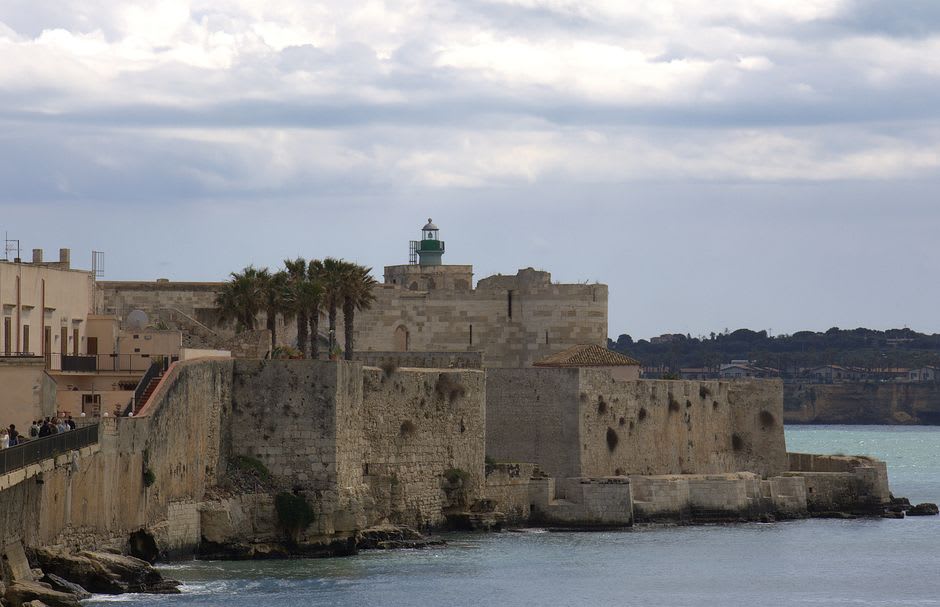
The Basilica di San Nicola anchors the northern end of the old town, a fortress-like Romanesque church built to house the relics of Saint Nicholas — yes, that Saint Nicholas, whose bones were essentially stolen from Myra by Barese sailors in 1087 and brought home in an act of medieval relic-piracy the city still celebrates every May. The crypt beneath the basilica draws pilgrims from across the Orthodox world, and I stood there one afternoon watching a group of Russian visitors weep quietly in front of the tomb, a reminder that this unassuming southern Italian city holds genuine spiritual weight for people who have travelled a very long way to reach it.
We ate dinner most nights at small unmarked places recommended by our hotel’s owner, plates of raw seafood — crudo di mare, the local obsession with eating fish and shellfish essentially untouched by heat, dressed only in lemon and good oil — that made me reconsider what freshness actually means. Bari’s relationship to the Adriatic is not decorative; the fishing boats come in at the old port each morning and the catch is often on a plate within hours. Lia, who is generally suspicious of raw seafood, ate an entire plate of it without comment, which from her counts as an enthusiastic review.
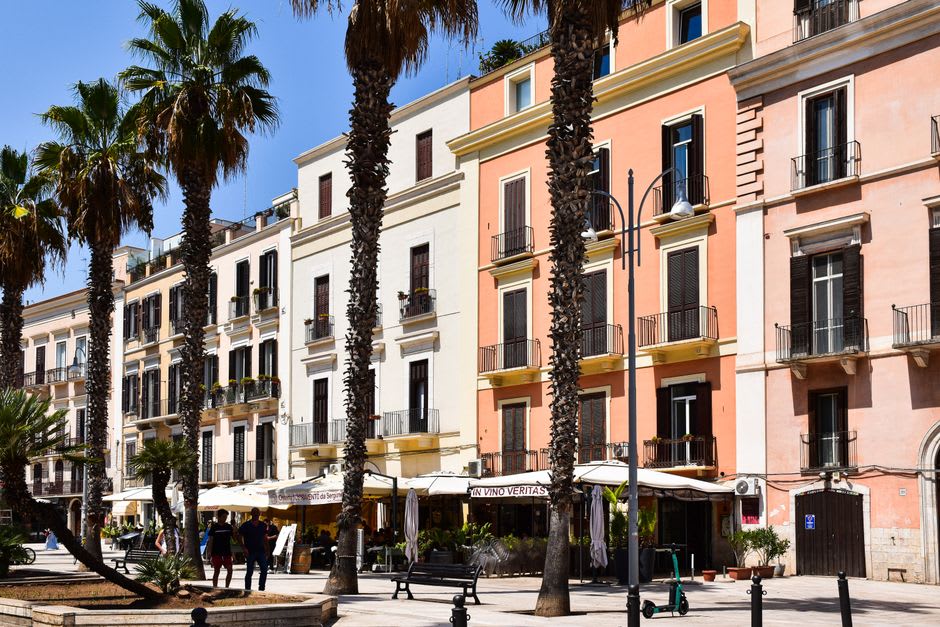
At night the old town changes register entirely — the pasta tables are folded away, and the same alleys fill with young Baresi drinking on doorsteps and low walls, music drifting from apartment windows, the whole quarter operating as an open-air living room. We sat on the seafront wall near the Fortino Sant’Antonio at midnight with a bottle of something local and cheap, watching the lights of ferries departing for Greece and Albania, and I felt the particular contentment of having stumbled into a city that nobody had oversold to me.
When to go: April through June or September through October, when the heat is manageable and the old town’s evening life is in full swing. Avoid arriving on a Sunday if you want to see the pasta-making in full force — the street tables are mostly a weekday and Saturday scene, timed to the week’s market rhythm.