
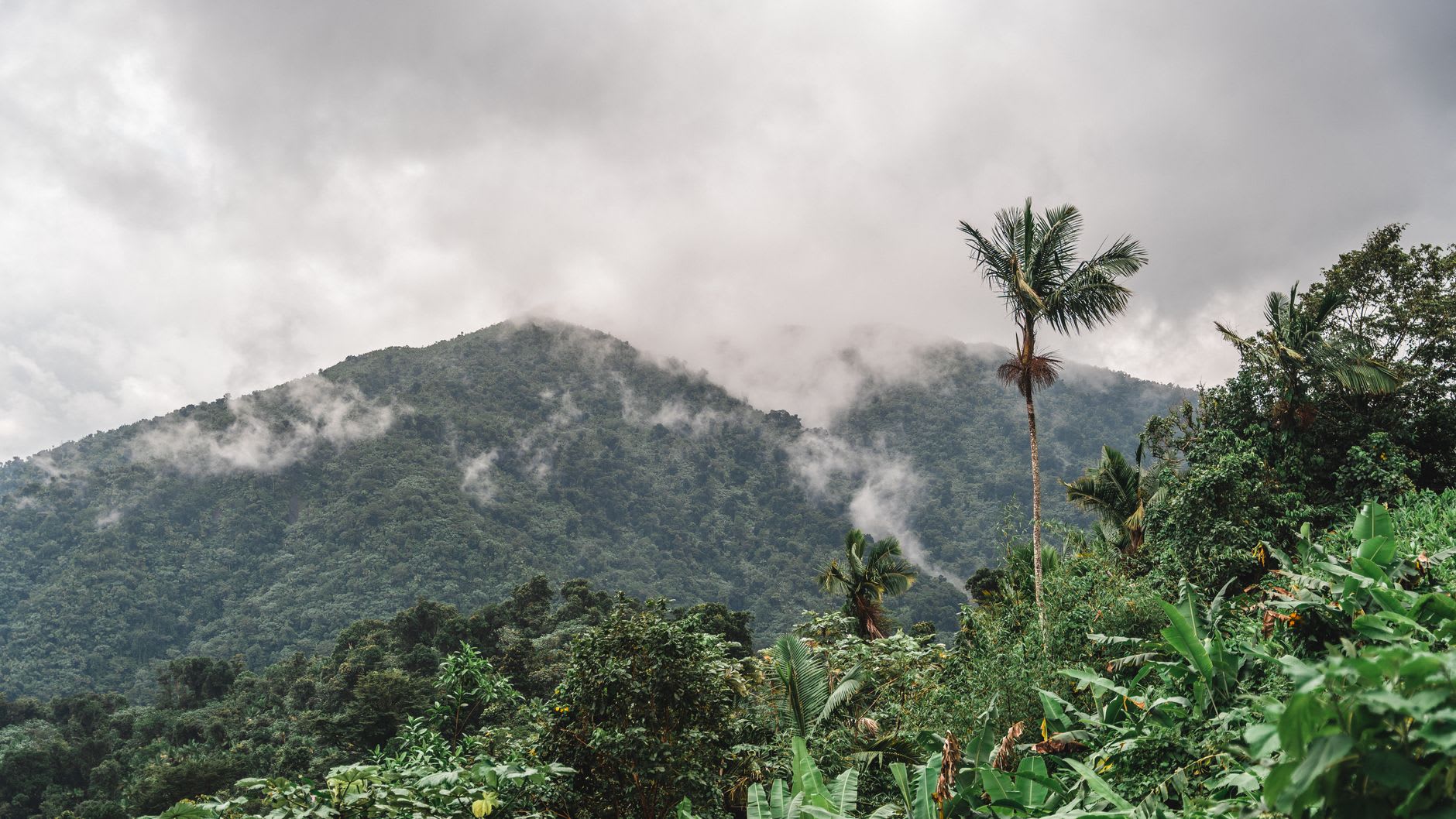
I went to El Yunque on a Thursday morning, early enough that the forest parking area was still half-empty and the mist was still doing what mist does in a tropical rainforest — hanging in the canopy, softening everything, making the tree ferns look prehistoric. Which they are, essentially. The Luquillo Mountains have been forested for centuries longer than Puerto Rico has been a human concern, and walking into that green density at seven in the morning, before the tour buses arrive, you can almost feel the gap between geological and human time.
The sound is the first thing. Not silence — the opposite of silence. The coquí frog, Puerto Rico’s unofficial mascot, is a small brown tree frog that produces a two-note call — ko-kee — with a volume entirely disproportionate to its body. There are seventeen species in Puerto Rico. El Yunque has most of them. They begin at dusk and don’t stop until sunrise, and during the day their diurnal cousins take shifts. The sound becomes so constant it starts to feel like weather — not something you hear so much as something you stand inside of.
La Mina Trail follows the river downstream to La Mina Falls, a 35-foot cascade into a pool the color of green glass. By eleven in the morning this pool has a crowd. At eight, it has you and the sound of moving water and the particular smell of wet stone and decomposing leaves that is one of the essential smells of the tropics — sweet and vegetable and faintly bacterial, deeply alive. I sat on a rock at the edge of the pool for a long time. A Puerto Rican parrot, which has been brought back from near extinction in this forest through one of the more patient conservation efforts in the Caribbean, called somewhere above the falls. The Puerto Rican parrot is brilliant green and nearly impossible to spot in a green forest. I didn’t see one. But knowing they were there changed the quality of looking.
The higher trails, toward El Toro peak at 3,524 feet, move through cloud forest — dwarfed trees dripping with bromeliads and orchids, visibility dropping to a few feet when the clouds move in, the temperature dropping enough that you wish for a jacket. Palo Colorado Trail is less walked than La Mina and worth the extra effort. The roots of the palo colorado trees have formed a kind of raised walkway over decades, and hiking along them feels like moving through a landscape that has organized itself for walking without quite meaning to. At the Yokahú Tower, a stone observation structure built by the Civilian Conservation Corps in the 1930s, you can see the coast to the north and Luquillo Beach to the east, the same cerulean Caribbean you arrived in, now looking completely different from elevation.
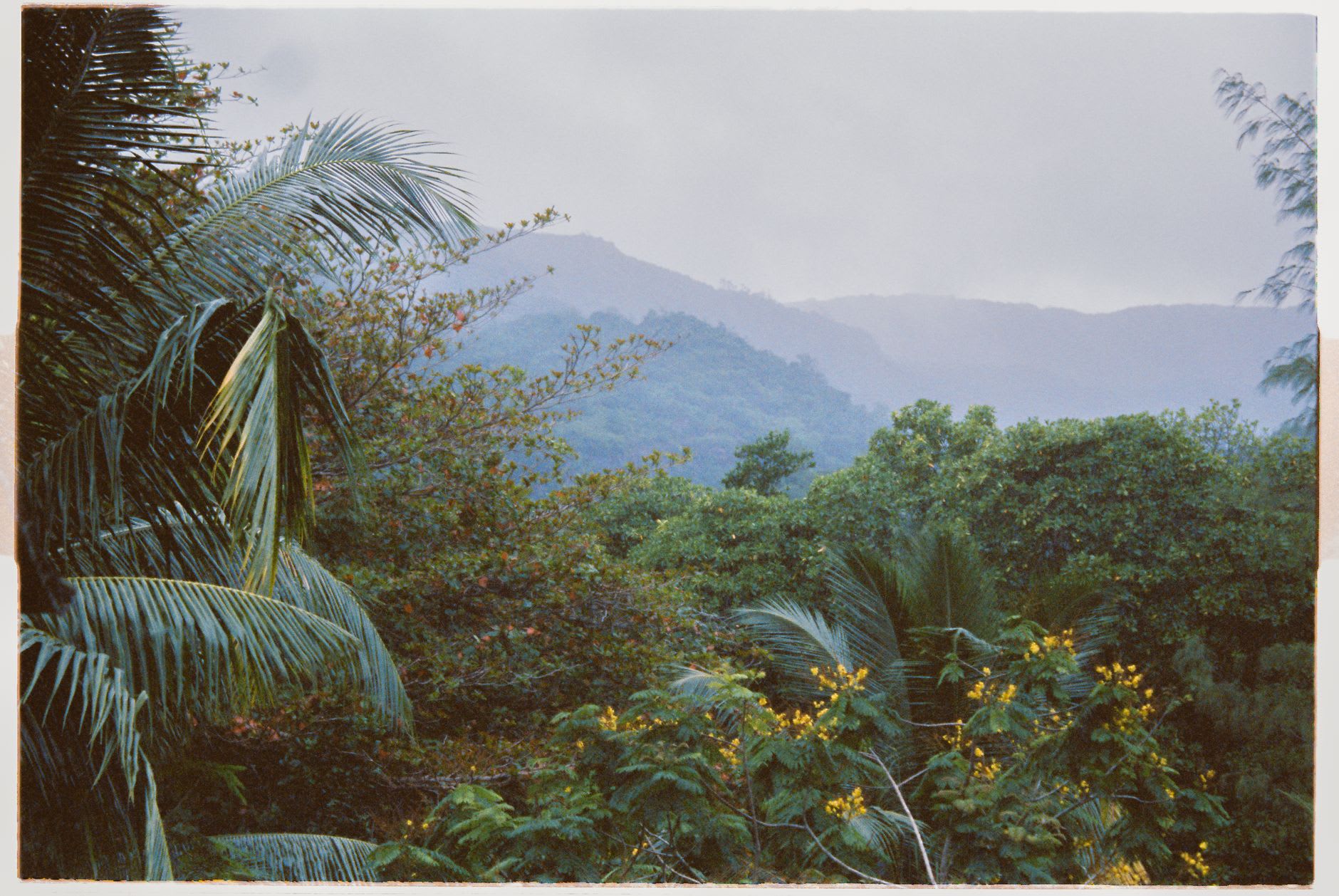
The drive up Route 191 from the main entrance has its own quality — the road narrows, the trees arch overhead, the temperature drops with altitude in a way you can feel in your ears. At the visitor center, rangers can point you toward trails based on current conditions and your tolerance for mud, which is a real variable here. El Yunque receives roughly 100 billion gallons of rainfall per year. It takes this responsibility seriously.
When to go: El Yunque is a rainforest — it rains. Morning is reliably clearer than afternoon, when clouds build over the peaks. The forest closes at dusk. Weekdays are significantly less crowded than weekends. Bring waterproof shoes and a light rain jacket regardless of forecast; the forest creates its own weather. Some upper road sections have remained restricted since Hurricane Maria in 2017 — check current access before going, as conditions change seasonally.