Caribbean
Puerto Rico
"Latin America and the Caribbean, compressed into one very loud island."
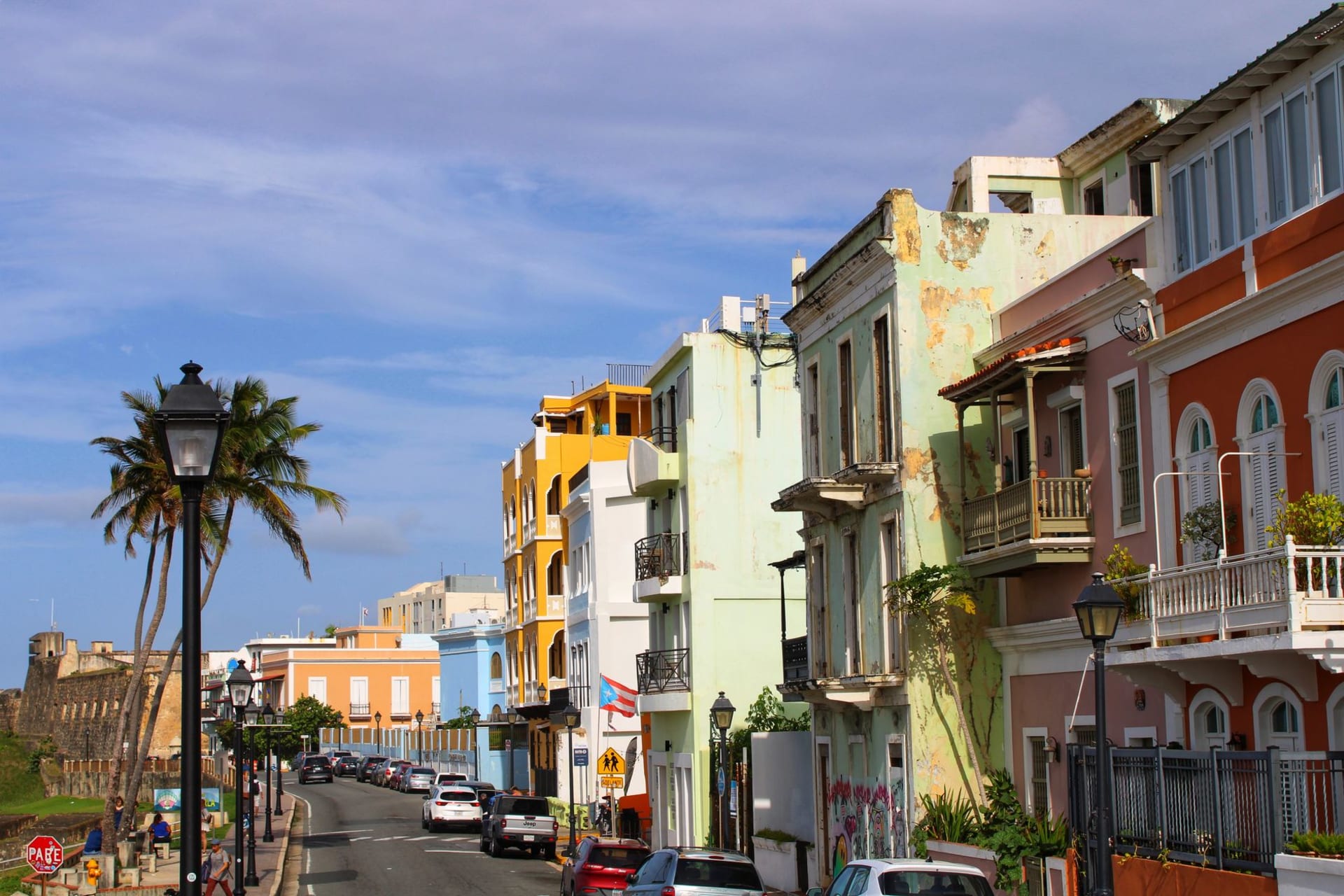
I landed in San Juan at dusk, and by the time the taxi crested the hill into Old San Juan, the light was doing something absurd to the buildings — that particular Caribbean gold hour that turns every painted facade into something a French Impressionist would have wept over. Cobalt blue, terracotta orange, mint green. The streets are cobblestoned with blue adoquines, volcanic stone ballast brought over by Spanish ships in the 1500s, worn smooth by five centuries of feet. I stood at the city gate, the Puerta de San Juan, and tried to remember the last time a city’s entrance had made me stop walking entirely. I couldn’t.
Old San Juan is the part Puerto Rico gets known for, and it earns its reputation. But the city extends beyond the postcard. La Placita de Santurce on a Thursday night is Puerto Rico at its most honest — a neighborhood square surrounded by produce stalls that transform after dark into an outdoor bar crawl, people dancing on the street, reggaeton and salsa competing from opposite doorways. Miramar has the serious restaurants: Pikayo for Wilo Benet’s hybrid Puerto Rican cuisine, small spots doing mofongo — the island’s signature dish of fried plantain mashed with garlic and pork crackling — with a ferocity that makes you understand why every Puerto Rican abroad becomes nostalgic when they talk about it. I ate mofongo four times in five days. I have no regrets.
Outside San Juan, the island opens up in ways the brochures underrepresent. The bioluminescent bay at Mosquito on Vieques is one of the few places on earth where the water glows teal-blue when you move through it — single-celled organisms called dinoflagellates responding to disturbance with cold light. I kayaked through it at ten at night, dragging my fingers through water that rippled into something out of a dream. The El Yunque rainforest in the northeast is the only tropical rainforest in the U.S. National Forest system, and the trails there — especially in the early morning before the heat builds — pass through a canopy so dense and loud with birds it feels genuinely wild. The southwest coast, around Cabo Rojo, is where the terrain turns dry and dramatic: salt flats, red cliffs, a lighthouse at the edge of the island with views in both directions.
When to go: Mid-December to April is the sweet spot — low humidity, virtually no rain, and the northeast trade winds keep things comfortable. Hurricane season runs June through November, with August and September carrying the highest risk. January and February are peak tourist months; if you want Old San Juan without crowds, aim for late November or early December.
What most guides get wrong: They frame Puerto Rico as a beach destination with a charming old city attached. It is actually a food and culture destination that happens to have excellent beaches. The mofongo, the lechón from the roadside pork stands along Route 184, the local rum — Ron del Barrilito, not the stuff sold in duty-free — the coffee from Yauco and the mountain towns of the central Cordillera: these are what make Puerto Rico irreplaceable. Rent a car, leave San Juan for at least two or three days, and eat at the places with no English menu. That is where the island actually lives.