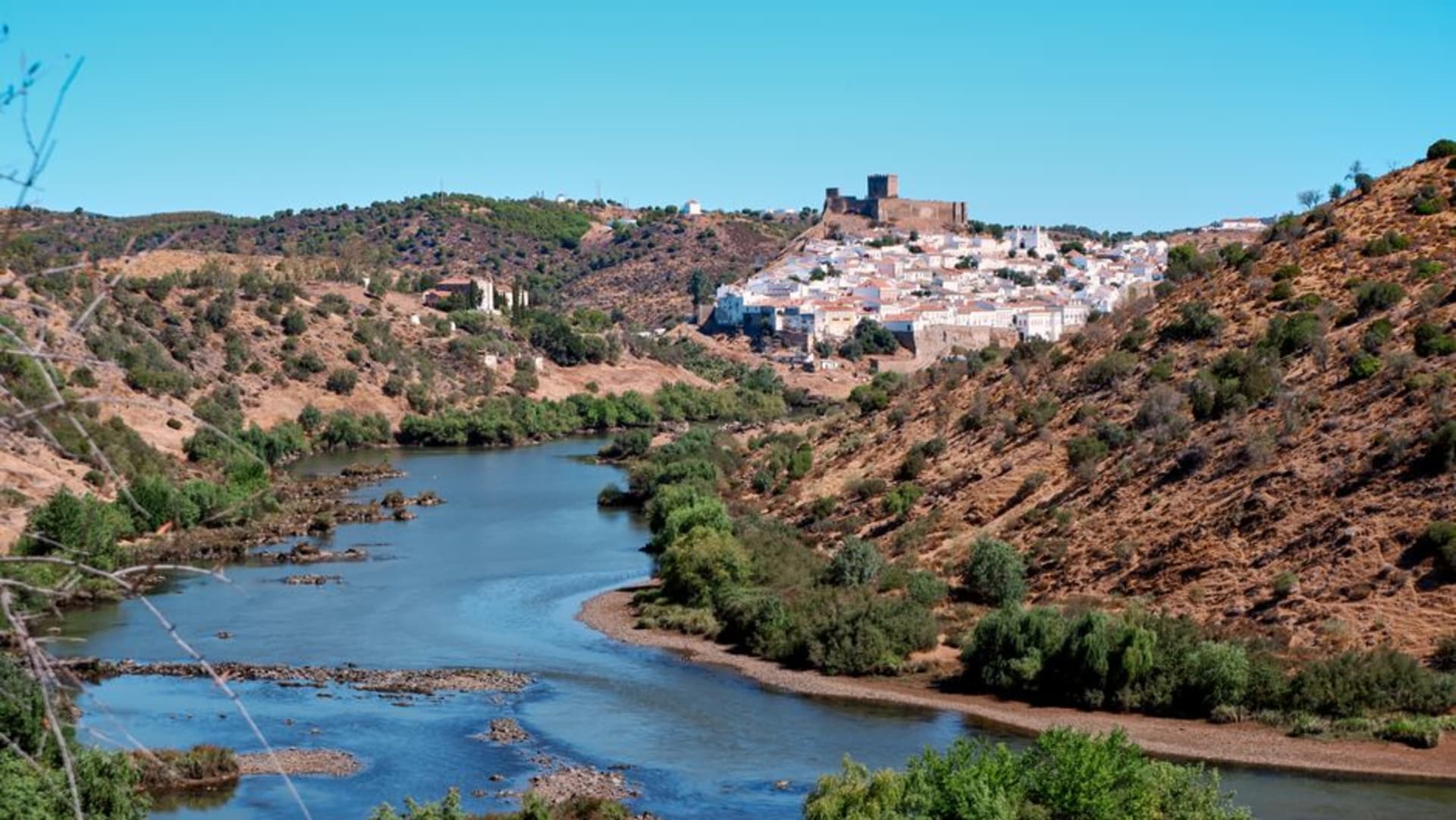
Mértola
"In Mértola you can put your hand on a Roman wall, an Islamic arch, and a Christian altar without taking three steps."
A riverside village stacked on a hill above the Guadiana, where a mosque became a church without anyone tearing the mihrab out, and three thousand years of layers show through in one afternoon's walk.

I arrived in Mértola by the river road, which is really the only sensible way, because the town reveals itself as a single dramatic gesture — whitewashed houses stacked up a rocky spur above the Guadiana, a castle crowning the top, boats that once carried copper ore and olive oil out to the Atlantic now just sitting quiet against the bank. It’s a small place, maybe two thousand people, but it wears its history the way other towns wear billboards: openly, everywhere you look. I parked below the walls and walked up through streets barely wide enough for the tuk-tuk that nearly clipped my elbow, and by the time I reached the top I’d passed Roman paving stones, Islamic-era house foundations, and a church that used to be something else entirely.
The Mosque That Kept Its Bones
That church is the Igreja Matriz, and it is, without exaggeration, one of the strangest and most moving buildings I’ve visited in Portugal. It was originally the main mosque of Islamic-era Mértola, built when this was a thriving river port under Moorish rule, and when the Christians retook the town in the thirteenth century they didn’t demolish it — they just consecrated it. The mihrab, the niche indicating the direction of Mecca, is still there behind the altar, along with the horseshoe arches and a forest of interior columns, and the effect of standing inside is less like visiting a monument and more like watching two centuries argue quietly with each other over your head.
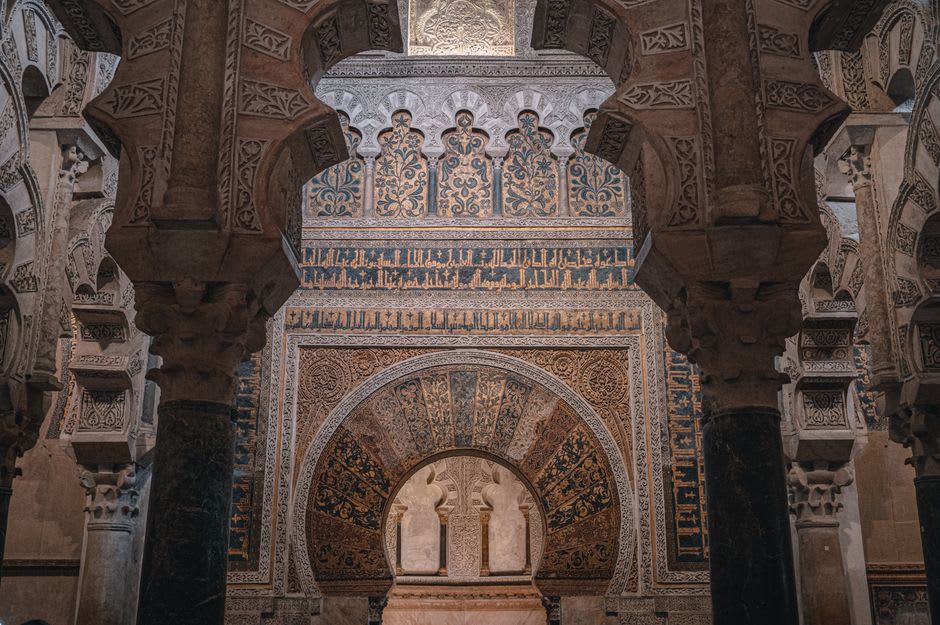
Mértola calls itself a “museum-village,” and it’s not marketing hyperbole — there are actual scattered site-museums across town, in old houses and former churches, showing off Roman mosaics, Islamic ceramics, and paleo-Christian basilica remains excavated right where they were found, each one small enough to see in fifteen minutes and specific enough that I kept stopping to reread the placards.
Storks, Silence, and the River
What I actually remember best, though, is the quiet. I sat by the river in the late afternoon with a coffee, watching storks work the thermals above the castle keep and a couple of local men fish without much apparent hope of catching anything, and it struck me that Mértola has managed something rare: it’s a genuinely significant historical site that has never bothered pretending to be a tourist attraction. Nobody was selling anything near that riverbank. Nobody needed to.
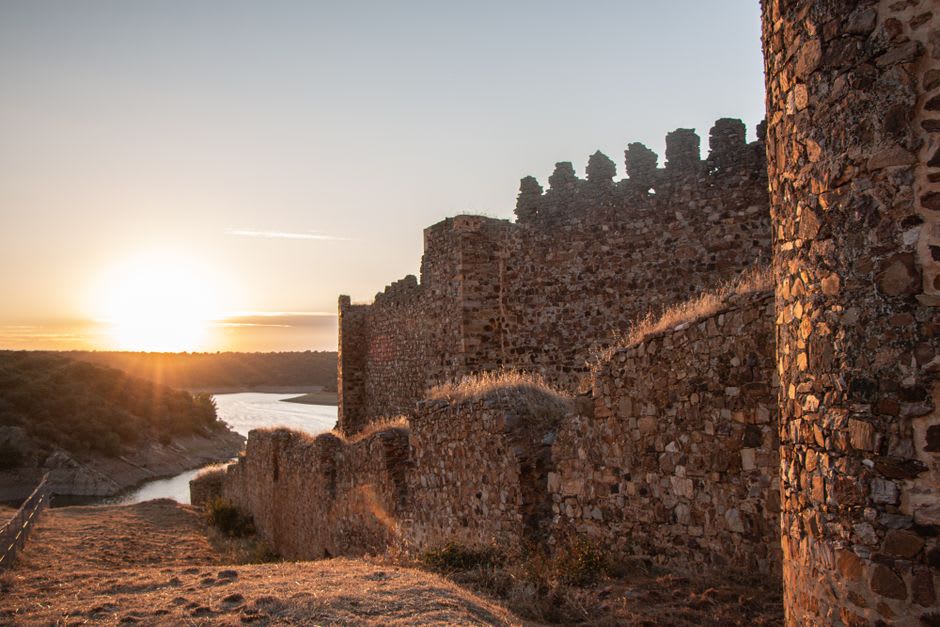
When to go: Come in spring or October, when the walk up to the castle in the midday sun won’t undo you, and check whether the Islamic Festival — held in even years, filling the streets with market stalls and music — lines up with your dates.
Keep exploring
More from Portugal
 portugal
 Miranda do Douro
A windswept plateau town above a canyon-cut river, holding onto its own language and a stick-dance nobody else in Portugal performs, as if it forgot to join the rest of the country.
Explore portugal
 Monção
The unofficial capital of Alvarinho wine country, where the vines grow high on pergolas above the vegetable patches and every terrace overlooks the Spain-facing Minho river.
Explore portugal
 Monchique
A misty mountain town above the Algarve's coastal heat, where thermal springs, handmade woodwork, and a fierce homemade firewater define a completely different pace of life.
Explore portugal
 Monsanto
A village built between and under enormous granite boulders on a hilltop in Beira Baixa, voted most Portuguese village in 1938.
Explore portugal
 Monsaraz
A whitewashed fortress village on an Alentejo ridge, looking down over Europe's largest artificial lake, where time seems to have simply stopped somewhere around the Middle Ages.
Explore portugal
 Montesinho
A wild border park of granite villages and communal ovens where wolves still roam and time seems to move at the pace of the shepherds who've always lived there.
Explore