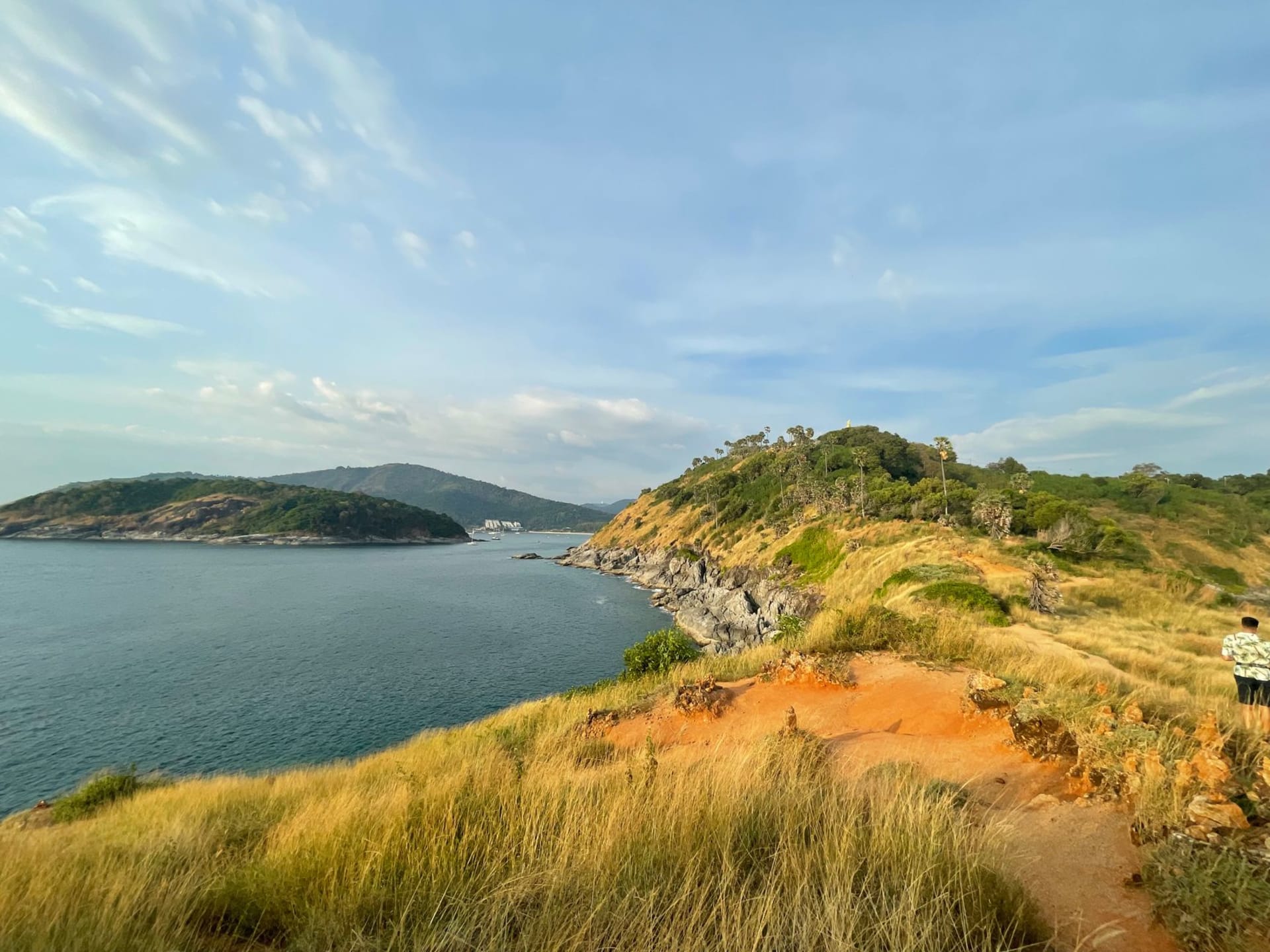
Nai Harn
"The monks own the land above the beach. That single fact is why Nai Harn is still worth visiting."
The story of Nai Harn is mostly a story about what didn’t happen. When the resort developers came south in the eighties and nineties, they found that the best land above the bay — the high ground that would have commanded the most dramatic views and commanded the highest prices — belonged to a Buddhist monastery. The monks were not selling. The result, decades later, is a beach that still feels like it belongs to the people using it rather than the companies who would have preferred to own the view.
I came down from the hillside road in the late morning, the bay appearing below me in one of those moments where the road curves and the whole thing is suddenly there: a wide horseshoe of pale sand, the water cycling through aquamarine and jade depending on depth, backed by trees rather than resorts. A freshwater lake sits just behind the beach, separated from the sea by a narrow strip of land, and on the lake’s shore the monks have built their compound — white walls, orange robes visible in the garden, the sound of chanting audible if you stand in the right place and the wind is cooperating.
The beach itself is wide and the sand is finer than at Kata, which is saying something. There are sun beds for hire from a modest operation near the centre of the bay, and a beach bar that sells fresh coconuts and cold beer and doesn’t try to be anything more than that. I spent an afternoon there reading and swimming and watching a family of Thai day-trippers from Phuket City who had set up a full picnic operation — a gas stove, a pot of something that smelled of galangal and lemongrass, folding chairs — and seemed to be having a significantly better time than anyone who had paid for a sun lounger.
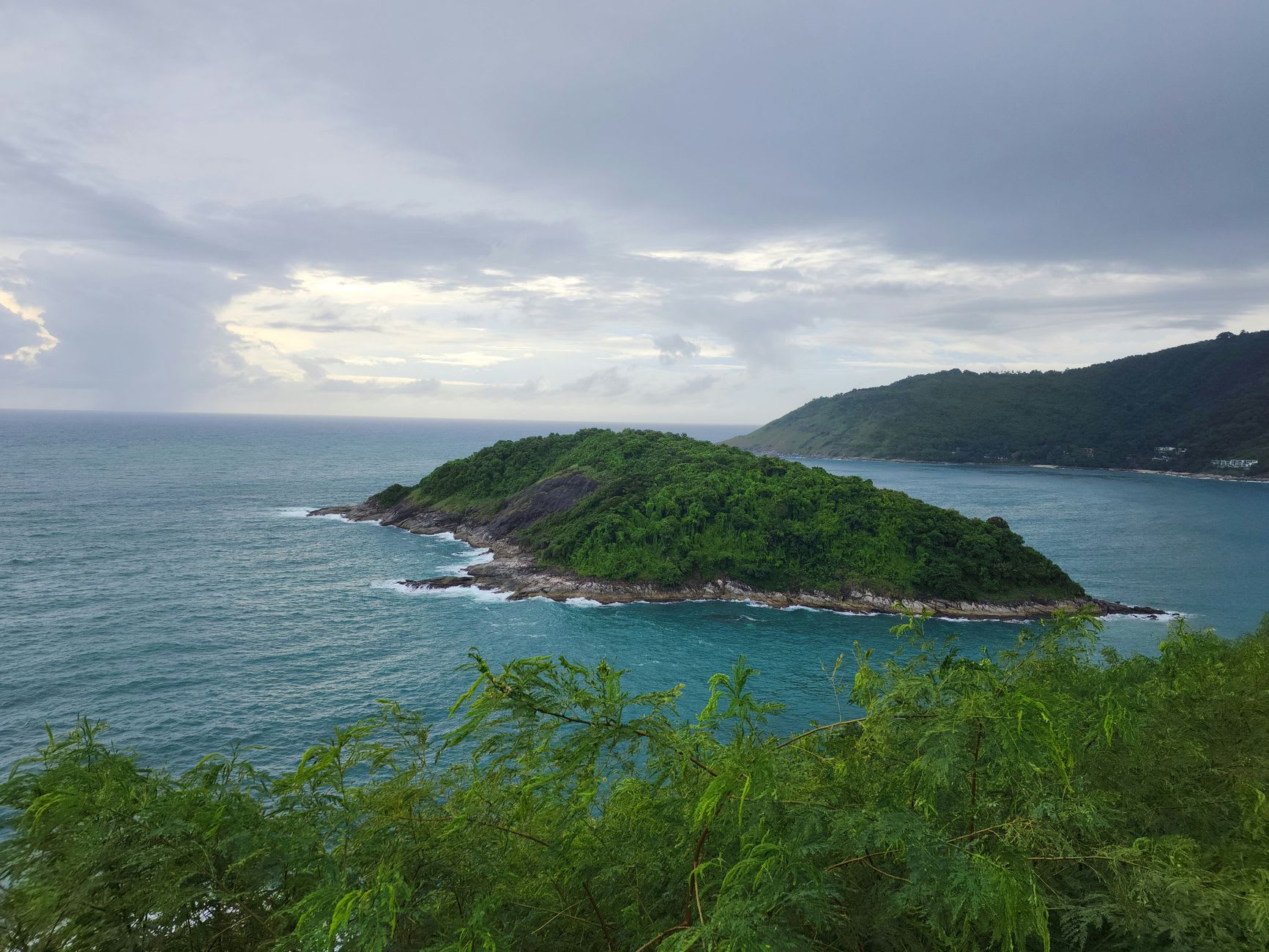
The southern headland, Laem Phromthep, is a short walk from the beach and gives views back across Nai Harn and south across the open Andaman toward a scatter of small islands. In the dry season the water below the headland is clear enough to snorkel, and there are coral formations in the rocks below the point that hold parrotfish and the occasional reef shark cruising the deeper water.

The village of Nai Harn, just inland from the beach on the road that loops back toward Rawai, has the best cheap food in southern Phuket. A morning market runs from six until nine that sells things designed for the local population: khao tom — rice congee with fish — fried Chinese doughnuts, bag curry over rice. The coffee shop that opened three years ago in an old shophouse is the only concession to the gentrifying forces that haven’t quite found their way here yet.
When to go: November to April for the calmest sea and clearest water. Nai Harn faces southwest and gets the full brunt of the monsoon swell between May and October — the beach itself is fine but swimming is inadvisable at the height of the wet season.