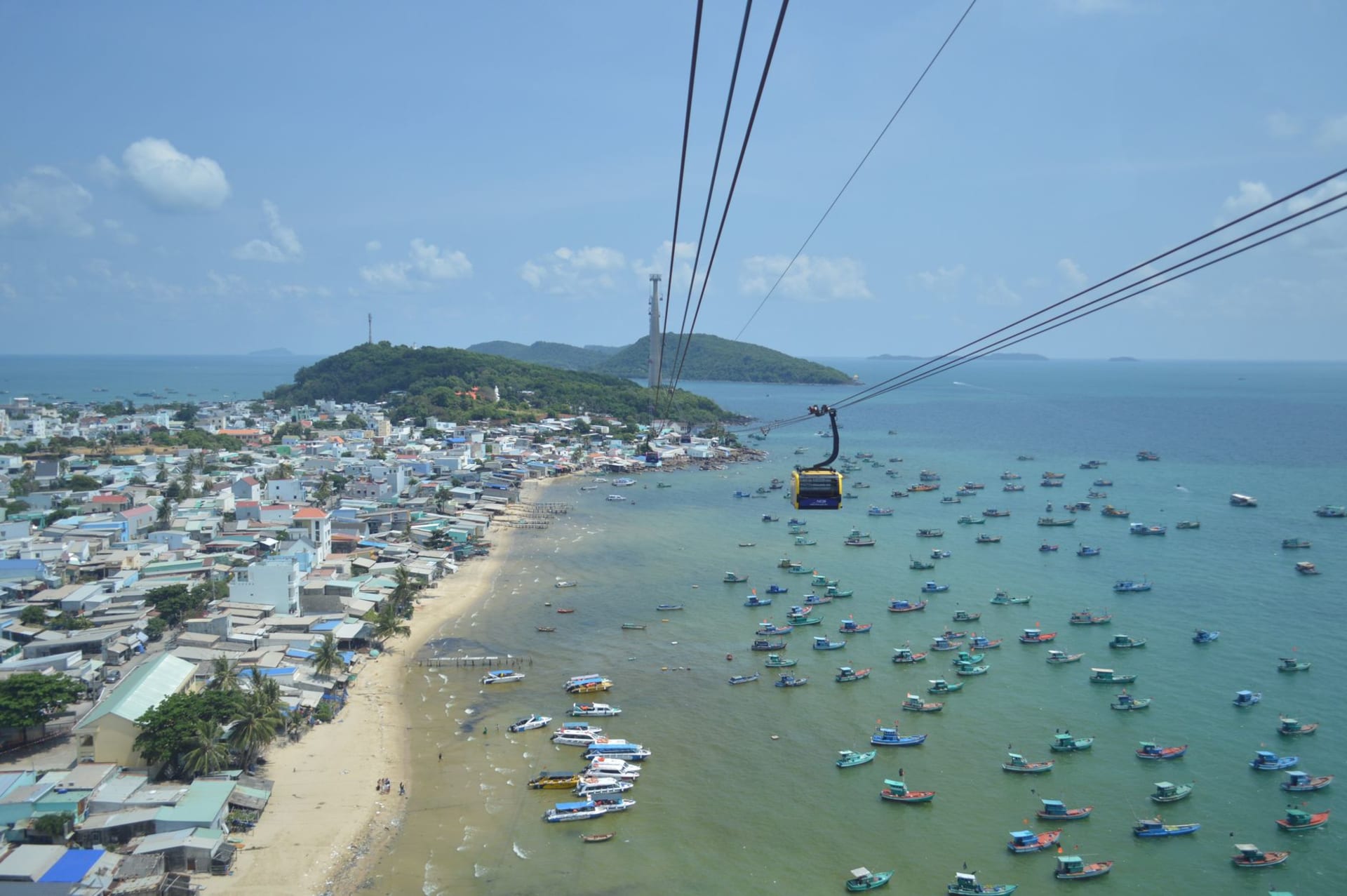
Ham Ninh Fishing Village
"The crab here is the kind of thing you think about years later when eating crab somewhere else."
The road to Ham Ninh on the east coast turns inland first, then cuts back toward the water, and the village appears below you — a cluster of stilt houses extending over the bay on wooden piles, the water beneath them the color of green tea in the morning light. I pulled the motorbike onto the shoulder and sat there a few minutes before descending. Some places announce themselves this way, asking for a moment before you enter.
Ham Ninh is one of the oldest settlements on Phú Quốc, a fishing community that predates the resort era by generations. The houses on stilts that extend into the bay have been here in some form for as long as anyone can tell you. The newer ones have tin roofs; the older ones, further out over the water, have planks worn smooth by decades of feet. A wooden walkway connects them, and in the mornings the women who live here hang nets and laundry on the same bamboo poles, and the distinction between the two isn’t always obvious.

The seafood restaurants at the end of the walkway are the reason most people come, and they are worth the reason. The specialty is cua rang me — crab fried with tamarind, garlic, and chili — served in aluminum trays with your legs dangling over the water and the occasional fishing boat nosing past beneath you. The crabs are small by global standards but extraordinarily sweet, and you eat them methodically, cracking shells with mallets on a board, getting messy, staying a long time. I shared a meal with a family from Ho Chi Minh City who had driven up from the south of the island specifically for this, and their youngest daughter methodically ate through more crab than everyone else at the table.
The village beyond the seafood walkway is quieter and less visited. The main settlement sits a few hundred meters back from the water, arranged along a dirt road, with a small Buddhist temple at one end and a market shed at the other that sells live seafood, vegetables, and the kind of supplies a fishing community actually needs. Children play in the road. Dogs sleep in patches of shade. Older men sit in the doorways of the shophouses drinking tea and watching the traffic — which is minimal — with practiced patience.

Ham Ninh faces east, which means the best light arrives in the morning and the afternoon can be harsh. Go early, eat crab at the floating restaurants when the sea breeze is still coming off the bay, then ride through the surrounding area on the small roads that loop through vegetable gardens and betel nut palms toward the forest edge. The east coast is the quieter, less developed half of the island, and Ham Ninh is its most alive community.
When to go: Ham Ninh’s east-facing bay is sheltered enough to visit year-round. The seafood is freshest in the morning when the boats come in. Come on a weekday to avoid the weekend crowds from Duong Dong. Dry season brings better road conditions on the coastal tracks south of the village.