Asia
Phú Quốc
"The island where the fish sauce is better than anything I've had on the mainland."
Phú Quốc doesn’t arrive gradually — you feel it the moment the plane descends over a carpet of jungle pressing to the edge of the water. I came expecting beach, which is what every article promises, and found something more interesting: an island that still has an interior. Inland, the roads narrow to tracks flanked by black pepper vines climbing wooden posts, their berries drying red in the sun. Phú Quốc pepper is not a marketing claim — it is a flavor, sharper and more aromatic than anything you find in supermarkets, and the farmers who grow it will hand you a fistful straight off the vine if you ask.
The south of the island still operates at a pace the resorts haven’t managed to absorb. In Dương Đông market, the stalls open before sunrise and the ice melts by eight. I ate cá trích cuốn — tiny herring grilled over charcoal, rolled with raw vegetables and a dipping sauce made from the local fish sauce — sitting on a plastic stool while women sorted the morning catch beside me. The island produces its own nước mắm, aged in wooden barrels along the wharf, and it has a depth that makes the bottled stuff sold everywhere else taste like it was invented by a different civilization. Buy a small bottle to take home. You will not regret it.
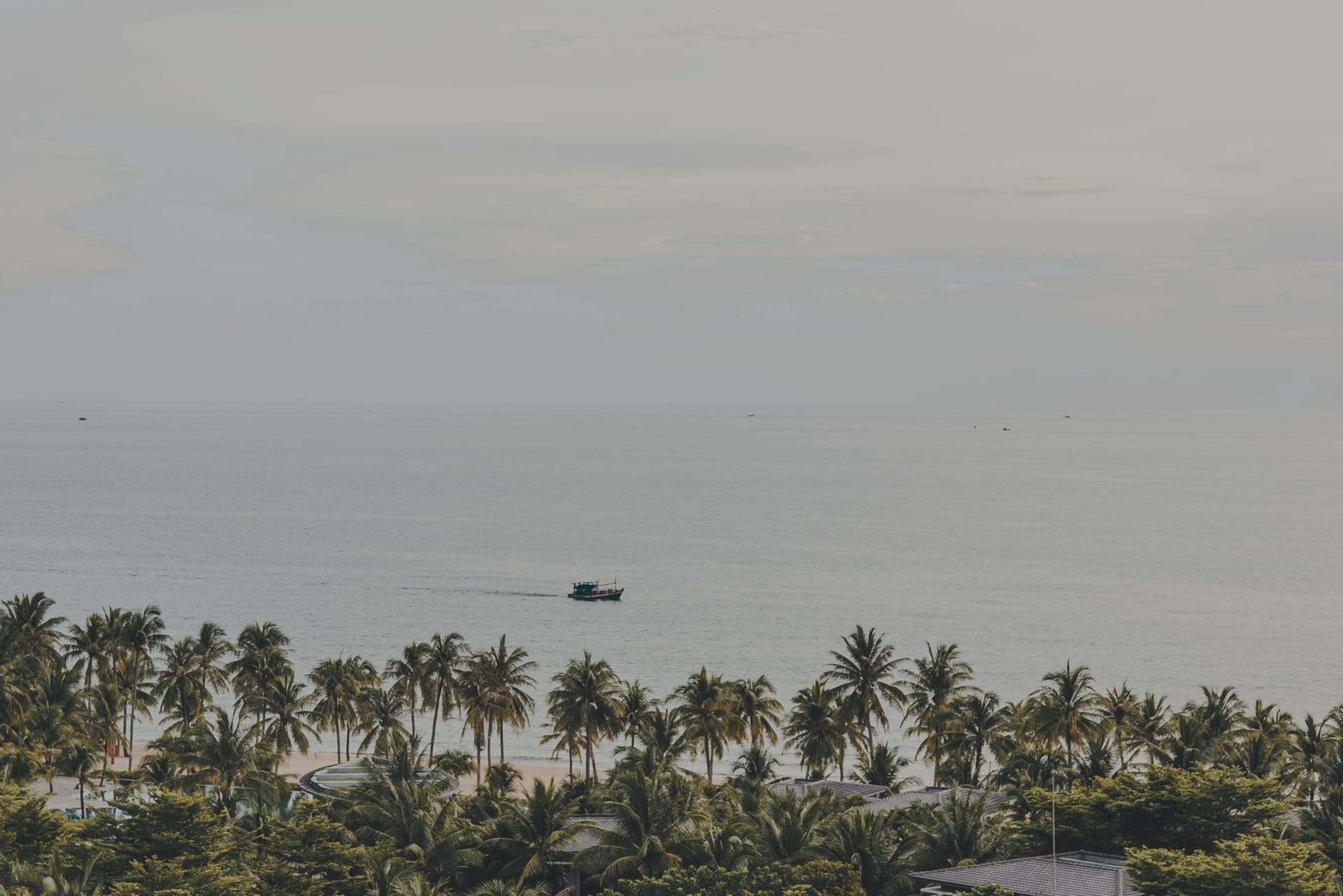
The beaches are real, and some are still quiet — Bãi Sao in the southeast, with its powdery white sand and water so clear you can see your feet at waist depth, draws families on weekends but empties out by late afternoon. Swim before noon, then disappear into the trees. The north of the island, around Vũng Bầu and Rạch Vẹm, is where the fishing communities live and the development thins to almost nothing. Drive up there on a rented motorbike at dusk, when the light goes flat and gold and the boats come back in, and Phú Quốc stops being a resort destination and becomes a place that exists for its own reasons.
When to go: November to April is the dry season — calm seas, low humidity, long beach days. May to October brings southwest monsoon rains and rougher water on the west coast, but the east coast beaches stay swimmable and prices drop significantly. Avoid late December through early January when the island is overrun with Russian package tourists and prices spike.
What most guides get wrong: They treat Phú Quốc as a beach holiday and skip the interior entirely. The pepper farms, the fish sauce distilleries, the night market in Dương Đông town — these are the things that make the island distinct from every other beach in Southeast Asia. Rent a motorbike on day one and go inland before you go to the beach.