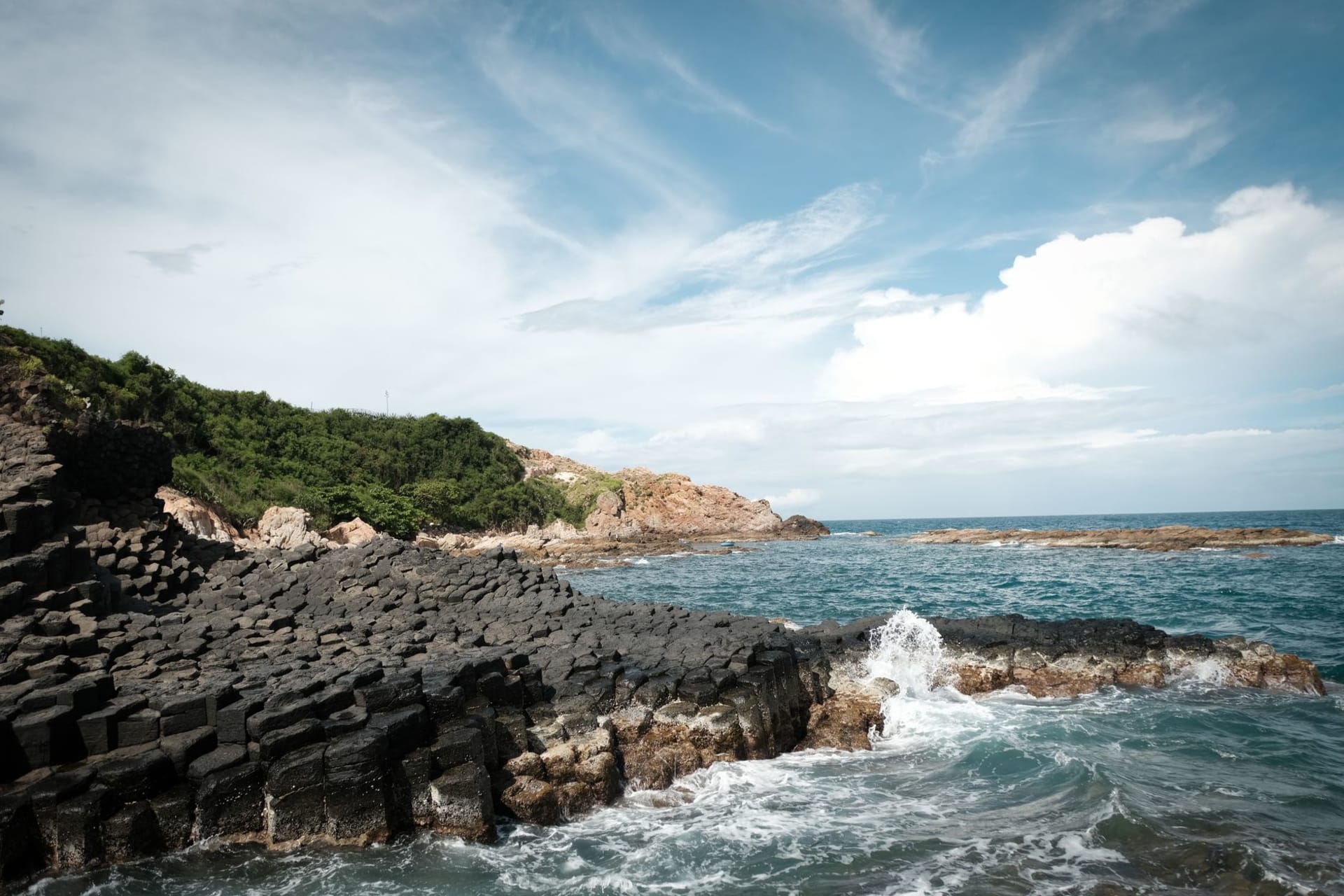
Ganh Dau
"You can see Cambodia from here — not metaphorically, just factually — and it reorients everything."
Ganh Dau is the northwestern tip of Phú Quốc, and getting there is most of the point. The road that runs up the west coast through the national park is one of the best on the island — narrow, shaded, cutting through the forest with occasional breaks where the sea appears below through the trees. By the time I reached the cape I’d been riding for forty minutes from Duong Dong and had passed perhaps three other vehicles.
The cape itself is low-lying, more promontory than cliff, with a small beach running east along the bay and a fishing settlement where the road ends. On the day I arrived, the visibility was good enough that I could see the Cambodian coast across the Gulf of Thailand — hazy but unmistakable, the silhouette of hills twenty kilometers away across the water. I hadn’t expected the geography to feel so immediate. The border runs through open sea, but from Ganh Dau you are closer to Cambodia than to the southern end of your own island.
The pepper farms intensify around Ganh Dau. The entire northwestern quarter of the island is pepper country — the Kampot-influenced soil that gives Phú Quốc pepper its reputation runs deepest here — and the farms line the road in both directions: low stone walls, wooden climbing posts, the vines trained in orderly rows, their berries at various stages of red and black depending on the season. I pulled over at a farm that had a hand-painted sign and a woman sitting in the shade sorting dried berries. She offered me a handful to taste. Fresh-dried Phú Quốc pepper is not what you get from the mill — it has a heat that builds slowly and a citrus note underneath that lingers.
The beach at Ganh Dau is a mix of sand and gravel, backed by casuarina trees, and it receives almost no development pressure because the road makes it difficult to get large tour buses in. On a Saturday afternoon I counted eight people on it, including the family from the fishing village who had spread a tarp in the shade and were eating lunch out of a pot they’d brought. The sea here is calm in the dry season — the cape’s orientation shelters it from the prevailing wind — and the water runs clear and relatively shallow over a sandy bottom.

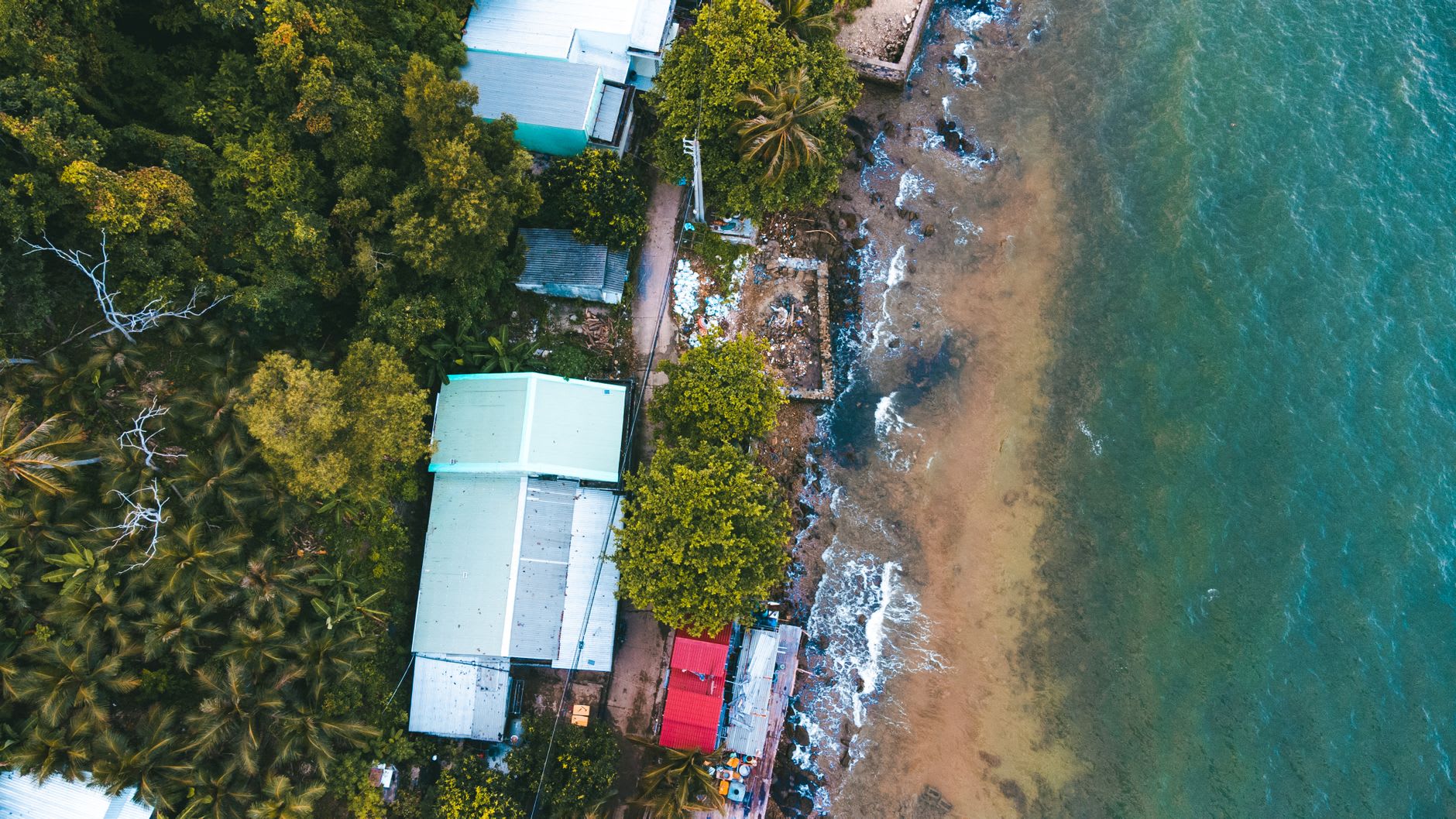
The fishing settlement at the road’s end is small — maybe twenty houses — with a pier where long-tail boats come and go and a single lean-to selling cold drinks and instant noodles to the fishermen. I sat there with a warm Bia Saigon watching a boat come in with the afternoon catch, and a man in a sun-bleached hat explained, through hand signals and a phone translation app, that his family had lived at this tip of the island for four generations. He seemed content about this in a way that was not performative.
When to go: Best accessed in the dry season, November through April, when the coastal road through the national park is reliable and the sea is calm enough to swim. Sunset from the cape is exceptional — the light hits the Cambodian coast across the water and turns everything the color of old bronze. Bring water; there are no restaurants north of the main Duong Dong road.