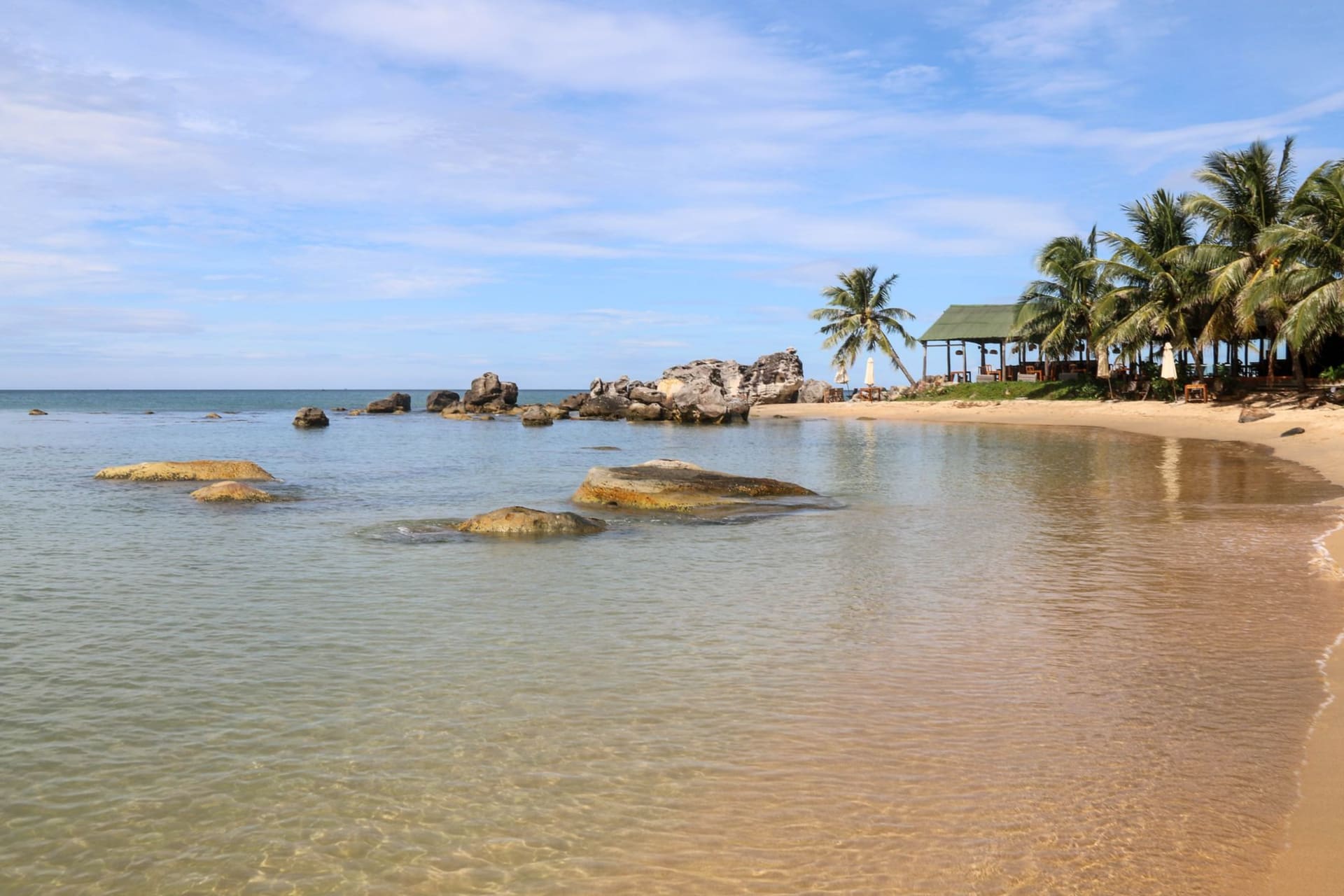
Bai Sao Beach
"By 4pm the vendors pack up and the whole thing becomes yours — which is when it makes sense."
The road to Bai Sao runs through the island’s southern interior, past pepper farms and stands of casuarina trees, and gives you no warning before it deposits you at one of the most quietly perfect beaches I’ve ever encountered. No build-up. No gradual reveal. You round a bend in the trees and there it is: the white so bright it makes your eyes water, the water so clear it seems not to have color so much as to borrow color from the sky above it.
I’ve been to beaches that looked like this in photographs and disappointed on arrival. Bai Sao didn’t. The sand is genuinely that fine — the texture of flour, the color of paper-white — and the water runs shallow for thirty meters before it deepens, which means you can wade out through what feels like liquid glass. The east-facing orientation keeps the morning swell gentle. I went in early, before the families arrived, and floated on my back looking at a sky with exactly one cloud in it.

By midday the beach has a few clusters of rented chairs and umbrellas, a couple of seafood shacks doing brisk business with the families who come down from the resorts. I ate grilled whole squid and a plate of ốc xào — stir-fried sea snails with lemongrass and chili — at a plastic table with my feet in the sand. The squid was fresh enough that it needed almost nothing to be good. The price, by the standards of anywhere I’ve eaten with this view, was absurd.
What nobody tells you about Bai Sao is that the crowd thins dramatically after 3pm. The tour buses have schedules to keep, the families pack up, and by four o’clock the vendors are folding their umbrellas and loading their motorbikes. The light at that hour goes amber and horizontal, hitting the water from a low angle, and the beach becomes a different place — quieter, more melancholy, more beautiful. I stayed until the last of the sun was gone and walked back through the dark on the dirt road, using my phone as a torch.

There’s a small cluster of seafood restaurants at the northern end where the road meets the beach, and these are worth knowing: the family-run ones set slightly back from the waterfront, operating out of what look like converted fishing sheds, serve the freshest food on the island at prices that haven’t yet caught up to the view. Order whatever came off the boat that morning and ask them to keep the preparation simple.
When to go: November through April gives you the calmest water and best visibility. The beach faces east so morning light is dramatic — arrive by 7am if you want the place to yourself before tour traffic begins. Avoid the peak Christmas-New Year window; even Bai Sao, normally quiet, gets crowded those weeks.