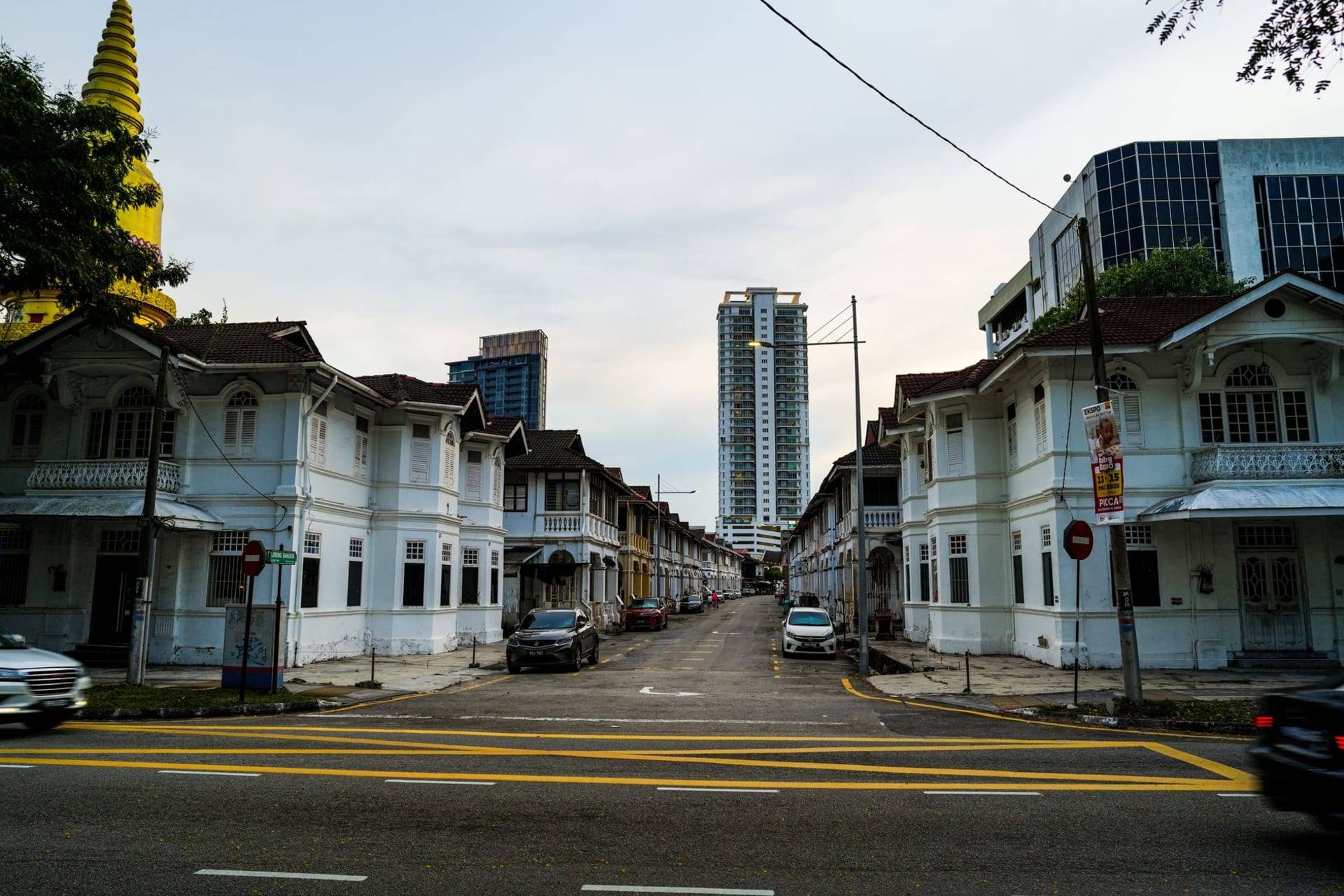
Little India Penang
"I walked into Little India for banana leaf rice and walked out three hours later having understood something I couldn't quite name."
The smell reaches you first — marigold and turmeric and the particular dry sweetness of fresh jasmine strung into garlands. I turned off Lebuh Pasar into Penang’s Tamil quarter on a Thursday morning during a minor festival I hadn’t known about, and the narrow street was already dense with people: flower vendors arranging their stalls in the pre-dawn dark, a priest in white cotton carrying an offering plate toward a temple whose entrance was buried in orange and yellow flowers, two men arguing over the price of something from inside a sari shop whose bolts of silk fabric caught the light in ways that made the whole scene look lit from within.
Little India in George Town is not a theme park of ethnicity. It is a working Tamil neighbourhood that has been here since the British brought Indian labourers and merchants to Penang in the late eighteenth century. The Chettiars — Tamil moneylenders from Nattukotai — set up their operations in the shophouses along Lebuh Pasar and Lebuh King, and the buildings still carry the faded evidence of that economy: old iron grilles, carved wooden doors, the occasional brass nameplate in Tamil script. Sri Mahamariamman Temple, the oldest Hindu temple in Penang, sits at the junction of Lebuh Queen and Lebuh Chulia, its gopuram tower bright with painted deities, its interior a cool contrast to the street heat outside.

The food here is the reason I kept returning. Banana leaf rice — a South Indian tradition that Penang’s Tamil community has made entirely its own — arrives as a large banana leaf on which white rice is placed, then surrounded by vegetable curries, a papadum, a piece of fried fish, and small portions of pickle and chutney. You eat with your right hand. The curries change daily and the ritual of eating from a leaf with your fingers is, once you surrender to it, one of the more sensory pleasures that food can offer. I ate at the same place on Lebuh Pasar three times in four days because the fish curry was different each time and always exactly right.
Thaipusam is the festival that transforms Little India into something that requires presence to understand. Held in January or February at the full moon of the Tamil month of Thai, it draws thousands of devotees to the Sri Mahamariamman Temple and involves a procession to the Nattukkottai Chettiar Temple on Jalan Utama — a journey of several kilometres undertaken by devotees carrying kavadi, elaborate metal frames often pierced through the skin of the bearer as an act of devotion. The sight is not comfortable. It is not meant to be. It is an expression of faith so physical and so total that watching it, even briefly, changes the terms of your understanding.
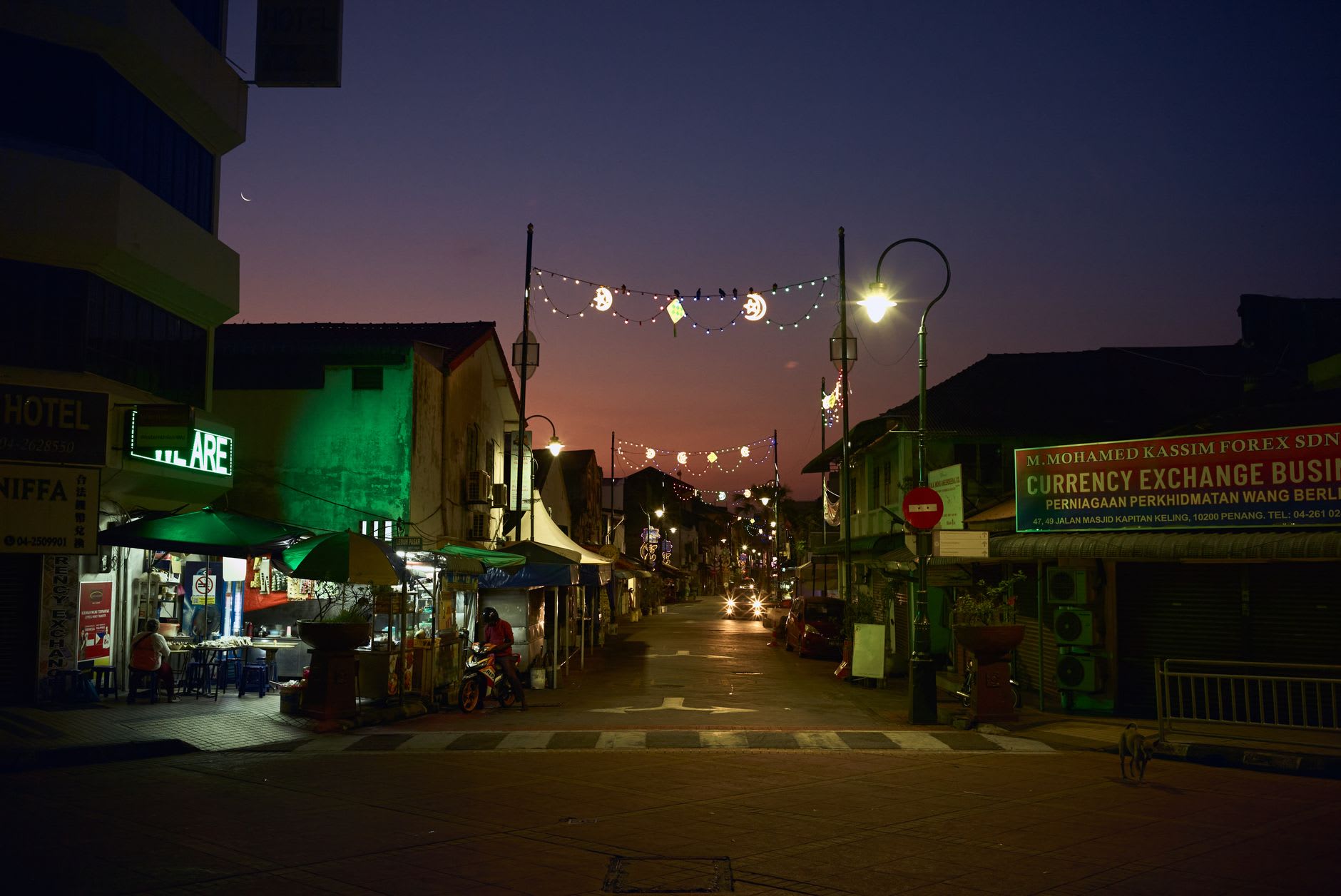
The flower market along Lebuh Pasar opens before the sun is properly up. By six in the morning the vendors are threading jasmine onto strings, assembling marigold chains, wrapping roses in cellophane for the morning offerings at the temple. The smell at that hour, in the grey light before heat arrives, is one of the better things I have encountered in a long time of travelling.
When to go: Thaipusam (January or February, date changes annually) is the most extraordinary time to visit, though Little India rewards any visit at any time of year. Morning is best for the flower market and banana leaf rice lunch. The neighbourhood is quieter on Sunday mornings.