Asia
Penang
"I came for two days, rebooked my flight, and stayed for two weeks."
I landed in Penang on a budget flight from Kuala Lumpur and walked out of the airport into air so thick with frangipani and diesel that it felt like a smell you could chew. By the time I reached the first coffee shop — a corner kedai kopi with ceiling fans, marble tables, and a uncle who’d been pulling shots of strong black kopi since before I was born — I understood that this was not a place you pass through. Penang demands to be taken seriously.
George Town is the heart of it, a UNESCO-listed colonial city where Armenian Street’s famous street art murals share a block with a Hokkien clan house that hasn’t changed since the 1890s. The heritage is real, not curated. Peranakan townhouses with their intricate tiles and carved wooden shutters sit alongside Tamil temples decked in garlands of marigold, next to a mosque whose call to prayer drifts over the whole scene without anyone looking up from their curry. This layered coexistence — Chinese, Malay, Indian, Peranakan — is not a brochure claim. It is the actual texture of daily life here, and you feel it most clearly at six in the morning in a hawker centre, surrounded by people who have been eating side by side for generations.
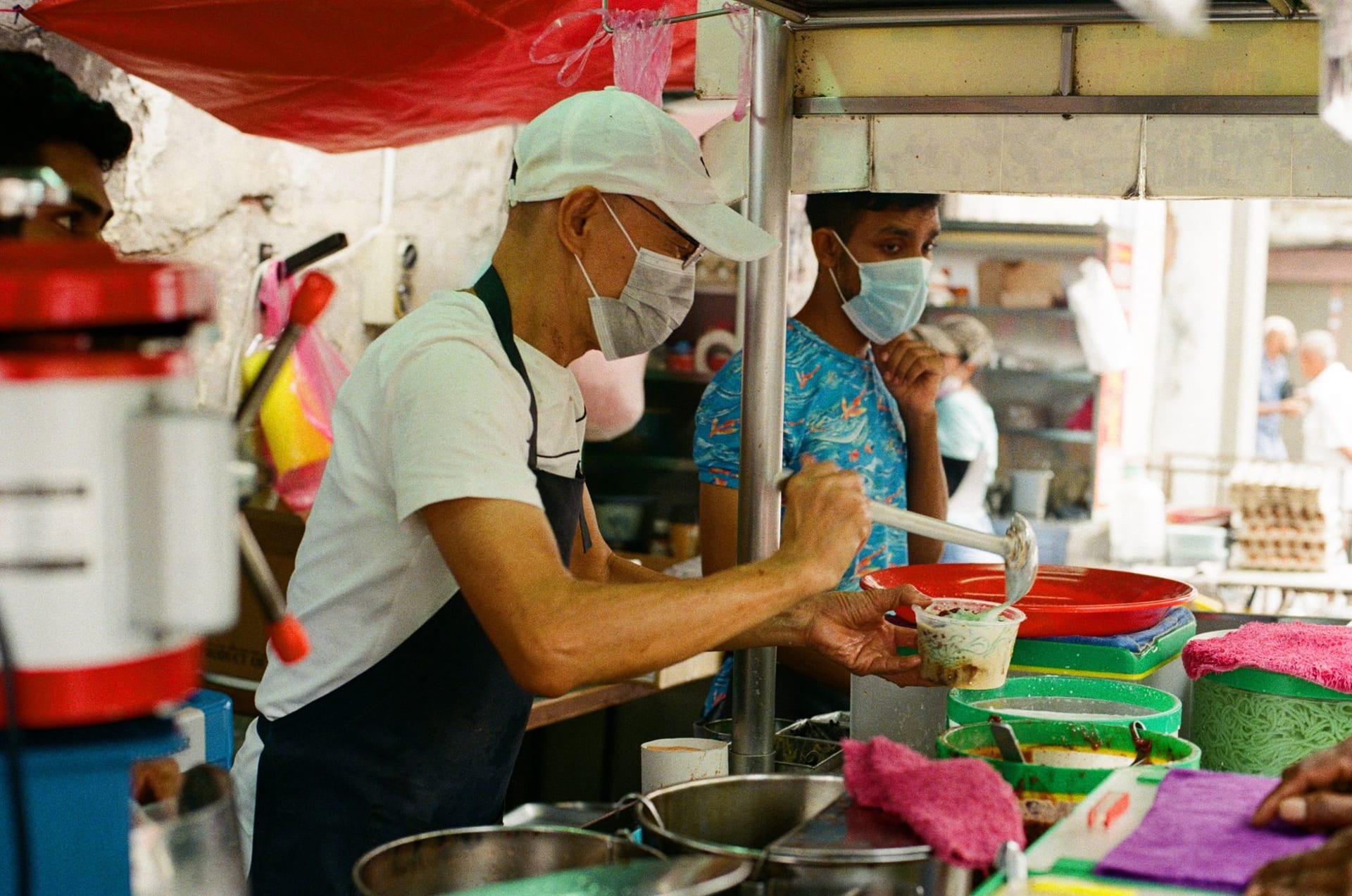
The food is the reason most people come and the reason they cannot leave. Char kway teow — flat rice noodles, cockles, Chinese sausage, egg, tossed in a wok so seasoned it has its own flavour — is the dish people make pilgrimages for, and the best versions are cooked by individuals who make nothing else. Assam laksa from Air Itam market is sour, funky, intensely fishy, and absolutely not what you expect when you order something called laksa. Cendol from the Penang Road stall — shaved ice, pandan jelly, red beans, coconut milk, gula melaka poured dark and caramelised over the top — is the only acceptable response to the afternoon heat. I kept a running list in my phone and crossed off dishes like I was settling a debt.
When to go: December through February is the coolest and driest period — still hot by most standards, but manageable for walking. The Hungry Ghost Festival in August and Chinese New Year in January or February bring the city alive in ways that are worth the extra humidity. Avoid the haze months of September and October if you want clear skies, though the food remains excellent regardless of weather.
What most guides get wrong: They frame Penang as a day trip from Kuala Lumpur or a single-night stop on the way north to Thailand. That is a waste. The logic of Penang — the way you start to recognise faces at your regular hawker stall, the way the city reveals its back streets slowly — only becomes apparent after three or four days. Book a guesthouse in George Town, ditch the itinerary after the first morning, and let the meals organise your days. That is the actual structure of a Penang trip.