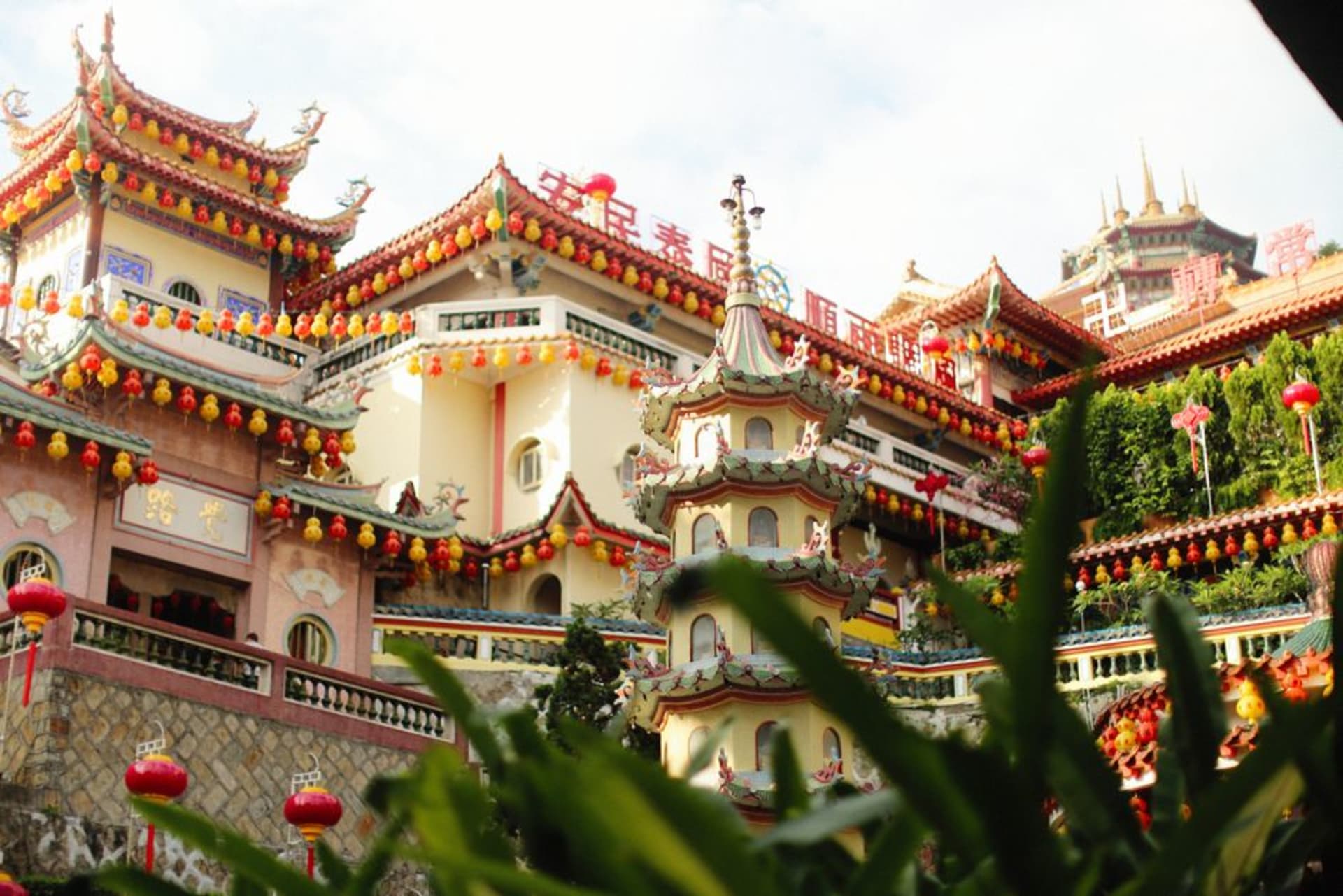
Kek Lok Si Temple
"We climbed before the tour buses did, and for twenty minutes the whole hillside was ours."
Malaysia's largest Buddhist temple complex climbs the hills above Air Itam, a seven-tier pagoda and a giant bronze Kuan Yin watching over Penang.
We got to Kek Lok Si at seven in the morning, which in Penang means the air is still soft and the souvenir stalls along the path up are just rolling open their metal shutters. Lia had read that this was the largest Buddhist temple complex in Malaysia, but nothing about the number prepares you for the climb itself — courtyard after courtyard, incense coils the size of dinner plates burning slowly overhead, monks in orange robes sweeping the same stone steps that pilgrims have been climbing since Beow Lean, a Chinese Buddhist monk, broke ground here in 1890. I remember stopping halfway up just to catch my breath and realizing the whole hillside above Air Itam was terraced with shrines.
The pagoda is what pulls your eye first, and it’s a strange, wonderful mongrel of a building — a Chinese octagonal base giving way to a Thai middle section, capped by a Burmese crown, finished in 1930 with money that partly came from Thailand’s King Rama VI. I’d read about this hybrid design before we went, but standing at its foot craning my neck up through all seven tiers, I understood it less as a compromise and more as a kind of hospitality, three Buddhist traditions sharing one roofline.
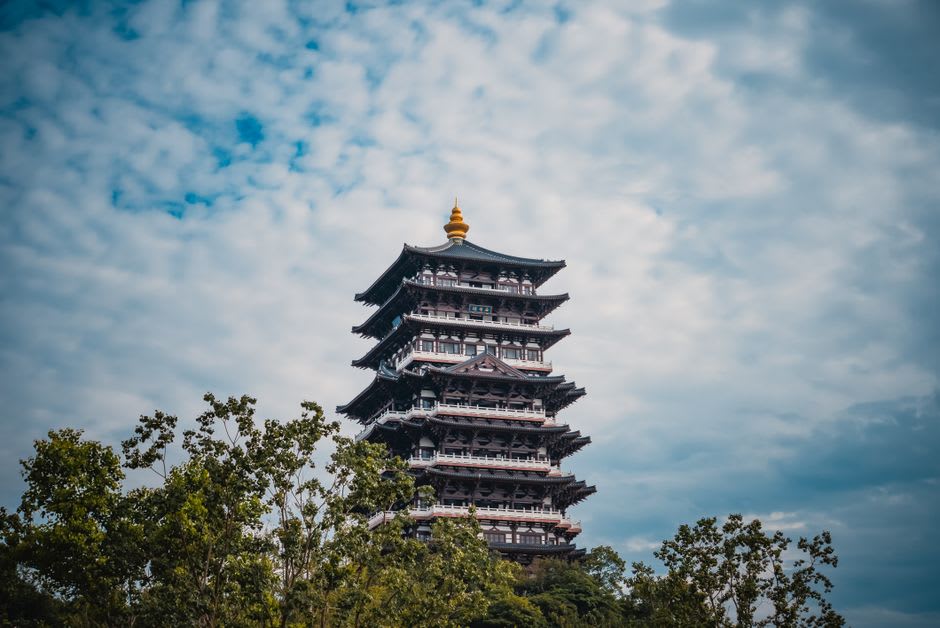
We took the funicular up to the top tier, mostly because Lia’s knees had had enough of stairs by then, and that’s where the 30-meter bronze Kuan Yin waits under her own vast pavilion, added in 2002. She’s visible from half of Air Itam below, and up close she’s almost too big to photograph properly — I gave up trying and just stood there for a while. An older woman next to us was lighting incense and murmuring to the statue like it was a conversation, and I felt oddly like an intruder in the best possible way, a reminder that this is still very much a working pilgrimage site and not a museum piece.
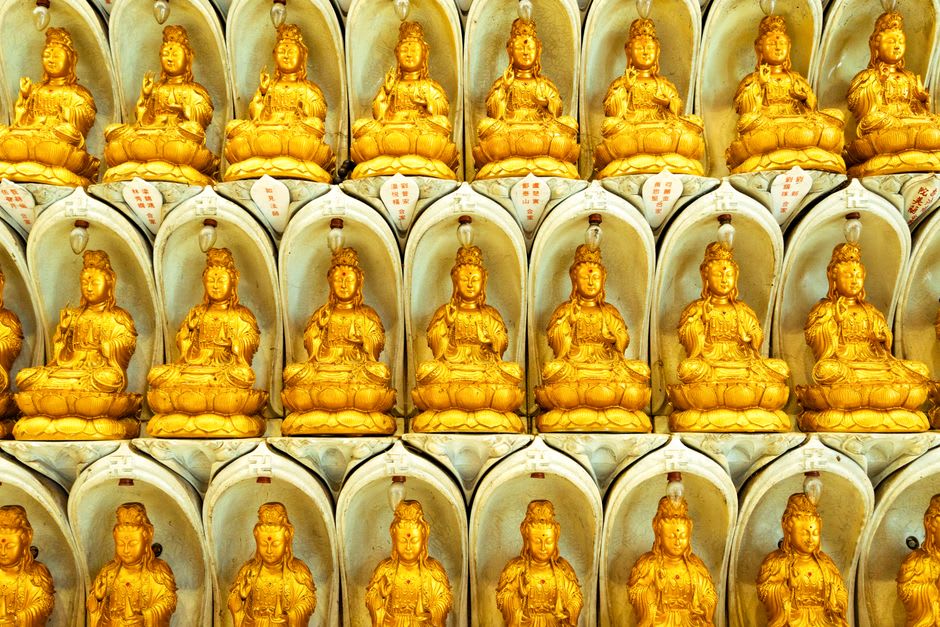
By the time we walked back down, the stalls were in full swing and the heat had arrived with the crowds, so we ducked into one for iced sugarcane juice and let the morning’s quiet sink in before the day got loud again.
When to go: We’re glad we came early, before the heat and the crowds caught up with us — though if you can time a trip around Chinese New Year, apparently the whole complex gets strung with lights and turns into something else entirely, which is now on our list for next time.