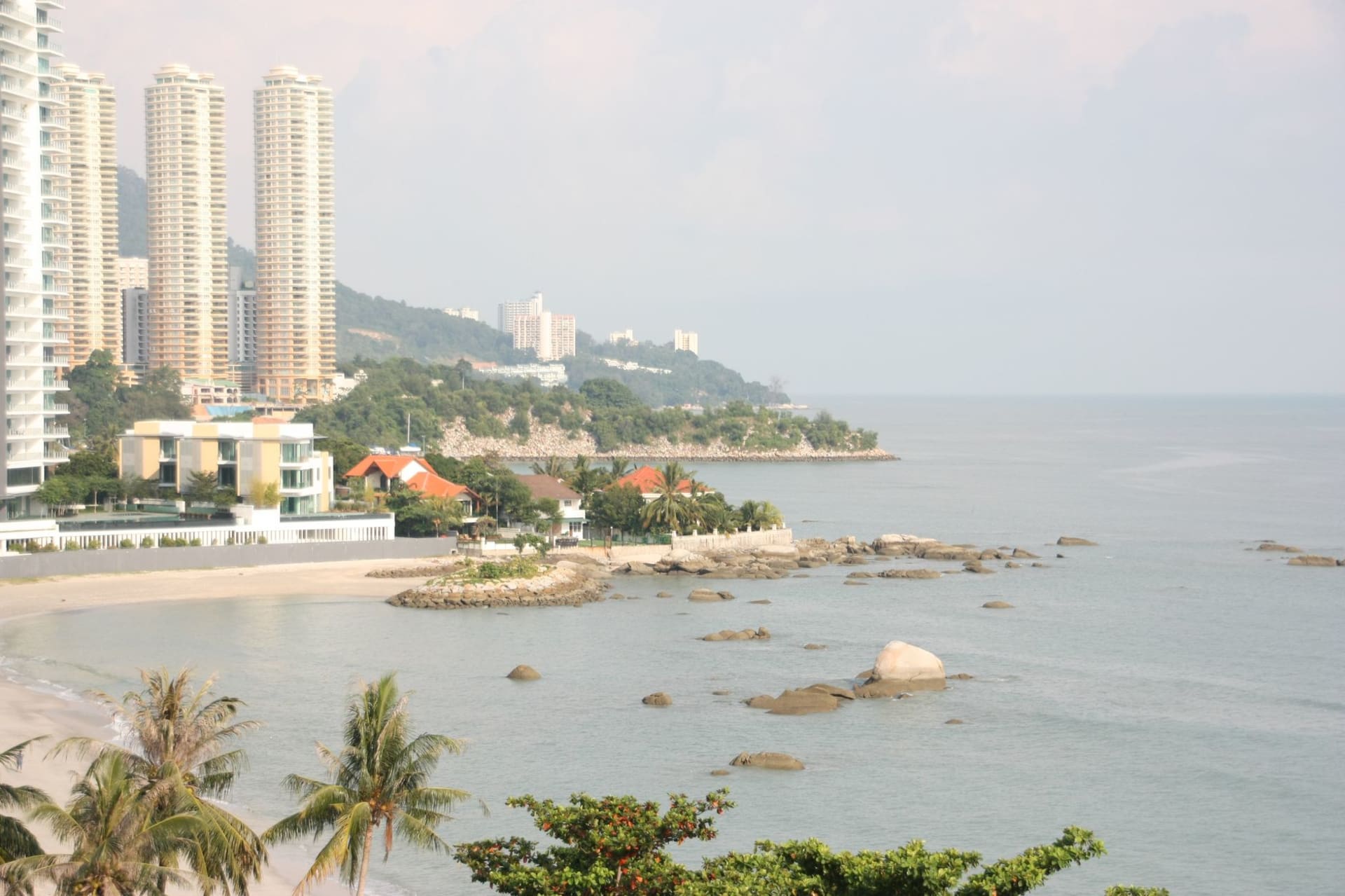
Gurney Drive
"Gurney Drive at dusk is what it feels like when a city decides to eat in the same place all at once."
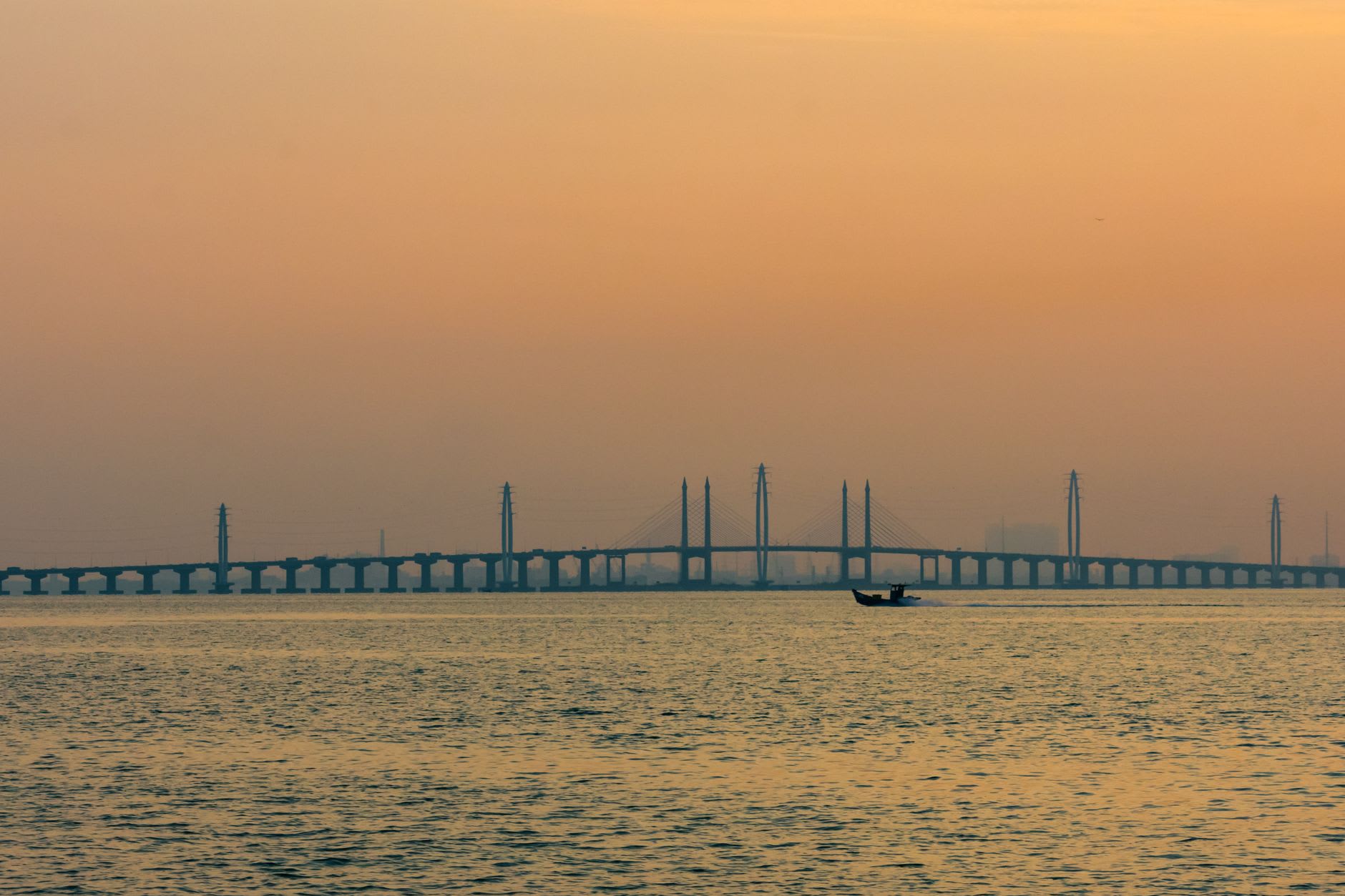
By six o’clock the light over the Straits of Malacca was doing what it does every evening in Penang — turning everything from gold to orange to a bruised, saturated copper that makes even the container ships anchored in the roads look picturesque. I was walking along the Gurney Drive promenade with a plastic bag of cendol sweating in my hand, and around me the evening ritual of the city was assembling itself: families pulling chairs up to tables at the hawker centre, old men cycling slowly past, couples taking the sort of photographs that will mean nothing to anyone except the people in them. This is the Gurney Drive evening, and it runs every day of the year.
Gurney Drive is Penang’s most famous hawker strip, and the Gurney Drive Hawker Centre — relocated to its present spot on reclaimed land several decades ago — is the place where the island’s entire culinary argument can be had in a single sitting. The char kway teow here is the standard against which people measure the char kway teow everywhere else. The oyster omelette is crispy and savoury and arrives in a pan still spitting. The laksa is lighter than the Air Itam version, adapted over generations for the seafront location and the evening breeze. The penang prawn mee — yellow noodles in a rich prawn and pork rib broth with half an egg and a scattering of kangkung — is the thing I ordered three evenings in a row before I accepted that I was going to keep ordering it until I left.
The promenade itself is where Penang walks. Along the water, a path stretches for several kilometres past the old bungalows and colonial clubs that predate the reclaimed land, past the high-rise condominiums that replaced them, past the occasional park bench where an old man sits with the patience of someone who has been watching the strait change for fifty years and expects to watch it change for fifty more. I fell into a rhythm of walking the promenade in the early evening — before the hawker crowds peaked, after the worst of the daytime heat — and found it one of the more calming things I did in Penang.
The sea view from Gurney Drive is technically obscured — the reclaimed land that pushed the shoreline further out now hosts the hawker centre itself, and you have to walk to the water’s edge to see the strait properly. But at certain hours, when the tide is right and the haze minimal, you can stand at the end of the promenade and see the Butterworth cranes on the mainland shore opposite, the tankers swinging at anchor, and the occasional car ferry making its short crossing. The strait never looks romantic from this angle, exactly. It looks functional, industrious, quietly purposeful, which is perhaps a more honest way for a working waterway to present itself.

Gurney Drive is also where Penang shops — the Gurney Plaza and Gurney Paragon malls anchor the landward end of the strip, air-conditioned monuments to the city’s other appetite. I avoided them almost entirely, but found the contrast useful: you can eat your prawn mee for a few ringgit and watch the mall’s glass facade reflect the same sunset that’s hitting the water, and the juxtaposition says something true about what Penang has become.
When to go: Arrive at the hawker centre between 6pm and 7pm for the best variety before the stalls sell out of their signature dishes. The promenade is pleasant in the early morning for jogging and dog-walking before the heat builds. Weekend evenings are the most atmospheric but also the most crowded.