Air Itam
"The laksa at Air Itam market is the most confrontational bowl of soup I have ever loved unconditionally."
The Grab driver dropped me at the Air Itam market before eight in the morning and I smelled the laksa before I saw it. It is not a welcoming smell if you don’t know what you’re walking into — sour tamarind, fermented shrimp paste, mackerel broken down into something almost unrecognisable, a funkiness that sits somewhere between the sea and something much older than the sea. I followed it to a stall run by a woman in her fifties who had been making this bowl since she was a teenager. She handed it over without eye contact. I carried it to a plastic table, sat down, and ate slowly, trying to understand what I was tasting.
Assam laksa is Penang’s most particular dish. It is not the coconut-milk laksa of the south — this version is sour, tamarind-sharp, with a broth built on mackerel bones and blachan, a paste of dried shrimp that smells alarming and tastes essential. The noodles are thick rice flour rounds. On top: shredded fish, sliced cucumber, pineapple, onion, mint, and a dark prawn paste called hae ko that you stir in at the end to deepen everything. The Air Itam market stall is the version people argue about in the way that people elsewhere argue about wine. I had it twice before I left.

From the market, the road winds uphill to Kek Lok Si — the Temple of Supreme Bliss, the largest Buddhist temple complex in Malaysia and one of the largest in Southeast Asia. It is genuinely overwhelming in scale. The complex climbs the slope in tiers: a seven-storey pagoda blending Chinese, Thai, and Burmese architectural styles; a colossal bronze statue of Guan Yin, the goddess of mercy, rising thirty metres above a hilltop pavilion; prayer halls thick with incense and stacked with offerings. On festival days the whole complex is lit with thousands of lanterns and the effect is something between a carnival and a vision.
I arrived on a quiet Tuesday morning when the tour buses had not yet come. Two monks in saffron were sweeping the lower courtyard. An old woman was feeding turtles in a pond near the entrance — the turtle liberation pond, where merit is earned by releasing creatures back to freedom, and the turtles have figured out that freedom includes being fed by pilgrims indefinitely. I climbed to the pagoda’s upper floors through a warren of souvenir stalls selling jade Buddhas and joss sticks and refrigerator magnets of Kek Lok Si, all of which I understood as part of the same ecosystem: the temple sustains itself by being visited.

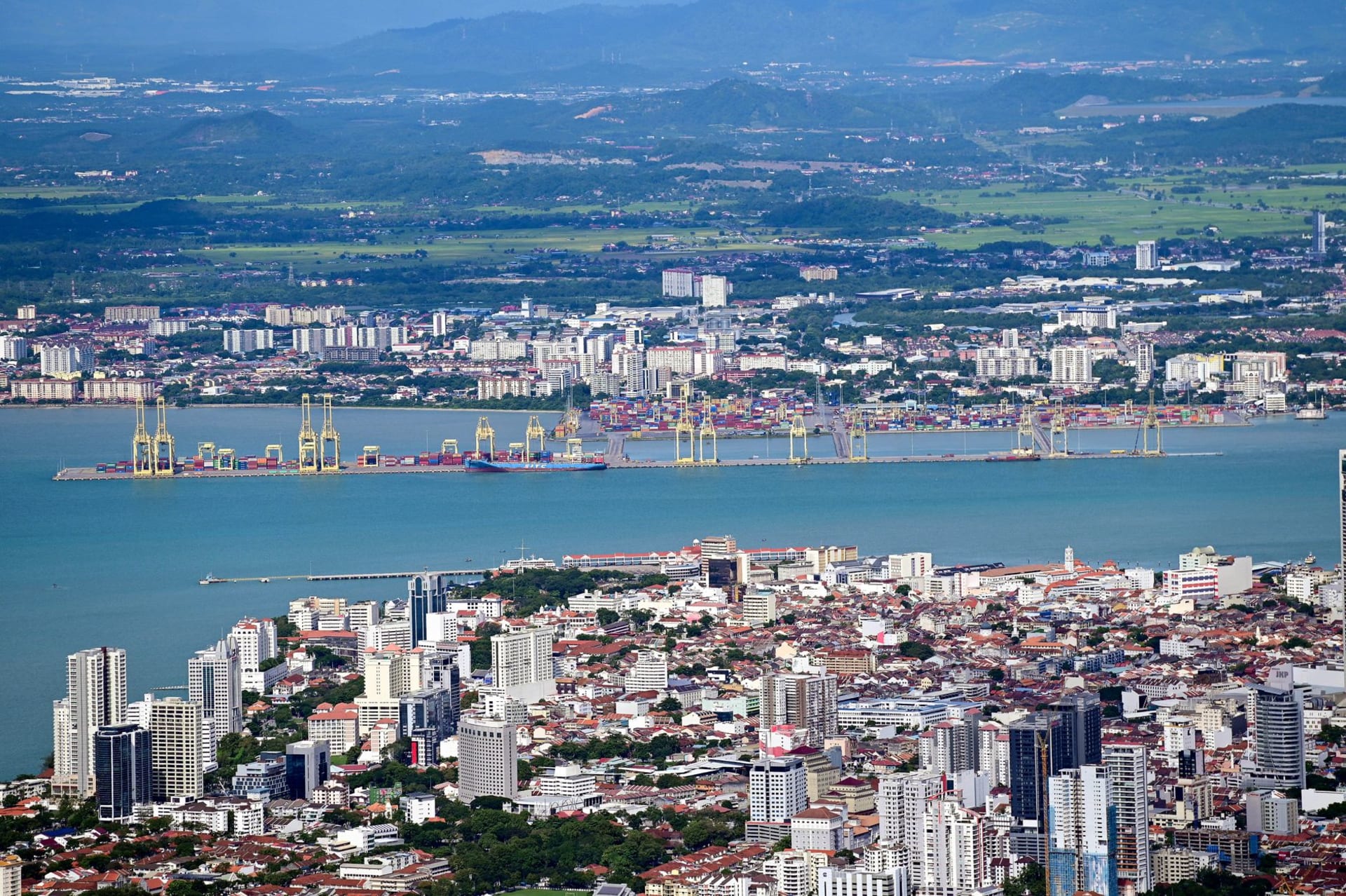
The view from the Guan Yin pavilion takes in most of the island — George Town in the distance, the Penang Bridge arcing toward the mainland, the container ships anchored in the straits — and it is one of those views that reorganises a place inside you. You understand from up here that Penang is an island, which sounds obvious until you see the water surrounding it from somewhere high enough to take in both sides at once.
When to go: Early morning is essential at Air Itam market — the best laksa stalls sell out by nine or ten. Kek Lok Si is most spectacular during Thaipusam (January/February) and the Chinese New Year lantern lighting, when the complex glows for thirty nights straight. Avoid weekend afternoons when tour groups arrive in volume.