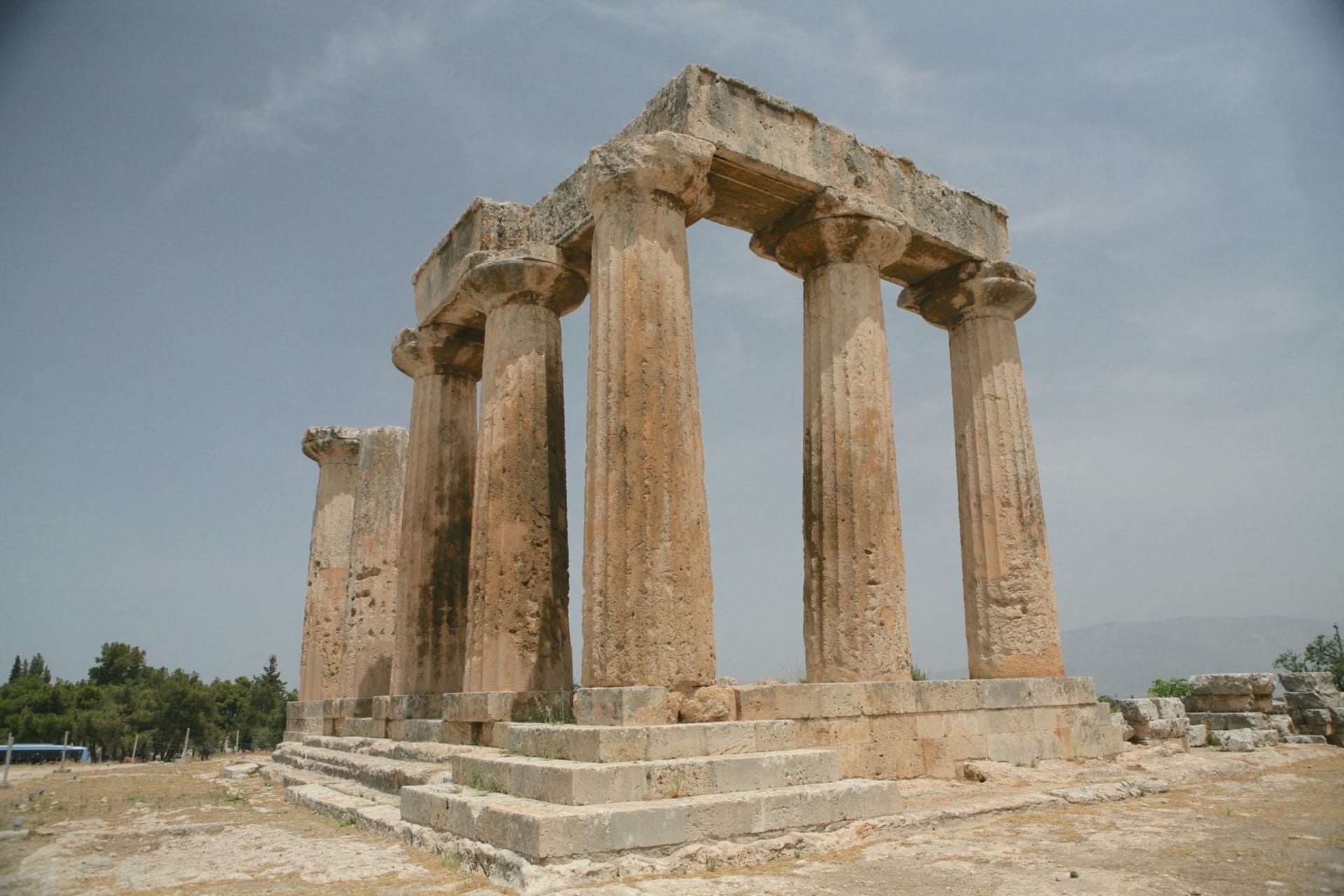
Mycenae
"Standing at the Lion Gate, I understood why the Greeks needed myths to explain who built this — no ordinary men did."
The Lion Gate hit me before I was ready for it. I’d rounded a bend in the path and there it was — the lintel stone alone weighing something like twenty tonnes, the carved lions above staring outward with the calm authority of creatures that have been watching this road for thirty-five centuries. The scale of Bronze Age architecture at Mycenae is not something you can prepare for intellectually. The walls are built from stones so enormous — some the size of small cars — that the ancient Greeks called this style Cyclopean, because only giants or gods could have moved them. Standing inside the Lion Gate on a morning in late April, with the hills of the Argolid falling away in all directions and a hawk turning slow circles above the citadel, I felt a particular kind of smallness that has nothing to do with architecture. It has to do with time.
The site unfolds on a rocky hill above a fertile plain — the same plain that Homer’s Agamemnon would have looked out over, planning his expedition to Troy. Whether you believe in the literal truth of the epics or not, something genuinely catastrophic happened here around 1200 BCE: the palaces were burned, the administrative system collapsed, the writing system was forgotten. Walking through the ruins of the palace complex — the great court, the throne room floor still showing traces of painted plaster — I kept thinking about how completely a civilization can vanish, and how thin the evidence of its existence becomes after three thousand years.

Down the hill from the main gate, the Treasury of Atreus is a different order of experience entirely. This beehive tomb — actually a tholos, a corbelled stone dome built into a hillside — is reached through a narrow entrance corridor lined with dressed stone. Inside, the dome rises to a height of thirteen metres, perfectly circular, perfectly silent. The acoustics do something strange in there: your own breathing comes back at you slightly altered. The stone smells of mineral cold and age. No one was in the tomb when I entered, and I stood in the centre of the dome for several minutes doing nothing but listening to the silence, which was not quite silence.
The small museum at the site entrance is better than its reputation suggests. The gold death masks found by Schliemann in the shaft graves — the originals are in Athens, but the replicas here are exact — have a strange beauty that’s entirely non-decorative. These were made for the dead. The weight of that intention comes through even in reproduction.

The modern village of Mykines below the archaeological site has a handful of tavernas that do a brisk trade in visitors who’ve worked up an appetite climbing the ruins. I ate a plate of fasolada — a white bean soup thickened with good olive oil — at a table under a mulberry tree, the shadow of the citadel hill visible above the roofline. It was one of those meals that tasted better for where I was eating it.
When to go: Early morning arrivals are essential — the site opens at eight and the first hour before the tour buses from Athens arrive is genuinely transformative. Late April to early June is the sweet spot: the wildflowers are extraordinary on the surrounding hills and the heat hasn’t yet made the exposed ruins punishing. Avoid midday in July and August unless you’re determined to suffer.