Europe
Peloponnese
"Every turn on this peninsula uncovers a civilization someone forgot to mention."
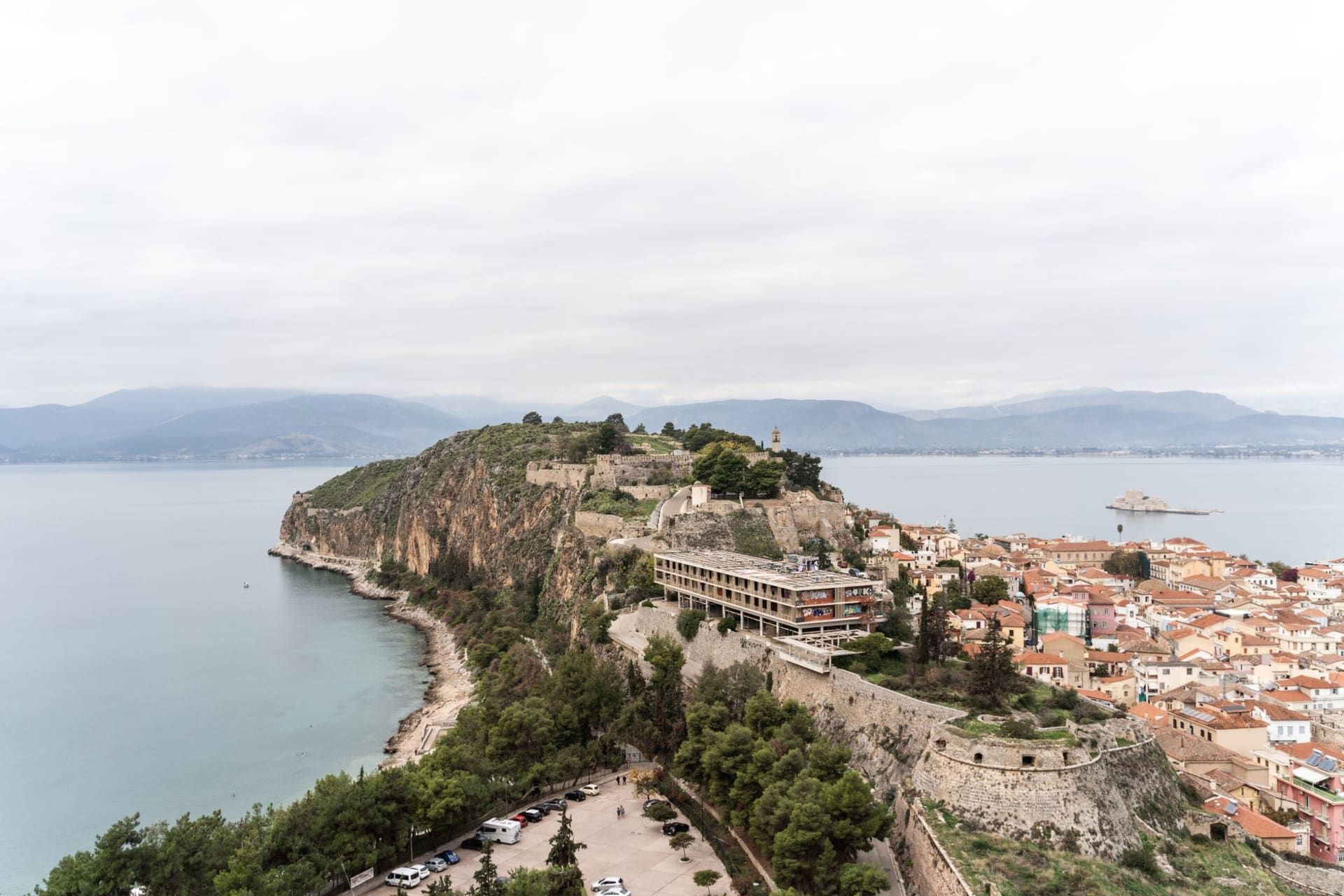
I arrived in Nafplio on an overnight bus from Athens and stepped out into a port town so quietly beautiful it felt almost unfair — like the Peloponnese had been holding out on me. The Acronauplia fortress stacked above the old town, Venetian mansions lining the waterfront, cats sleeping on Ottoman fountains. I’d come to see Mycenae and Epidaurus, the ruins everyone mentions. But the peninsula kept pulling me elsewhere: to the deserted Byzantine city of Mystras clinging to a Spartan hillside, to the Mani’s tower houses and lunar coastline, to an olive oil cooperative outside Kalamata where a man named Giorgos let me taste oil pressed that morning, greenish-gold and peppery at the back of the throat.
The Peloponnese is four or five distinct Greeces stacked on top of each other. In a single day you can walk through the Lion Gate at Mycenae — where the stones are so massive you wonder whether the myths about giants were really myths — eat grilled octopus at a harbor table in Tolo by lunch, then drive south through the mountains and end up in the deep Mani watching the sun drop into the Ionian. The food is relentlessly good and almost entirely local: Kalamata olives eaten where they actually grow, fresh feta layered into a horiatiki that tastes nothing like what you’ve had before, slow-roasted lamb in the mountain villages. In Sparta — yes, Sparta, which is now a completely ordinary Greek town full of orange trees — I ate the best honey I’ve ever tasted from a plastic tub in a minimarket, next to a shelf of lottery tickets.
What I wasn’t prepared for was how empty most of it felt. Not empty as in disappointing — empty as in you actually have space to think. At Epidaurus I sat in the ancient theatre at dusk after the day-trippers had gone and dropped a coin on the stage. It rattled up into the seats with absurd clarity, exactly as advertised, and I was alone to hear it. The Peloponnese rewards the people who stay past the afternoon bus back to Athens.
When to go: Late April to early June or September to October. July and August are hot enough to make the ruins genuinely grueling and the beaches crowded. Spring is extraordinary — wildflowers everywhere, the light soft, temperatures manageable for walking ancient sites.
What most guides get wrong: They treat the Peloponnese as a day-trip from Athens — Mycenae and Epidaurus, back by dinner. That’s a waste of the peninsula. The real experience is renting a car and sleeping somewhere different each night for a week: Nafplio, then the Mani, then Mystras, then Olympia. Budget at least five days, ideally seven. The distances look short on a map and are not.