Kalamata
"The Kalamata olive you've eaten all your life tastes completely different when you eat it where it grows."
I found the olive oil cooperative by accident, following a handwritten sign on a roadside wall outside town that said, in Greek and approximate English, something like “traditional press, visit welcome.” The man who let me in was named Giorgos and he spoke no French and almost no English but had a manner of absolute hospitality that required no translation. He led me through the pressing room — the smell was extraordinary, a warm green density in the air, something between fresh cut grass and pepper — and handed me a small ceramic cup of oil pressed that morning. It was greenish-gold and left a peppery catch at the back of the throat that faded slowly. I’ve eaten Kalamata olives my entire adult life, or thought I had. What I’d been eating were pale imitations of the thing I was drinking from that cup.
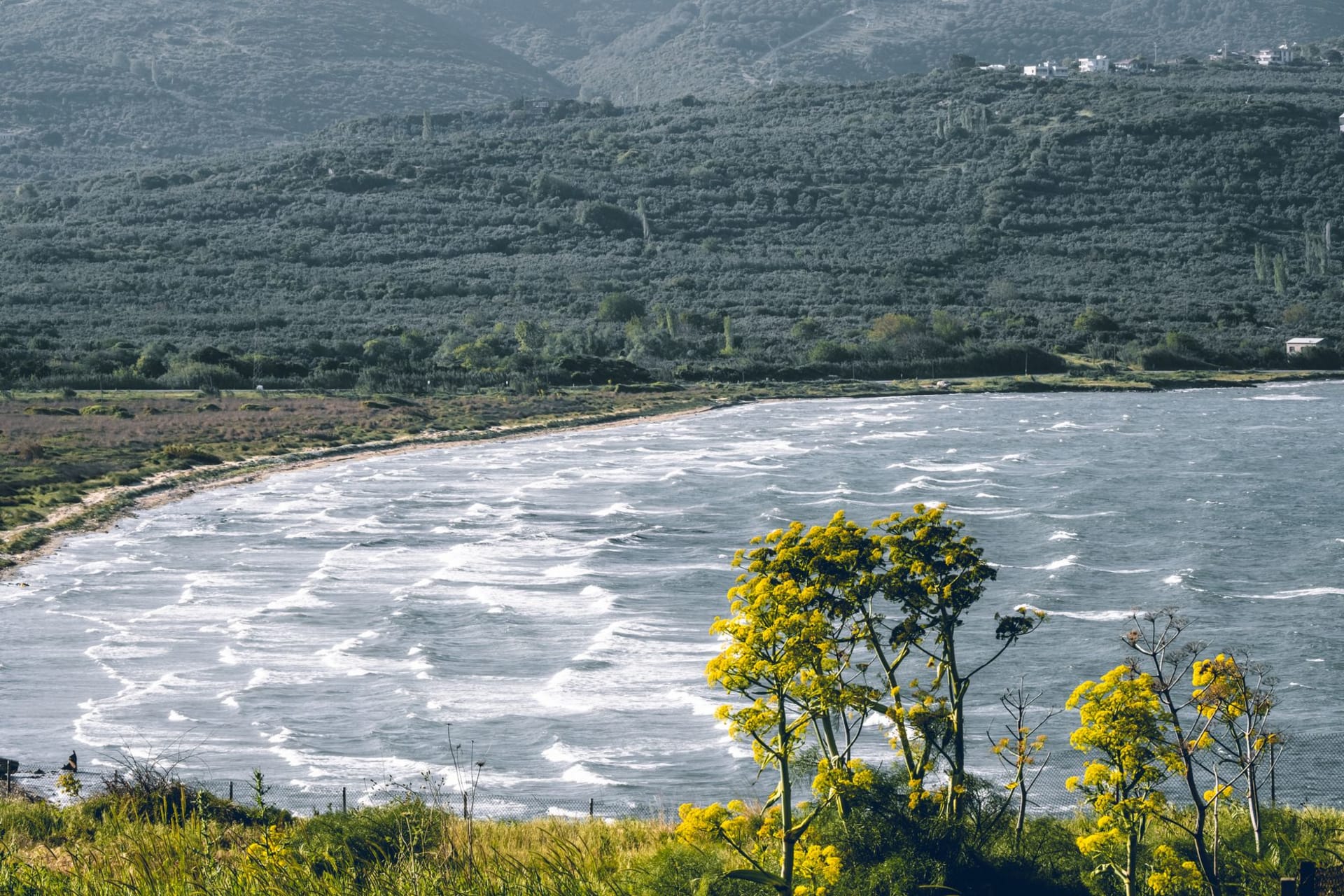
Kalamata itself is a real city rather than a tourist construct — the second-largest in the Peloponnese, a working port and commercial center that happens to sit at the head of the Messinian Gulf with the Taygetos range rising spectacularly behind it. The 1986 earthquake that destroyed much of the old center is visible in the architecture: the historic upper town and kastro area were largely spared, but the central city has a somewhat uniform seventies-and-eighties look that would not win any urban design awards. The character is in the neighborhoods that survived or were rebuilt with care — the old market quarter near the kastro, the harbor front, and the long beach promenade that runs south from the port.

The Friday morning market is worth arranging your schedule around. It fills several streets near the center and sells everything that grows within thirty kilometers: Kalamata olives in a dozen preparations (cracked, cured in brine, cured in oil, rubbed with herbs), figs fresh and dried, the thick dark honey from the Taygetos slopes, fresh vegetables with the soil still on them, and a variety of prepared local foods — tirokafteri, the spicy feta spread; dakos, the Cretan-style barley rusk with tomato — that make the question of lunch academic. I spent more money at the market than I had at most restaurants on the trip.
The kastro above the old town dates from the Byzantine period, rebuilt under the Villehardouin Franks and then the Venetians, and the view from its walls is the best in the city: the Messinian Gulf spreading south, the mountains east, the delta of the Nedon river to the west. Below the kastro, the neighborhood of Ypapantis has a few streets of old stone houses and an atmosphere distinctly separate from the modern city below.

The harbor front in the evening is where the city shows its best face. The promenade fills up around nine — families, couples, teenagers on scooters — and the tavernas along the water serve fish landed that day and the local dried fig pasteli, a sweet-sesame bar that looks modest and tastes like something a grandparent would make. I sat at the end of a pier until quite late, drinking a glass of rough Messenian red wine, watching the lights of the fishing boats far out on the gulf. The smell of the sea mixed with the olive oil on my hands from the market that morning. There are worse ways to spend an evening in the Peloponnese.
When to go: October is the olive harvest season and the most atmospheric time to visit — the presses are running, the air carries that green olive smell for miles, and the countryside around Kalamata is full of activity. Spring (April-May) is beautiful for the mountain views. The International Dance Festival in July brings excellent performances to the kastro but also fills the hotels. The beach south of the harbor is swimmable from June through September.