Epidaurus
"I dropped a coin on the stage and it rattled all the way to the back row. Fourteen thousand empty seats heard it."
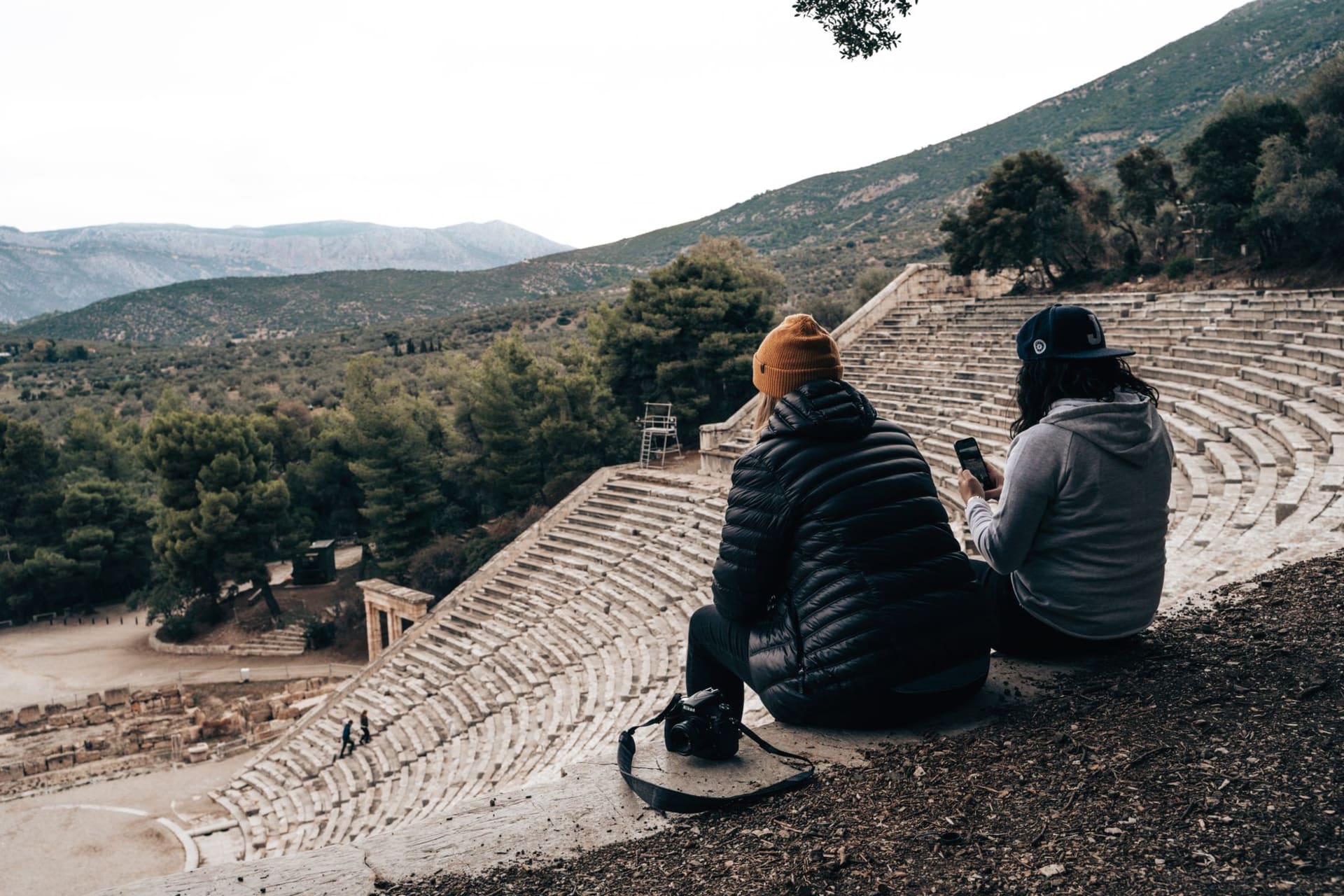
The last tour bus left at half past four, and by five the theatre was mine. Not entirely mine — a couple from somewhere Nordic were still picking their way down through the upper tiers — but close enough. The light had gone golden and low, raking across the limestone seats and casting long shadows into the orchestra circle. I walked down to the stage, stood in the centre of it, and dropped a two-euro coin. The sound it made travelling up through fifty-five rows of stone seats was not loud, but it was clear — absurdly, impossibly clear. Like the theatre was listening.
Epidaurus is officially an archaeological site in the Argolid hills, the sanctuary of Asclepius where the ancient Greeks came to be healed. The healing complex — bathhouses, dormitories, a gymnasium, temples — spreads across a flat pine-scented valley below the theatre, and in its day it functioned something like a combination of hospital, spa, and religious retreat. Patients slept in the sanctuary hoping the god would visit their dreams with medical advice. The theatrical performances were part of the cure — catharsis, the Aristotelian idea that watching tragedy could purge damaging emotions, was not a literary theory here. It was medicine.

The theatre itself was built in the fourth century BCE and seats around fourteen thousand people. It is the best-preserved ancient Greek theatre in existence, and when you sit in it you understand immediately why: the proportions are so precisely calculated, the curvature so exact, that it does not feel like a ruin at all. It feels like a functioning room that happens to be made of stone and open to the sky. I sat in the upper tier, level with the tops of the surrounding pines, and watched the sun descend behind the western ridge while the shadow crept up across the seats like a tide coming in. The pine resin smell was intense in the evening warmth. A cricket started somewhere in the stone.
The Asclepieion below — the healing sanctuary — requires a different kind of attention than the theatre. The remains are fragmentary and need imagination to reconstruct: a column drum here, a floor mosaic there, a great circular structure called the tholos whose subterranean passages may have housed sacred snakes. The museum near the entrance holds carved dedication reliefs from grateful patients — marble arms and legs and ears, the parts the god had supposedly healed — arranged in glass cases with a matter-of-fact archaeological precision that somehow makes them more moving, not less.

In summer, the Athens and Epidaurus Festival runs weekend performances of ancient drama — Sophocles, Euripides, Aristophanes — in the ancient theatre itself. Watching Greek tragedy performed in the space for which it was written, with the Argolid hills dark around you and torchlight on the stage, is one of those experiences that lands differently than you expect. The plays stop feeling like cultural artifacts and start feeling like warnings.
When to go: The festival performances run June through August — check the Athens and Epidaurus Festival schedule and book well ahead, as the better productions sell out months in advance. For the ruins without crowds, early May or late September is perfect. Go late in the afternoon on any visit; the morning crowds clear by three and the evening light on the theatre is extraordinary.