Eyam
"I read the names painted on the cottage plaques out loud to Lia, and neither of us said anything for a while."
A limestone village that locked its own gates against the plague in 1665, and still carries that quiet, deliberate weight today.

I’ll admit I went to Eyam expecting a nice walk and a pub lunch, and left feeling like I’d been sat down and told something I needed to hear. This is the village that, in 1665, decided to seal itself off rather than let the plague spread into the rest of the Peak District. A bundle of infected cloth arrived from London, the tailor who unpacked it died within days, and the rector convinced the whole parish to draw a boundary — the Boundary Stone, still there on the edge of town — and simply stop leaving. No one in, no one out, for over a year. By the time it was over, roughly a third of the village was dead.
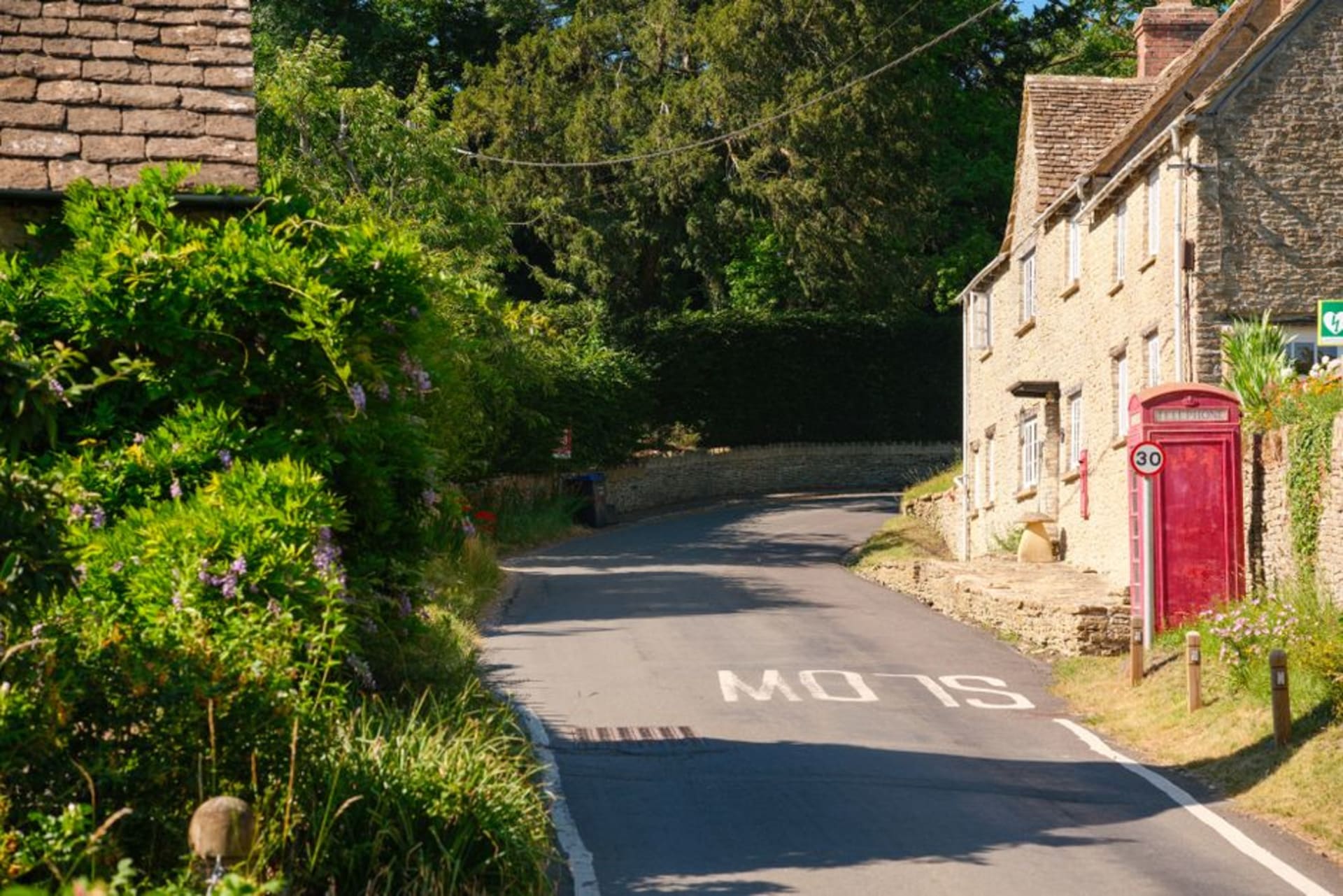
What gets me is how visible it still is. Walk down the main street and half the cottages have small plaques listing who lived there and who they lost — a father, three children, a wife, sometimes an entire family in a single household over a few weeks. It’s not a museum piece behind glass, it’s just there on the wall next to someone’s front door, someone who presumably still lives in the house. I found myself slowing my pace without meaning to, the way you do in a cemetery.

Lia and I did the plague trail on foot, which takes you past Eyam Hall, the church with its Celtic cross in the graveyard, and up to the Riley Graves — a lonely fenced plot on a hillside where a woman named Elizabeth Hancock buried her husband and six children with her own hands, over eight days, because everyone else was too afraid to come near. Standing up there with the wind coming across the fields, no other tourists in sight, was more affecting than anything I’d braced myself for reading about it beforehand.
It’s not all grim, to be fair. Eyam Museum does a genuinely good job contextualizing the outbreak without being macabre about it, and the village itself, once you get past the plaques, is a proper pretty Peak District settlement — gritstone houses, a well-kept green, tearooms that do a solid scone. We had lunch at a bench outside the church and watched an ordinary Tuesday happen around us: dog walkers, a delivery van, kids on bikes. That contrast, between the quiet present and what happened here, is really the whole experience.
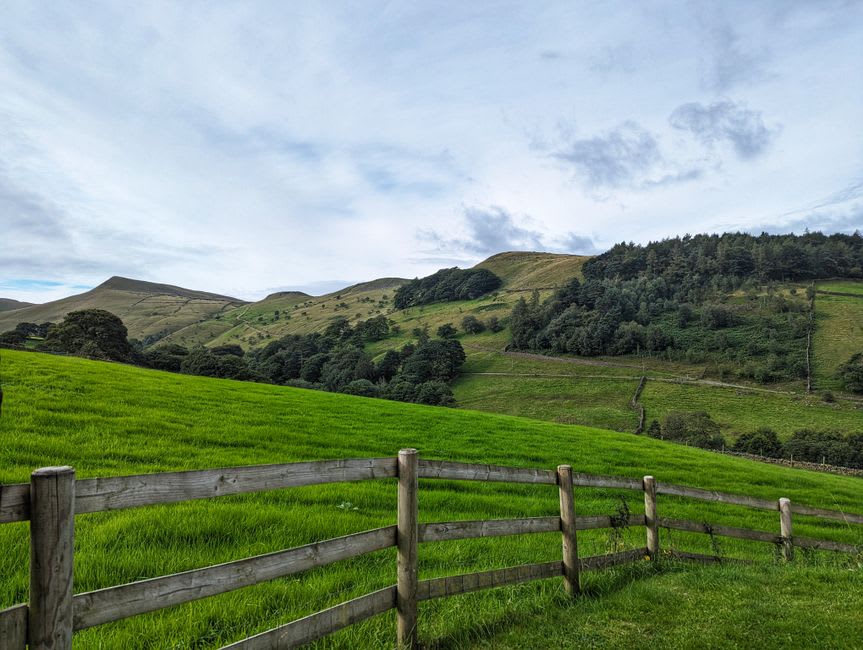
When to go: Spring or early autumn gives you good walking weather for the Riley Graves trail without the summer coach-tour crowds; aim for a weekday if you want the village to feel as still as it should.
Keep exploring
More from Peak District
 peak-district
Hathersage
A Hope Valley village where Charlotte Brontë came to think and Robin Hood's lieutenant is supposedly buried in the churchyard.
Explore peak-district
Kinder Scout
The highest, bleakest plateau in the Peak District, a peat wilderness where a mass trespass in 1932 helped win the public's right to walk England's wild land.
Explore peak-district
Ladybower Reservoir
Three drowned valleys in the Dark Peak where the water level in dry summers exposes the ghost of a sunken village.
Explore peak-district
Mam Tor
A ridge summit above a landslip so persistent it swallowed a main road, with views stretching across two Peak District valleys.
Explore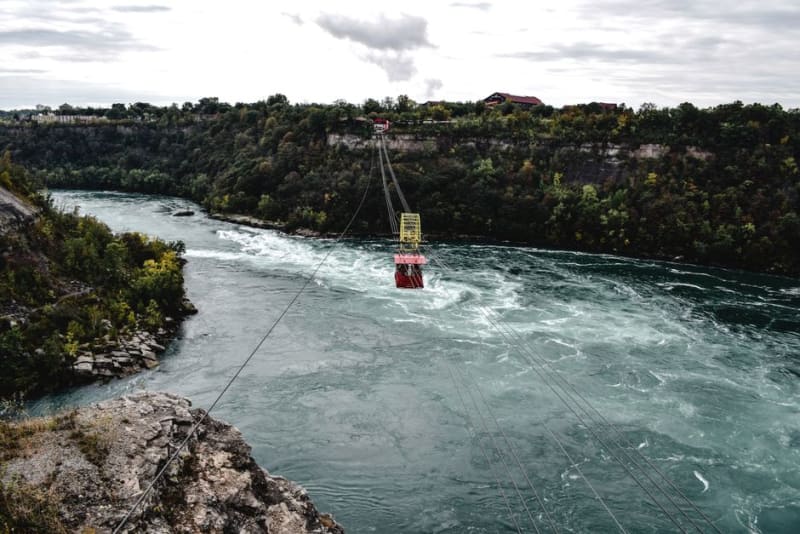 peak-district
Matlock Bath
A slightly faded Victorian spa town squeezed into a gorge, where a cable car swings you up to viewpoints above the Derwent.
Explore peak-district
Monsal Dale
A limestone valley where a Victorian viaduct crosses the River Wye and the walking trail through the old railway tunnels is one of England's best.
Explore