
Termas de Puyuhuapi
"The only door to this place is a boat, and the only sound is water finding water."
A boat ride across a silent fjord to hot pools built over the sea, at the edge of the rainforest in Chilean Patagonia.
There’s a particular kind of quiet that happens when you turn off a boat engine and the only thing left is a fjord. Lia and I had that moment on the short launch crossing from the Carretera Austral to Termas de Puyuhuapi, our bags wedged between someone’s cooler and a coil of rope, everyone on board instinctively lowering their voices as the boatman cut the motor and let us drift the last stretch toward the dock. You can’t drive there. That’s the whole point.
We’d stopped in Puyuhuapi village the night before, a strange and lovely little place founded in 1935 by Sudeten German immigrants, where an old carpet workshop still runs on a tradition that has nothing to do with Patagonia and everything to do with the people who chose to make a life at the edge of it. I bought nothing, but I stood in the doorway for a while listening to a loom, thinking about how many small, specific histories get folded into a landscape people usually describe only as “wild.”
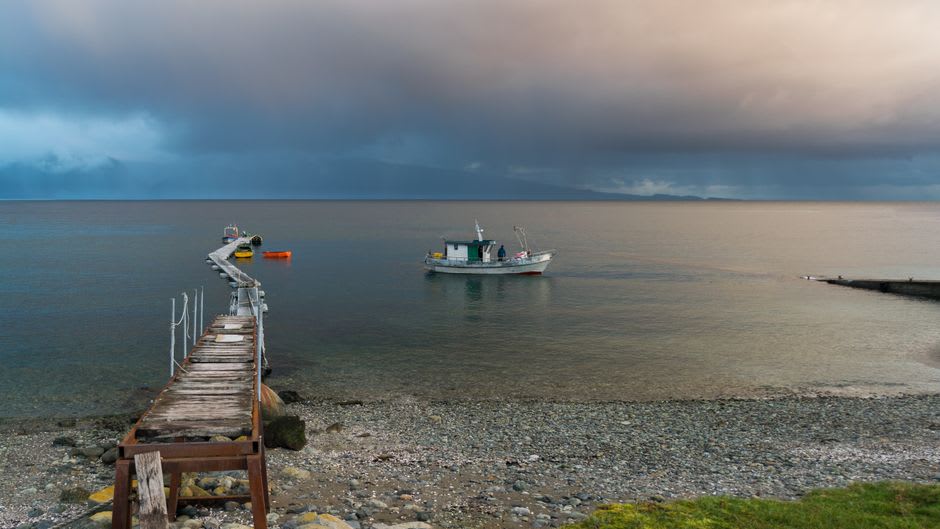
The springs themselves sit right where Queulat National Park’s fjord system meets the water, thermal pools piped down from a source near 40°C into a series of basins set among ferns and coigüe trees, some of them built directly out over the sea so you’re soaking with nothing between you and the fjord but a low stone wall. I got into the outermost pool at dusk, the water almost too hot at first, and watched the light go grey-blue over the water while a light rain started and didn’t bother anyone. Lia found a pool further back, half-shaded by rainforest canopy, and stayed there so long I had to go find her before dinner.
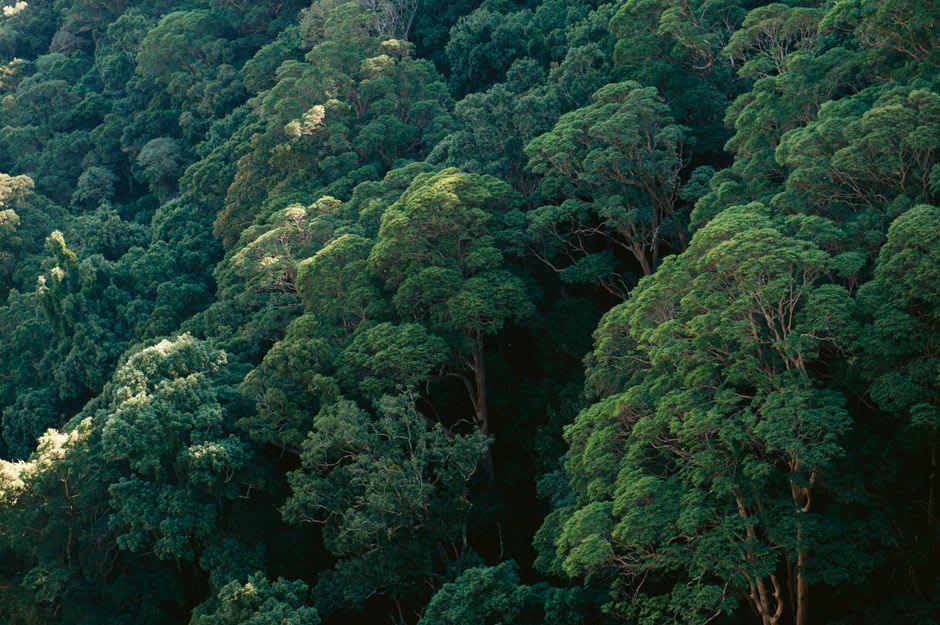
What stays with me isn’t really the heat of the water, it’s the transition — rainforest, then stone, then the pool’s edge, then fjord, no barrier announcing itself, just one thing becoming the next. We ate simply that night, some kind of hake and boiled potatoes, and talked about how few places left you feel like you’ve arrived somewhere by actually crossing something to get there.
When to go: The springs stay open all year, but if you’re coming in the Chilean summer, December through March, it’s worth timing your visit to combine it with the glacier and fjord excursions that run out of the area during those months.
Keep exploring
More from Patagonian Fjords
 patagonian-fjords
 Caleta Tortel
A village with no roads and no cars, built entirely on boardwalks above the water where the Baker River bleeds into the fjord.
Explore patagonian-fjords
 Canal Messier
The narrowest stretch of the fjord route, where mountains close in from both sides and the sky above you becomes a blue ribbon.
Explore patagonian-fjords
 Chiloé Island
A fog-drenched archipelago of wooden churches, stilt houses, and a mythology dark enough to make you check the treeline at dusk.
Explore patagonian-fjords
 Golfo de Penas
The Gulf of Sorrows — a twelve-hour open Pacific crossing where the ferry leaves the sheltered channels and everything becomes a different kind of serious.
Explore patagonian-fjords
 Isla Magdalena
A tiny island in the Strait of Magellan where sixty thousand Magellanic penguins nest in burrows and regard your boots with complete indifference.
Explore patagonian-fjords
 Laguna San Rafael
A turquoise lagoon full of drifting ice where a glacier the size of a small town calves directly into the sea with a noise like artillery.
Explore