
Port Moresby
"Port Moresby is not the country. It's the door you have to open to get to it."
I landed in Port Moresby on a Tuesday morning and the city immediately told me nothing about what was coming next. POM, as everyone calls it, is a place where first impressions land hard and without nuance: the heat off the tarmac, the frantic PMV buses honking at everything, the security guards with pump-action shotguns outside every supermarket and bank, the piles of betel nut husks staining the pavements red outside Boroko market. The guidebooks describe Port Moresby as dangerous, which is both true in specific ways and wildly unhelpful as travel advice. I spent three days here at the start and two days at the end of a month in PNG, and I found a city I did not expect — partial, contradictory, bruised in places, and alive in ways that clean cities rarely are.
The National Museum and Art Gallery in Waigani is one of the better collections of Pacific material culture I have encountered anywhere, and it is almost always empty when I was there, which gave me the luxury of standing alone in front of masks from the Sepik, drums from the Highlands, Huli wigs under glass, and a full-scale replica of a Motu lakatoi trading canoe without anyone pressing in around me. PNG’s cultural diversity — over eight hundred languages, hundreds of distinct visual traditions — is here compressed into a series of rooms that you can walk through in an afternoon. I found it more moving as a second visit than a first, because by then I had been to some of the places the objects came from and they had acquired a weight they hadn’t carried before.

Ela Beach, a crescent of sand along the inner harbour, offers a strange kind of breathing space in the middle of the city. On Sunday mornings it fills with families, young men playing touch rugby, women in bright floral dresses selling coconuts and sliced watermelon from Styrofoam boxes. The harbour behind them holds container ships and the occasional outrigger canoe, and the Coral Sea stretches away toward an invisible horizon. I drank a young coconut with lime juice and sat on a wall watching the city rest for a few hours, and I thought about how little space for this kind of ease Port Moresby usually allows itself.
The Koki fish market on the waterfront is better experienced early — by six in the morning the fishing boats have already landed and the concrete tables are covered with the night’s catch: red snappers, coral trout, giant trevally, crabs still moving, bags of small reef fish sold by the heap. The market smells of salt and entrails and wet rope, and the vendors work fast, wrapping fish in newspaper or pandanus leaves with practiced flicks of their wrists. I bought a snapper and took it back to my guesthouse, where the owner cooked it with coconut milk and local greens and I ate it on a plastic chair in the yard with the city moving and honking beyond the fence.
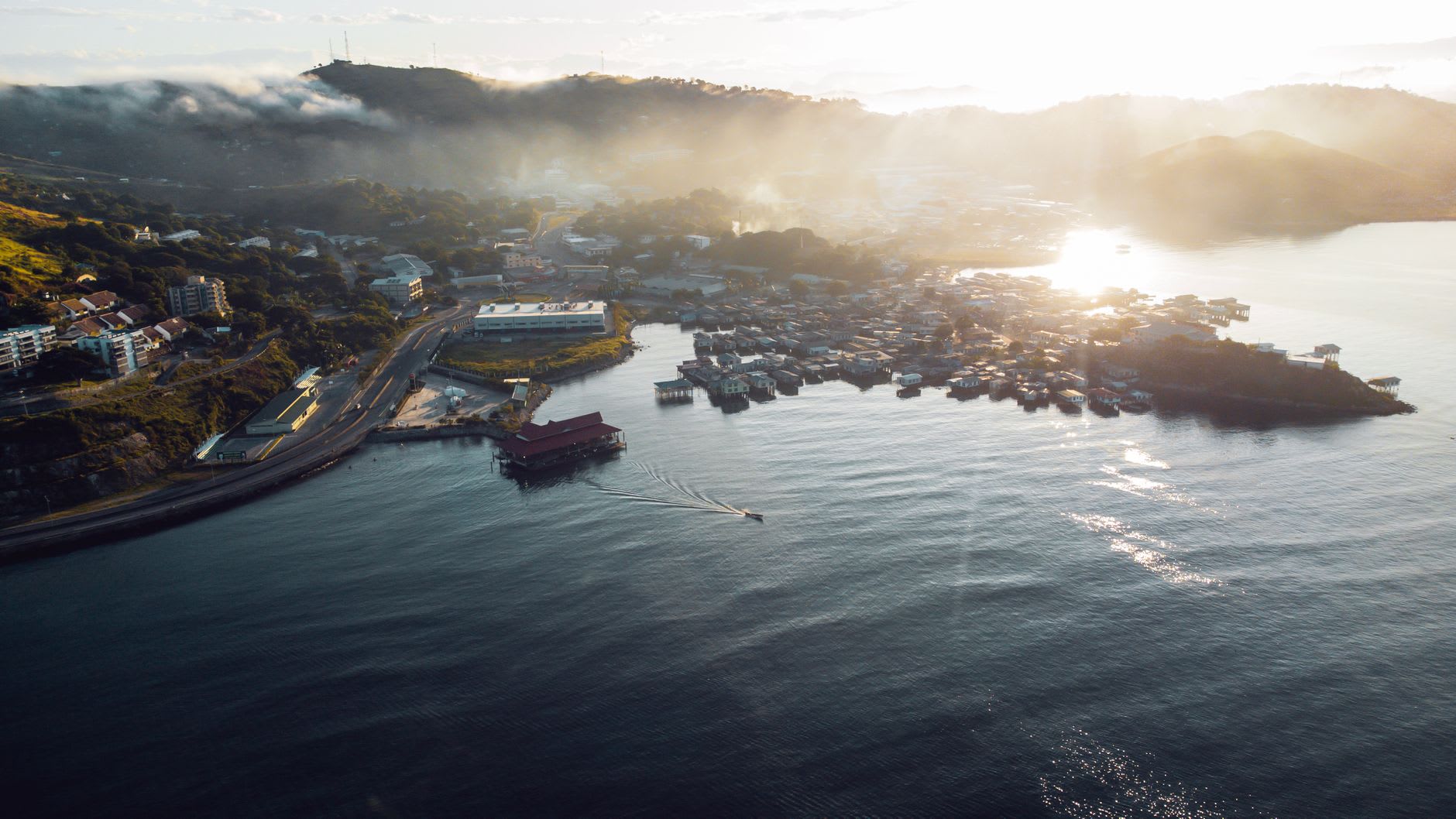
Moresby is not a destination in the way that the Highlands or the Sepik are. It is a gateway and, increasingly, a city that is building something — new apartment blocks rising in the business district, a Chinese-funded highway cutting south toward the sea, a university population that spills into the cafes of Boroko on weekday afternoons with laptops and textbooks and the specific energy of people who believe the country is about to change. I am not sure what it will become. But I have stopped dismissing it.
When to go: May through October is the dry season, when Port Moresby is hot but not oppressively humid. As a transit stop before connecting to the Highlands or coastal provinces, any month works — just build in at least two nights to recover from long-haul travel and visit the museum and markets before moving on.