Mount Hagen
"At the Mount Hagen market I bought a handful of betel nuts from a woman who had walked four hours to get there. She seemed entirely unbothered by this."
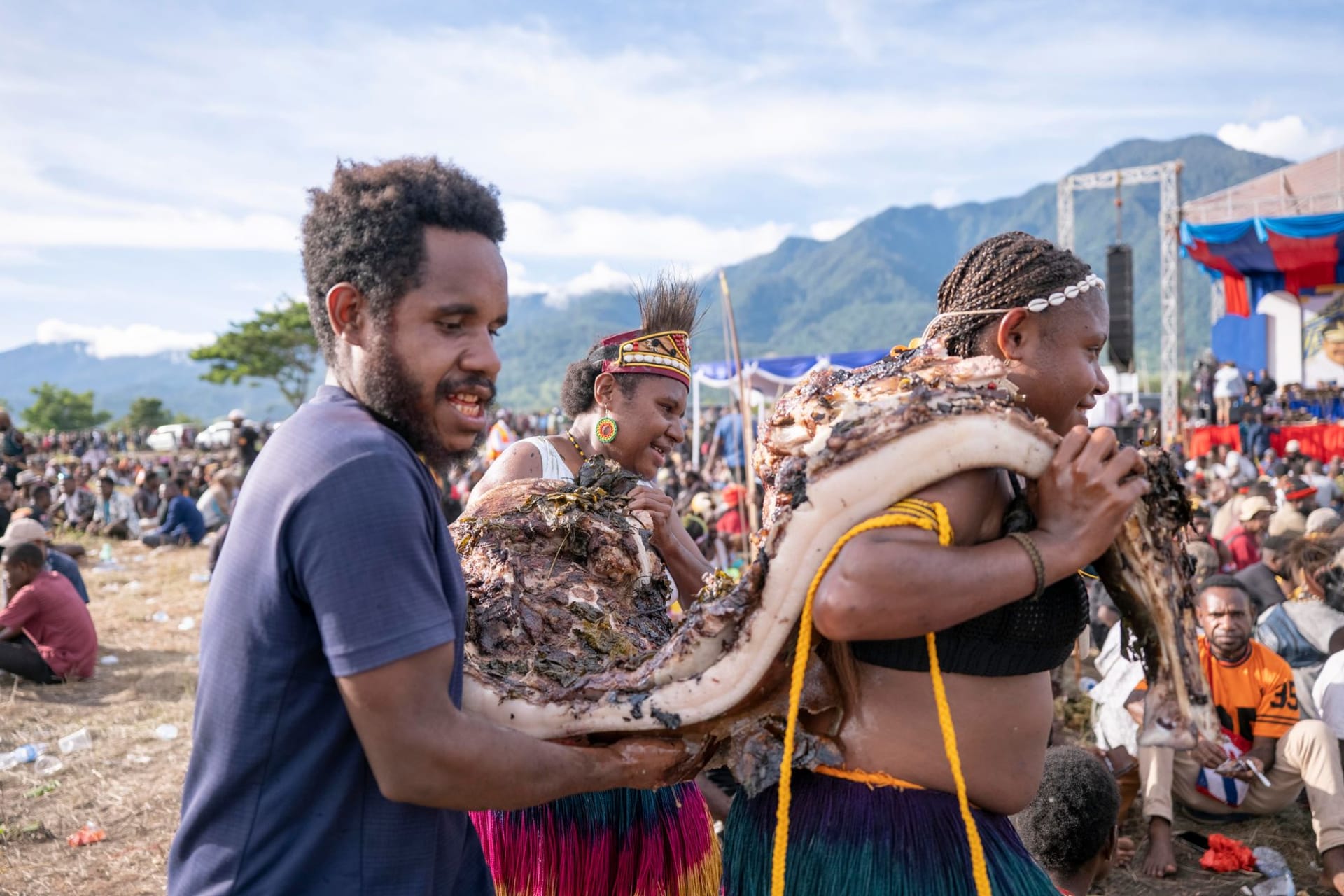
Mount Hagen sits at 1,700 metres in the Western Highlands, and the first thing you feel on arriving is the altitude in your chest and the weight of the sky pressing down lower than it does on the coast. The second thing you feel is the market. On Saturday mornings the main market swells to an event that has no equivalent I have encountered in Pacific travel — thousands of people converging from the surrounding valleys, some of whom have walked since well before dawn, carrying baskets of kaukau, bundles of greens, live chickens, cages of beetles, bags of fresh turmeric, piles of betelnuts wrapped in mustard leaf. The bilum bags — the woven net bags that Highland women carry everything in, balanced from their foreheads — are objects of such dense craftsmanship that they deserve to be in galleries and instead they are being used to carry sweet potatoes to a concrete market stall.
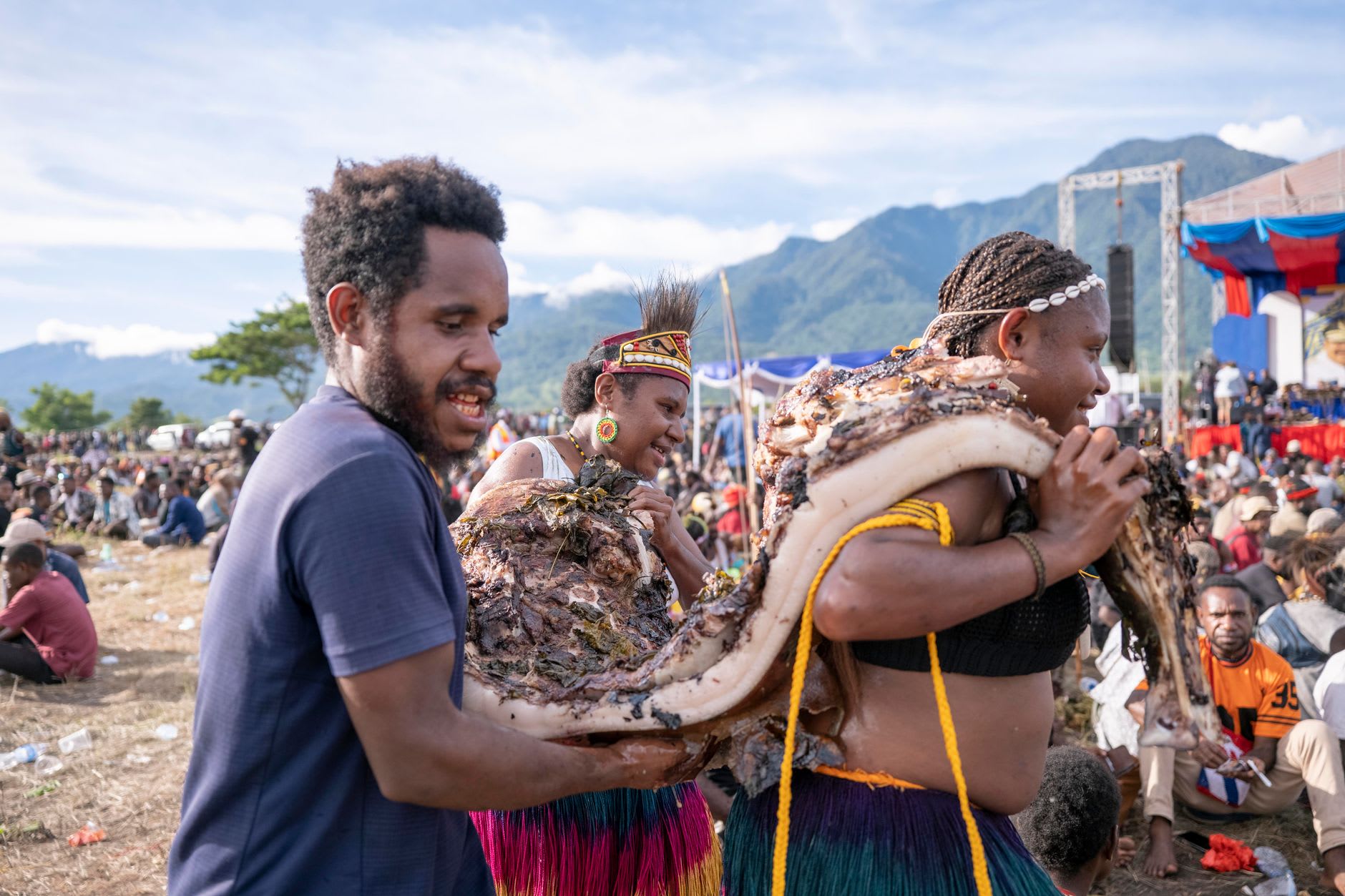
I arrived at seven in the morning and walked the rows for two hours without covering everything. The produce section gives way to a section for pigs — the central unit of wealth in much of Highland society, the currency of bride price and compensation payments — and then to a section for second-hand clothes and factory goods and mobile phone credit and raw peanuts sold by the cup. The noise is constant and layered: Tok Pisin floating over the top of a half-dozen local languages, the squeal of a dissatisfied pig, women laughing at something across two stalls, the clang of a corrugated iron sheet being repositioned. I bought ginger the size of my fist for almost nothing and ate it raw, standing in the sun, blinking.
The town itself is rough in the useful way of frontier commercial hubs — trade stores stocking everything from outboard motors to flip-flops, Chinese-owned wholesale warehouses, a main street where PMV buses fight for space with pickup trucks transporting bags of Highlands coffee from the processing mills. The Western Highlands produce some of PNG’s best arabica coffee, and the co-operatives operating out of the Wahgi Valley grow beans at altitudes that create acidity and fruit notes that specialty roasters in Australia and Japan have discovered in the last decade. I had coffee each morning at a guesthouse in town — instant Nescafé, which is ironic given the altitude, but that’s how it usually works.
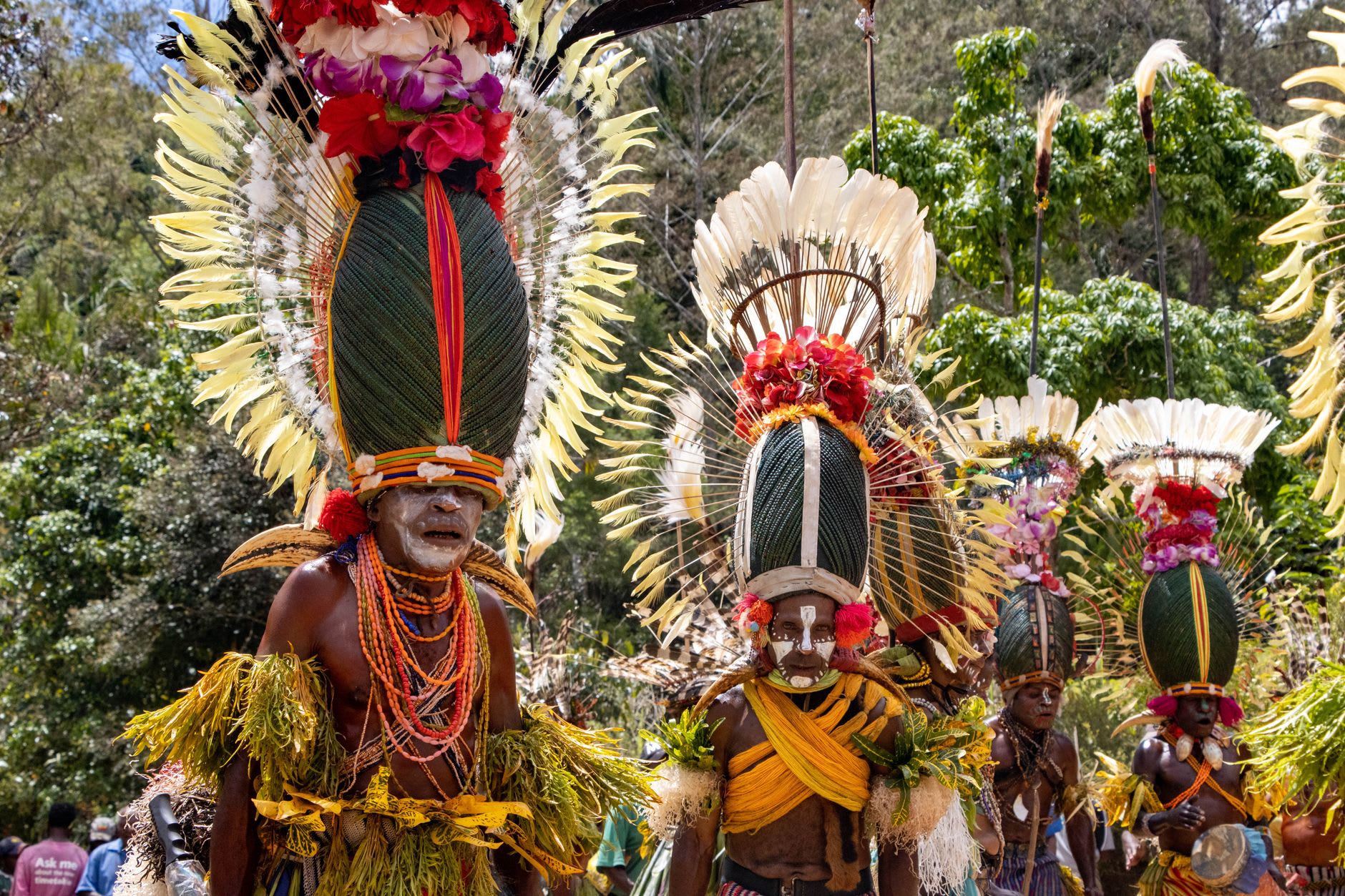
The Mount Hagen Show, held in August, is the Western Highlands equivalent of the Goroka Show and draws clans from across Western and Southern Highlands provinces in full ceremonial dress. I attended it before the Goroka Show and found it, if anything, more intimate — smaller, with a wildness and a density of performance that the Goroka event, being better known, has partially tamed.
The highlands around Hagen are worth exploring slowly by PMV or with a local driver — Kuk Swamp, a UNESCO World Heritage Site just outside town, is one of the world’s oldest known agricultural landscapes, where humans were cultivating gardens nine thousand years ago. The site does not look like much: a flat, drained marsh with grid-pattern ditches. But standing in it with that knowledge changes what you see.
When to go: August for the Mount Hagen Show — book guesthouses at least two months ahead. May through September is the dry season for the Western Highlands generally, with the clearest days for the surrounding mountain views and the firmest road surfaces for day trips into the Wahgi Valley.