
Goroka
"Nobody was performing for me at the Goroka Show. I happened to be there. That distinction changed something in me."
The plane drops through cloud over the Eastern Highlands and suddenly there it is — a wide, cultivated valley ringed by ridges so green they look almost fictional, a green that only grows in places that have never been dry a day in their existence. The air at Goroka sits at about 1,500 metres and the moment I stepped off the tarmac I felt it in my lungs: cooler, thinner, smelling of woodsmoke and red earth. The town below the airstrip is modest — a main street of trade stores, PMV buses painted in violent yellows and reds, women selling kaukau and bundles of greens on woven mats. None of this tells you what September brings.
The Goroka Show is held on the weekend closest to Papua New Guinea’s Independence Day, and calling it a cultural festival is both accurate and completely insufficient. What I walked into on a Saturday morning was a football field filling slowly with perhaps sixty groups from across the Eastern Highlands and beyond — men and women in headdresses of bird-of-paradise feathers that fanned out like the tails of something mythological, faces painted in ochres of red and yellow and white, bodies adorned with kina shells, pig tusks, grass skirts that moved with them like living things. The drums had started before dawn. By mid-morning the sound was layered and insistent, each group keeping its own rhythm, overlapping with the rhythms of every other group until the field was one enormous, polyphonic ceremony that nobody was conducting.
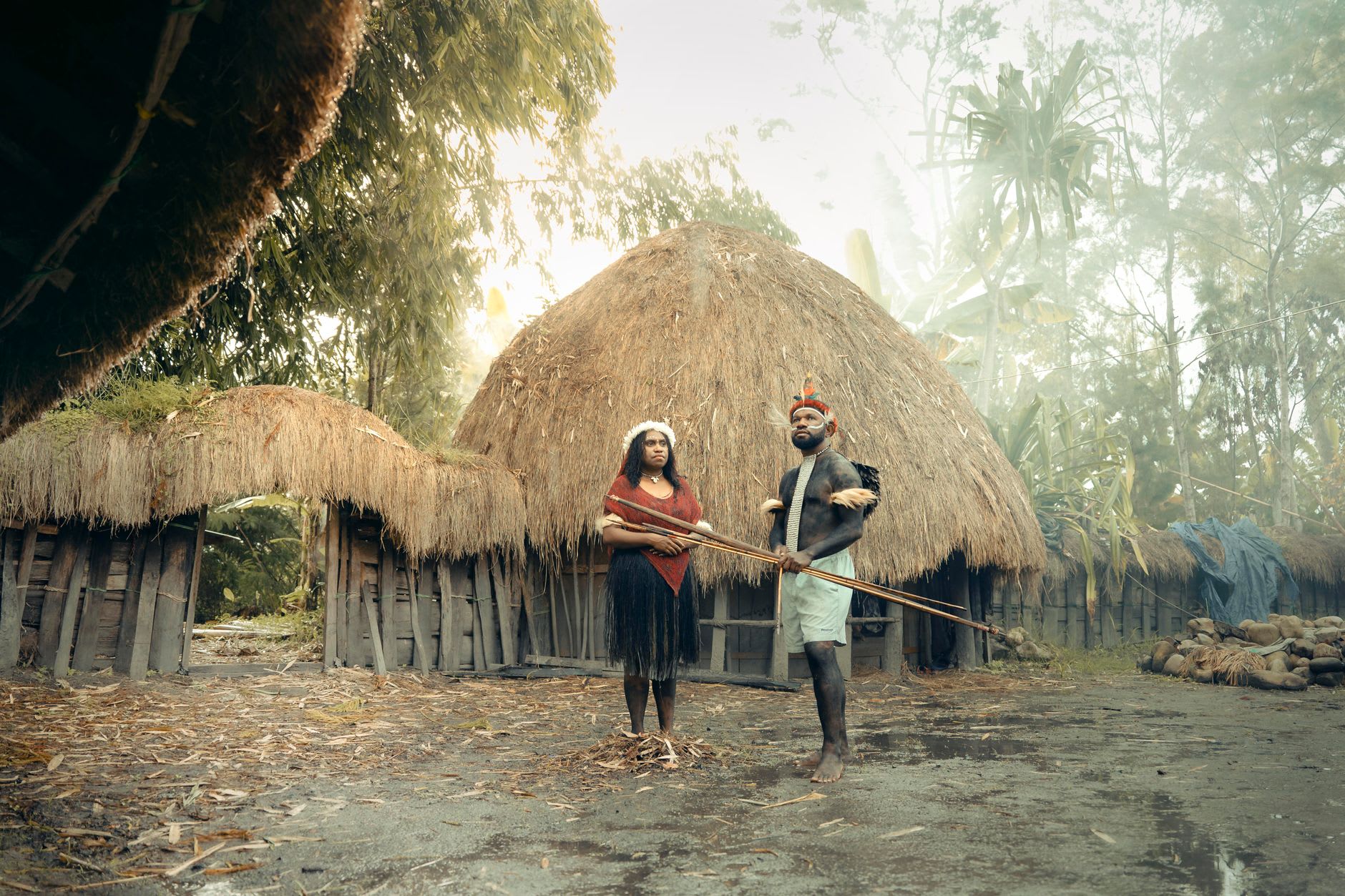
What struck me most was the complete absence of self-consciousness. Nobody was performing a version of their culture for tourists — they were doing what people do at sing-sing gatherings, which is to come together in full ceremonial dress, make music, dance, and assert the presence of their clan in the world. I was there along with a small scattering of other travelers and a much larger crowd of Papua New Guineans from Port Moresby and other towns who had traveled specifically for this. In a country of over eight hundred languages, the Goroka Show is one of the few occasions when the nation’s impossible cultural diversity becomes briefly visible in a single field. The emotion it produced in me was not the clean, packaged feeling of a tourist attraction. It was something rawer — the feeling of witnessing something alive, fragile, and utterly self-possessed.

The town itself is worth two or three days even outside of Show season. The central market on weekday mornings is a study in highland abundance: sweet potatoes in every shade from cream to deep purple, bundles of aibika leaves, fresh ginger the size of fists, and sometimes live chickens trussed by their feet with an air of complete stoicism. In the evenings I ate at a guesthouse run by a family from the Asaro Valley — kaukau with pork belly in a dark gravy made with onions and tinned tomatoes, eaten on a plastic table with a kerosene lamp buzzing nearby. After weeks in PNG I had stopped wanting anything different.
When to go: The Goroka Show falls in September, usually on the Independence Day weekend, and is the reason most travelers come. Book accommodation many months ahead — guesthouse beds fill entirely. Outside of September, May through August is the most reliable dry-season window for exploring the Eastern Highlands by road, with clearer views and passable dirt tracks.