
Porto Jofre
"We idled past the same bend three times before she appeared — unhurried, unconcerned, utterly sovereign."
The road ends here. After ninety kilometres of wooden bridges, red dust, and caimans lazing on every muddy bank, the Transpantaneira terminates at Porto Jofre in a cluster of basic lodges and a floating dock on the Cuiabá River. There is no town. There is no shop selling anything useful. There is the river, the jungle pressing in from both sides, and somewhere in that jungle, jaguars — more jaguars per square kilometre than almost anywhere else on earth. My guide Miguel had the particular stillness of a man who has spent years watching things that move. He handed me coffee in the dark, said nothing about the conditions or the schedule, and pointed toward a boat.
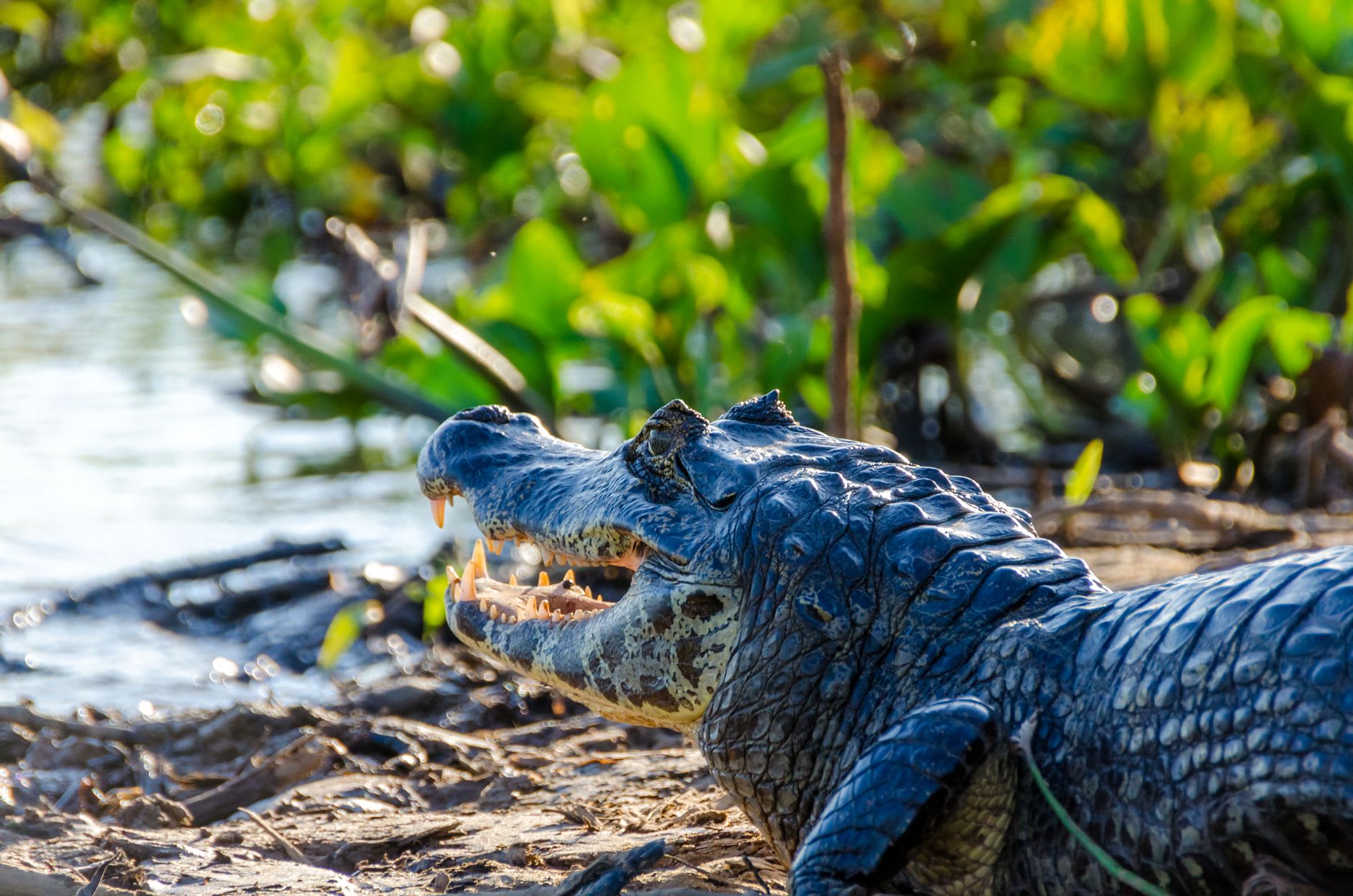
We left before the sun was fully up. The river smelled of mud and wet leaves, and something else — something animal, musky, that I couldn’t place until Miguel said the word quietly: onça. Jaguar. Not a sighting yet, just the smell of territory. The caiman count hit double figures before we cleared the first bend — not the small ones you ignore, but proper black caimans, two metres and more, arranged on sandbars with the confidence of landlords. A giant river otter surfaced ten metres from the boat, regarded us with a look of frank annoyance, and dived. Then the radio crackled — another boat, upstream, had found a female with cubs. We were there in four minutes.
The jaguar was standing on a low clay bank, entirely unconcerned. She was heavier than I expected, the spots more complex — not black on amber but clusters of smaller marks that seemed to shift as she walked. She walked for seven minutes. We followed at idle speed. At one point she turned and looked at the boat with an expression that contained, I was certain, a kind of boredom. Her cubs appeared in the undergrowth, smaller, quick, then gone. She followed them without hurry. I had not taken a single photograph. My camera sat in my lap. Some things you just watch.
The lodges at Porto Jofre range from dormitory-basic to genuinely comfortable, but the experience is the same regardless: dinner is grilled pintado — a silver-spotted catfish pulled from the river that morning — with rice, black beans, and farofa, crispy and faintly smoky. You eat at a communal table with whoever else is staying, comparing sightings in the comfortable shorthand of people who have spent the day doing the same thing. The conversation eventually drops. Sleep comes early. The guides are outside before dawn, boats already warming. The rhythm repeats, and you are grateful for it.
When to go: July and August are peak jaguar months — dry season, low water, animals concentrated on the remaining riverbanks. June and September are excellent with smaller crowds. Avoid the wet season (November to April) for jaguar sightings; the river floods and tracking becomes nearly impossible. Book lodges months in advance for July.