Americas
Pantanal
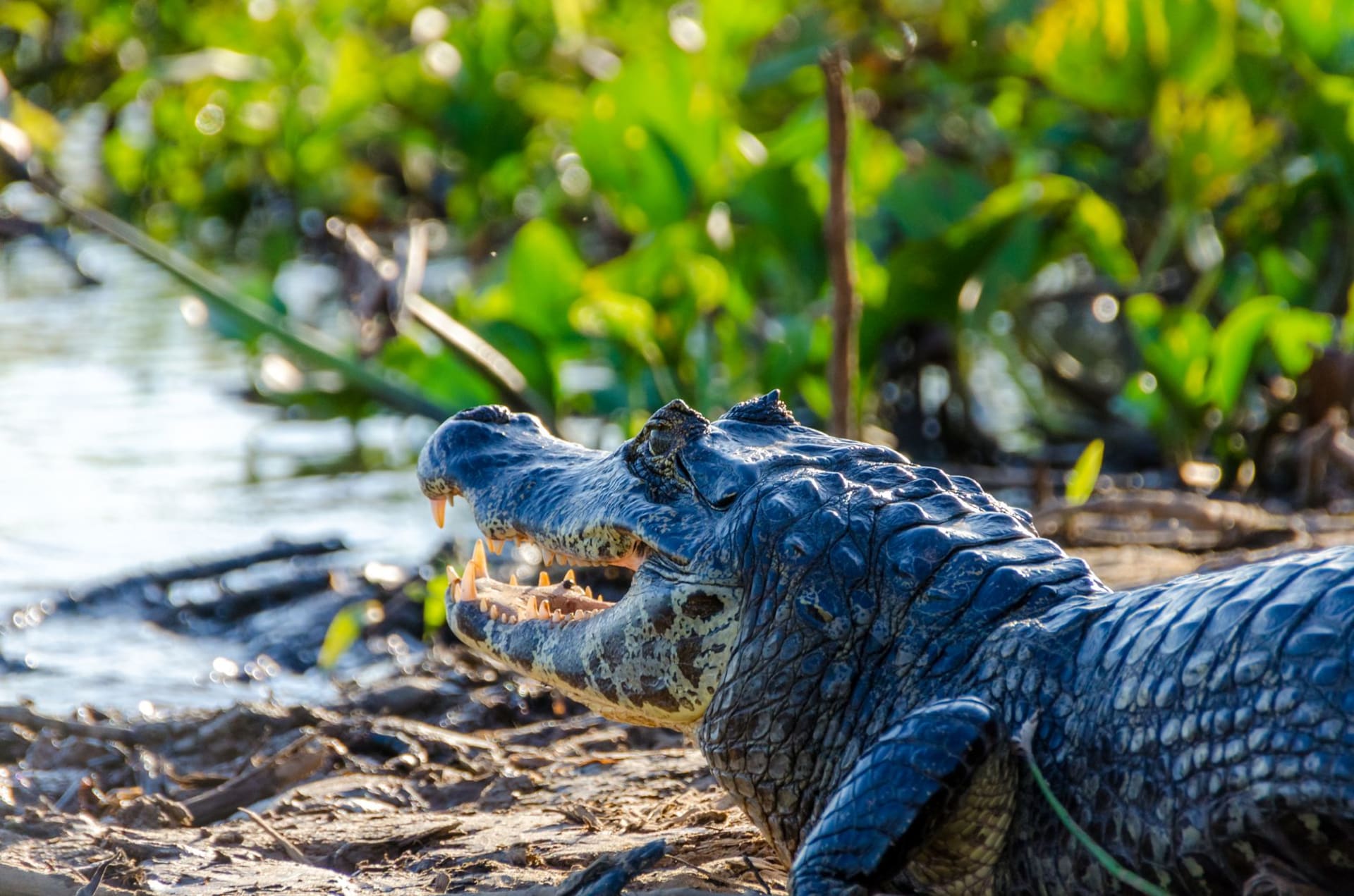
"I counted eleven caimans before my coffee went cold."
I arrived in the Pantanal expecting wildlife. What I was not prepared for was the volume of it — the way it is simply everywhere, unperforming, going about its business as if the concept of a shy animal had never evolved here. Within the first hour on the water, we passed a jabiru stork standing knee-deep in the shallows, a pair of giant otters arguing over a fish, and a caiman so still it looked like a log until it didn’t. My guide, a man of very few words, pointed at the bank and said, quietly, onça. A jaguar. Thirty metres away, walking.
The Pantanal operates on a different logic than most wildlife destinations. The Amazon has more species but the canopy swallows them. The Pantanal is open — a vast, seasonally flooded savannah covering an area larger than France, straddling the borders of Brazil, Bolivia, and Paraguay. During the dry season, from June to October, the water recedes and the animals concentrate around remaining pools and rivers. The density becomes almost absurd. Thousands of caimans piled on sandbanks. Capybaras grazing in herds like they own the place (they do). Hyacinth macaws — the largest parrot in the world, electric blue and improbable — perched in pairs on dead trees against a sunset that feels designed to humiliate photographers. The Transpantaneira highway, a dirt road on wooden bridges through the northern Pantanal, is one of the great wildlife drives on earth. You stop every hundred metres. You stop constantly.
The logistical base is either Cuiabá in the north or Campo Grande in the south. I chose the north — Porto Jofre is the jaguar capital, where boats idle on the Cuiabá River from first light, guides scanning the banks with binoculars. The lodges here range from basic to genuinely comfortable, and the food at most of them runs toward grilled river fish — pintado, dourado — with rice and farofa, simple and exactly right after a day on the water. The pace is slow. You wake before dawn, go out twice a day, eat, read, sleep. After three days I had forgotten what a city felt like.
When to go: June through October is dry season — the best time for jaguar sightings and concentrated wildlife. July and August are peak months. The wet season (November to May) transforms the landscape into a vast inland sea, spectacular from above but harder to navigate by boat. Birdwatching during the wet season can be extraordinary, but jaguar sightings drop sharply.
What most guides get wrong: They sell the Pantanal as a side trip from Rio or São Paulo, a two-night extension tacked onto a beach holiday. It is not that. The Pantanal rewards time — three nights minimum, five if you can manage it. The magic compounds. The first day you’re overwhelmed. The second day you start reading animal behaviour. The third day you understand why the people who come here keep coming back.