
Wadi Qelt
"The monastery is built into the cliff as though the cliff agreed to it. I am not sure it did."
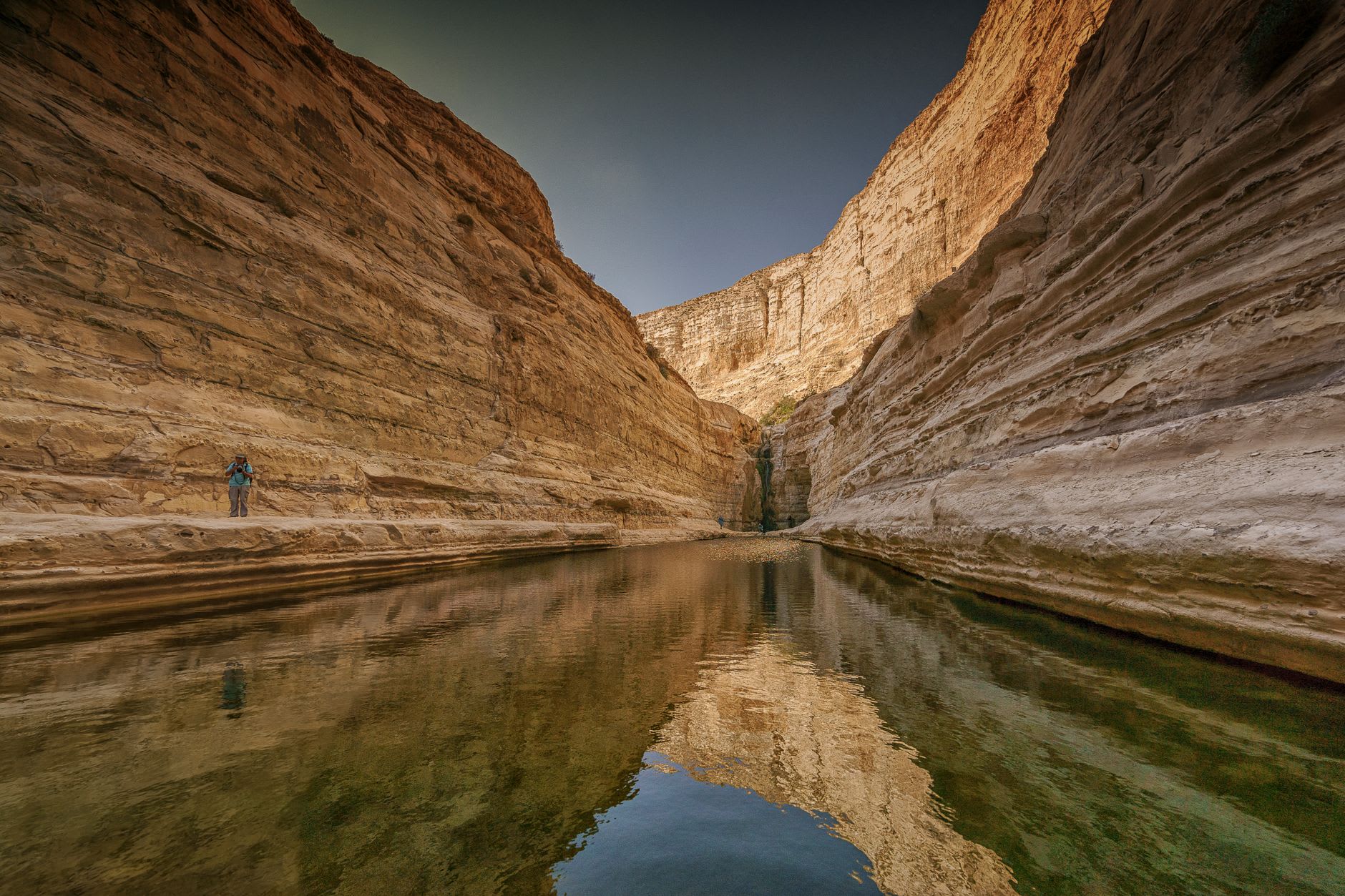
The canyon begins gently and then commits. I started the walk from the Ein Qelt spring on the western rim, in the early morning before the desert heat established itself, and for the first twenty minutes the path followed a water channel — a Roman-era aqueduct still carrying water — through scrubby hillside that could have been anywhere dry in the Mediterranean. Then the ground dropped away and the walls rose and I was in something else entirely: a narrow slot of orange and ochre limestone dropping fifty, then eighty, then a hundred metres on each side, the only sound the water running below on the valley floor and the occasional percussion of a stone dislodged by my feet.
Wadi Qelt cuts between the Judean hills above Jerusalem and the Jordan Valley below Jericho, a distance of roughly twenty-eight kilometres. The wadi runs through Area C — under Israeli military and civil control — and the walk along it is one of those experiences where the political geography is completely invisible and the physical geography is completely overwhelming, which creates a certain dissonance if you think about it and a certain relief if you don’t. I tried to do both at once and failed at both.
St. George’s Monastery appears around a bend without warning. It is built into the north face of the canyon about halfway down the wadi — a complex of white buildings pressed into a ledge in the cliff that should not be wide enough to hold them, connected to the canyon walls by stone arches and accessed by a path that descends from the canyon rim above. The monastery dates from the fifth century, destroyed by the Persians in 614 CE, rebuilt by the Crusaders, damaged and rebuilt again. The current structure is mostly nineteenth century, but the cave churches cut directly into the cliff face are older, and the spring that supplies the monastery’s water has been running since before anyone built anything here.
A Greek Orthodox monk let me in through the gate and gestured toward the church. Inside, the walls are covered in icons in the Byzantine tradition, hung so densely that they function almost as wallpaper, every surface occupied by a saint or a scene, the gold leaf on the older pieces catching the candlelight in a way that makes them seem to be producing light rather than reflecting it. A skull and crossbones mosaic in the floor near the entrance marks the tomb of monks who died here in the Persian massacre. I stood on it and looked up at the icons and found the combination of things — beauty and death and the cliff face pressing in from outside — about as direct an encounter with a specific tradition of belief as I have had anywhere.
The stream on the valley floor — the Wadi Qelt itself — supports a narrow ribbon of vegetation entirely inconsistent with the desert on either side: oleanders in pink flower, rushes, the kind of deep green you associate with reliability of water. Desert larks called from somewhere in the canyon walls. A heron stood motionless in a pool downstream. I sat on a rock in the shade and ate the bread and cheese I had brought and drank water from a bottle and listened to the stream until my body temperature came down to something reasonable.
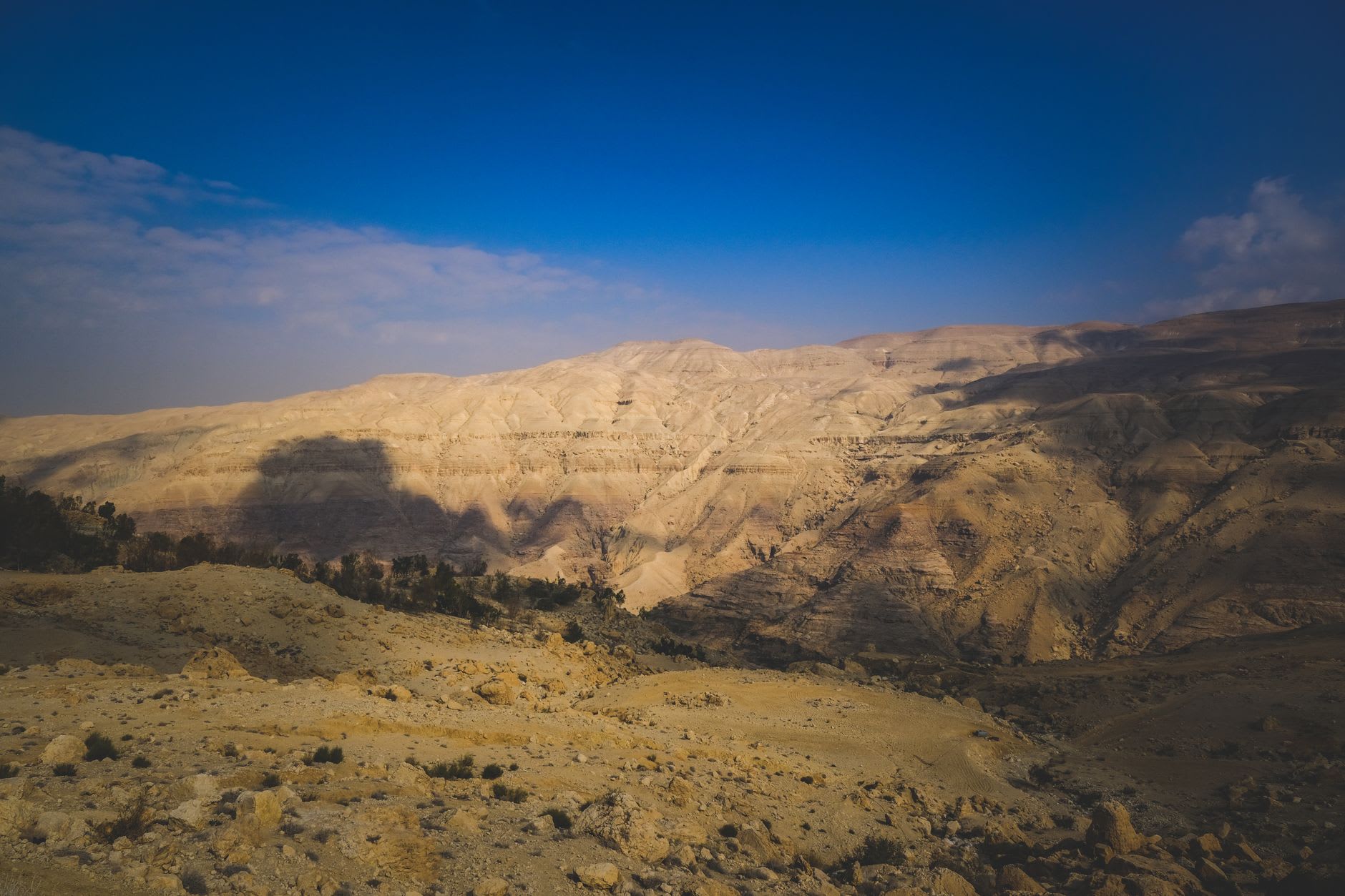
The walk from the western springs to Jericho takes five to seven hours depending on pace, and the gradient is almost entirely downward as you lose altitude from the Jerusalem hills to the Jordan Valley floor. By the time you reach the palm groves on the outskirts of Jericho the canyon has widened into flatness and the heat is something else entirely from the morning coolness of the upper wadi. I arrived at a taxi stand and drank a litre of water in about two minutes and sat in the shade until I could think clearly again, which took longer than I expected.
When to go: November through March is the only viable window for the full day hike. October and April are marginal — possible but hot. The wadi is at its most beautiful in February and March when the wildflowers are out on the upper sections and the stream is fullest. Bring more water than you think you need; the climb out is steeper than the descent in, and the heat increases significantly as you lose altitude toward Jericho.