Middle East
Palestine
"Nowhere I've been carries this much weight in every single stone."
I arrived at Bethlehem through the checkpoint on a grey January morning, shepherded through a concrete corridor with turnstiles and overhead cameras, a queue of workers and pilgrims and aid organisation badges shuffling forward in practiced silence. And then I stepped out the other side into Manger Square and a man immediately offered me coffee without being asked, without expecting anything in return, just because I was standing there looking uncertain. That contrast — the grinding machinery of occupation and the reflex warmth of Palestinian hospitality — never resolved itself into something simple. It stayed with me for the entire trip, which is probably the point.
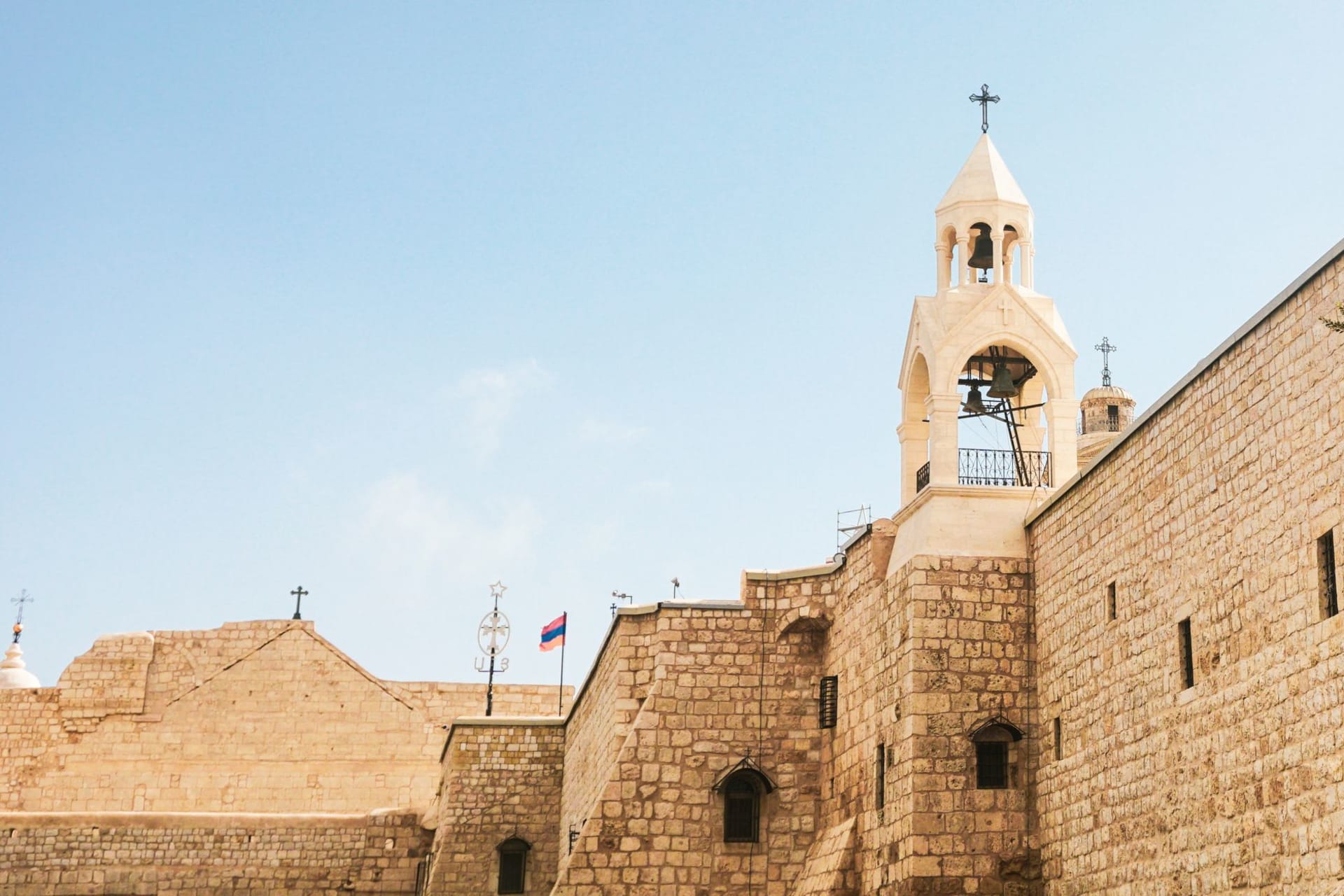
Bethlehem is not the postcard. The Church of the Nativity is extraordinary — fourth-century mosaics still on the floor, incense so thick it makes your eyes water, pilgrims genuflecting beside Coptic monks beside Armenian priests in a genuinely medieval chaos of competing denominations — but the city around it is a living Palestinian town. The market streets behind the church smell of za’atar and cardamom, the graffiti on the separation wall is a rotating gallery of anguish and dark humour, and the restaurants around Beit Jala serve musakhan — slow-roasted chicken on flatbread soaked in onion and sumac — that I still think about in Mexico when I’m craving something I can’t articulate. Further north, Ramallah surprised me with its restaurants and bookshops and evening crowd spilling out of cafes. It functions, stubbornly. And Nablus, with its ancient casbah and the best knafeh I’ve ever eaten — hot, cheese-pulled, dripping with rose-water syrup at eight in the morning from a vendor who has been at that same spot for forty years — felt like a city that had simply decided to continue existing, full stop.
The landscape itself catches you off guard. The West Bank hills in spring are green in a way that doesn’t fit any preconception: terraced olive groves, wildflowers along the road shoulders, stone villages the same colour as the earth they’re built on. Jericho, the oldest continuously inhabited city on earth, sits in a flat plain below sea level surrounded by date palms, hot and biblical and weirdly quiet. I sat at a cafe there and drank fresh pomegranate juice and felt the specific vertigo of a place where so much of the world’s most contested history started.
When to go: March to May is ideal — the hills are green, the temperatures are mild, and the light in the late afternoon turns everything amber. October and November work well too. Avoid midsummer in Jericho specifically; it sits below sea level and gets genuinely brutal.
What most guides get wrong: They treat Palestine as a pilgrimage destination for Christians or as a conflict zone for journalists, and almost none of them tell you it is a place to simply travel — to eat well, to walk through old cities, to sit in someone’s living room drinking sage tea. The checkpoints are real and the situation is not abstract, but Palestinian hospitality is not performing resilience for visitors. It is just how people live. Show up with curiosity rather than pity and the place will open up in ways that have nothing to do with the headlines.