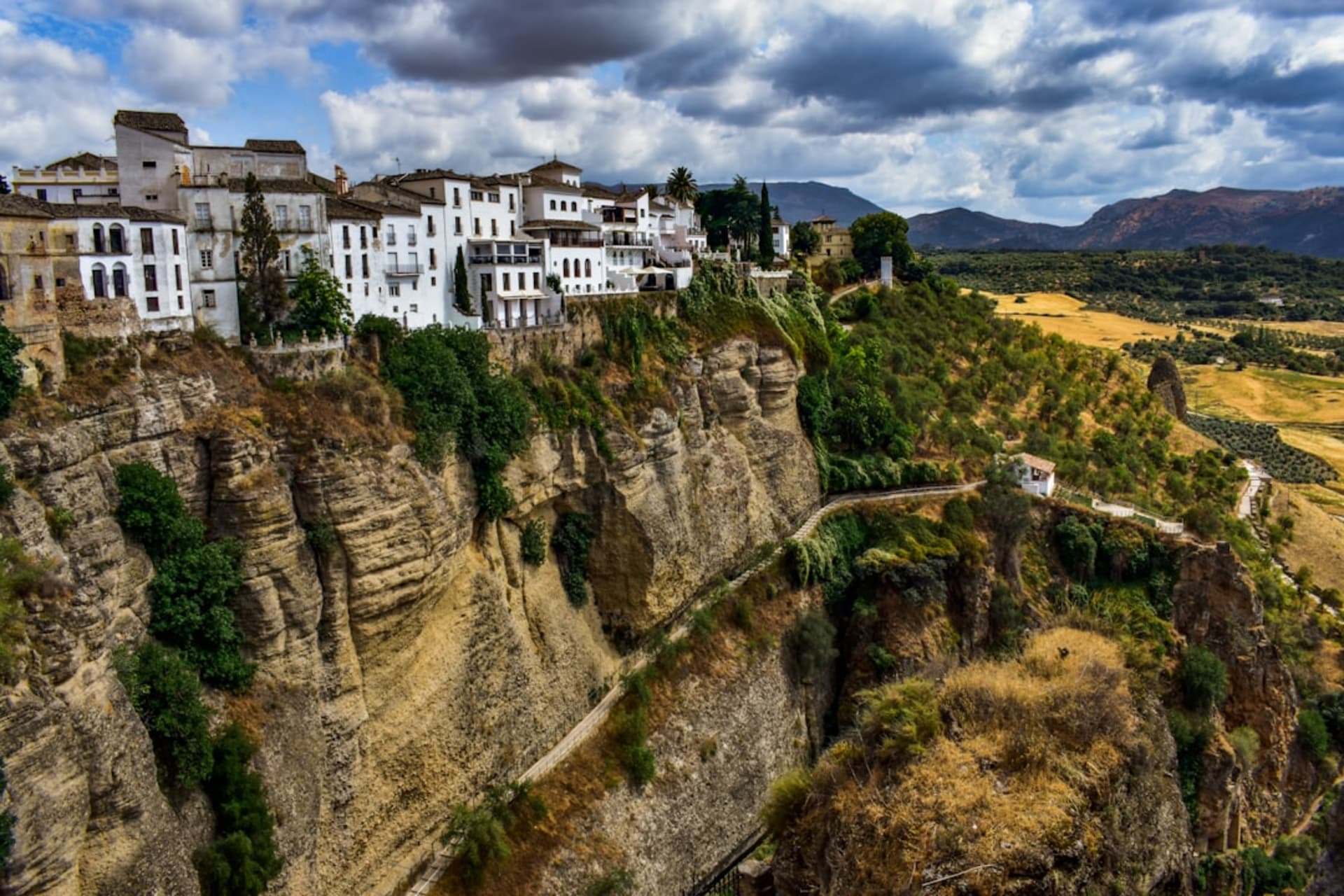
Mar Saba
"A monastery built into a cliff by a man who wanted to be left alone. It still works."
A fifth-century Greek Orthodox monastery built directly into a sheer cliff face above the Kidron Valley, still home to a small community of monks living almost exactly as their founder did.
The road to Mar Saba ends abruptly at a parking area on the canyon’s rim, and the monastery itself is not visible until you’re almost on top of it, because it was deliberately built to be invisible from above — a cluster of domes, terraces, and stone cells cascading down the near-vertical cliff face of the Kidron Valley, blending so completely with the rock colour that I nearly missed it scanning the far side before someone pointed straight down. Saint Sabbas founded it in 483 CE, choosing the site precisely because it was inaccessible, and the monastery has functioned with barely a pause since, which makes it one of the oldest continuously inhabited monasteries on earth.
Women are not permitted inside the monastery walls, a restriction that has held since its founding and that my female travel companion accepted with more grace than I expected, occupying herself instead at the Women’s Tower a short distance away, a structure built specifically so female visitors historically had somewhere sanctioned to stay. I went in with a small group, met at the gate by a monk with a beard that seemed to have its own weather system, and was led down through cool stone corridors carved partly from the natural rock, past the skull-lined ossuary where centuries of monks are interred, layer upon layer, and into the main church where Saint Sabbas’s own remains rest in a glass-topped sarcophagus.
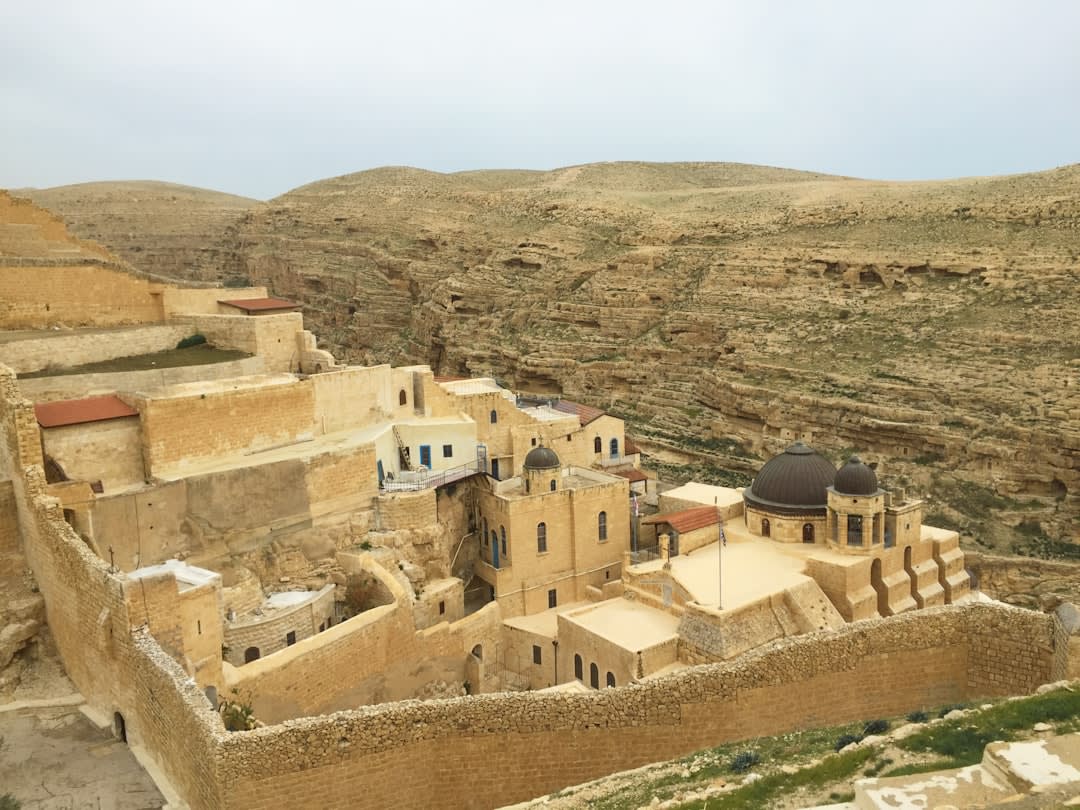
The monk who guided us, communicating mostly in gestures and a handful of English words, took us out onto a terrace overlooking the canyon, and the silence there was of a different order than silence I’d experienced anywhere else — not an absence of sound but a kind of accumulated weight, sixteen centuries of the same prayers said in the same place by men who chose total withdrawal from the world on purpose. A few dozen monks still live here, following a monastic rule scarcely altered since Byzantine times, growing their own vegetables on narrow terraces, keeping candlelit hours, and generally ignoring the twenty-first century with what looked to me like genuine indifference rather than performance.
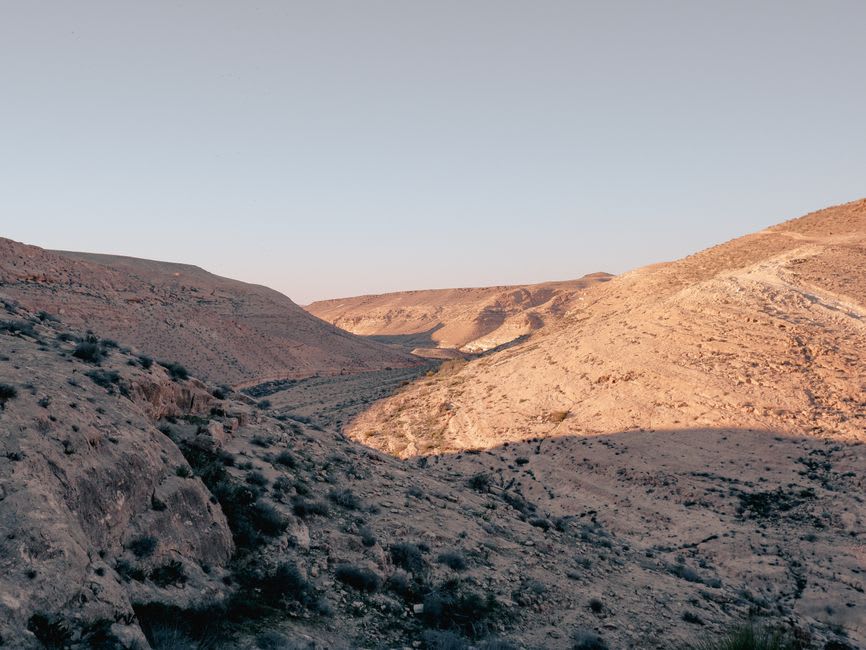
We were offered a small shot of arak and a piece of Turkish delight before leaving, the traditional welcome for visitors, and I drank it standing on a terrace edge with a two-hundred-metre drop beneath my feet, looking at a landscape that has apparently changed very little since Saint Sabbas himself stood in roughly the same spot deciding this was, finally, remote enough.
When to go: Morning visits are calmer and cooler; check locally for current access arrangements since visiting hours and permissions can shift. The road there winds through genuinely dramatic Judean Desert scenery, worth the drive on its own.