A small oasis village north of Jericho built around a spring that turns the surrounding desert into a startling stretch of green, especially after winter rains.
Auja lies about fifteen minutes north of Jericho along the road toward the Jordan Valley, and I nearly drove past it entirely — there’s no dramatic gate or monument announcing the place, just a gradual thickening of green along the roadside where there had been nothing but pale hills and scrub. The village grows around Ain al-Auja, a spring that emerges from the base of the hills and, historically, has been strong enough to support genuinely lush agriculture in a stretch of the Jordan Valley that otherwise receives some of the lowest rainfall anywhere in Palestine.
I parked near the spring pool itself, a shaded, informally maintained spot where local families come to swim, especially on Friday afternoons, and found a group of teenagers jumping off a low concrete ledge into water that was startlingly cold given the desert heat surrounding it on every side. An older man sitting nearby, clearly a regular, told me the spring’s flow has diminished significantly over recent decades — a mix of upstream water extraction, changing rainfall patterns, and the cumulative effect of new agricultural wells in the surrounding area — a decline he described with the specific, weary precision of someone who has watched a resource he grew up considering permanent slowly become uncertain.
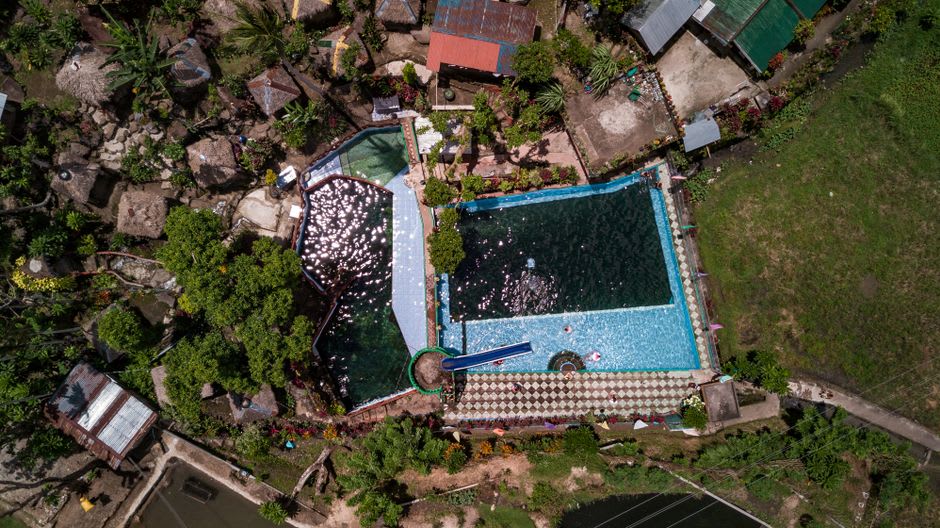
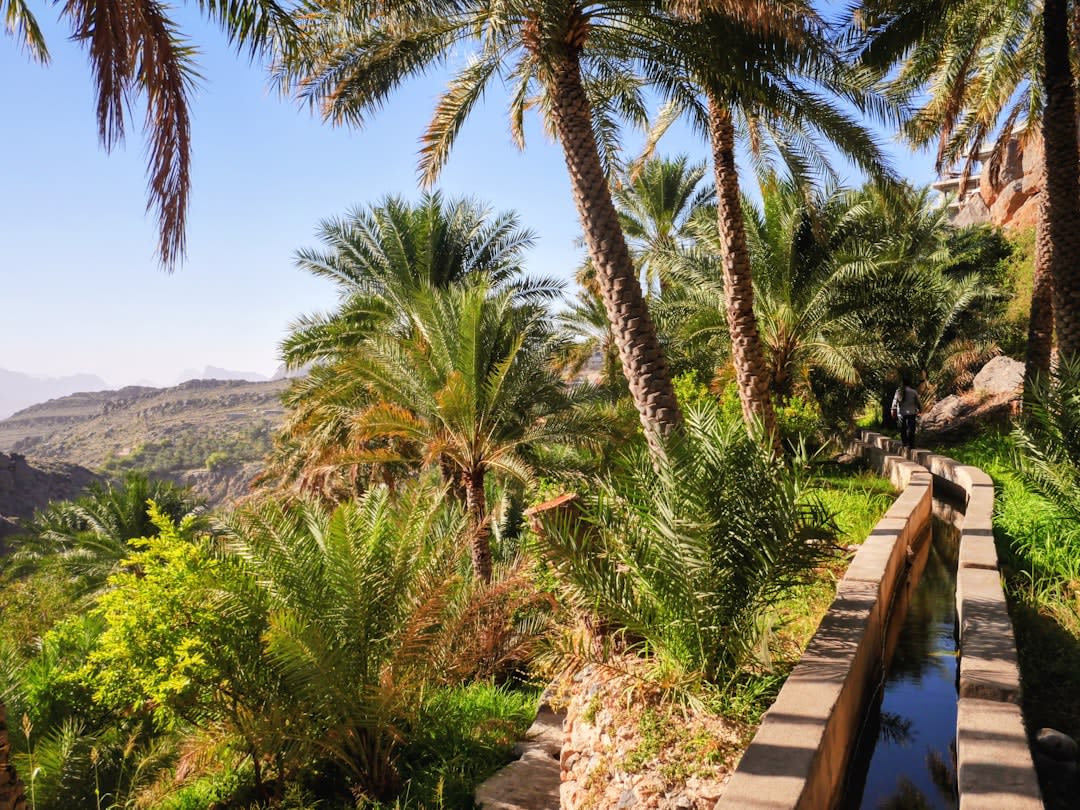
The village itself is small and unhurried, its economy built around date palms, citrus, and banana groves fed by the spring’s irrigation channels, a green corridor that stands in genuinely startling contrast to the bare, folded hills rising immediately behind it. I walked one of the irrigation paths at dusk, water audibly moving through the stone channels beside me, frogs calling from somewhere in the undergrowth, and the smell of ripening dates thick in the warm air — a sensory experience that felt entirely disconnected from the desert I’d been driving through twenty minutes earlier.
I bought a bag of fresh dates from a roadside stand on my way out, still warm from the sun, and ate most of them before reaching Jericho.
When to go: Spring, after winter rains, is when the spring flow and surrounding greenery are at their fullest. Friday afternoons bring local families out to swim, which makes for good atmosphere if you don’t mind sharing the pool.
Keep exploring
More from Palestine
 palestine
 Battir
A UNESCO World Heritage valley where Roman-era terraces are still irrigated by a spring system that predates the Ottoman Empire by several centuries.
Explore palestine
 Beit Sahour
The traditionally Christian town just east of Bethlehem where shepherds are said to have received news of the Nativity, now a quiet base for hiking the surrounding Judean hills.
Explore palestine
 Bethlehem
A living Palestinian city wrapped around the world's most contested manger — incense, graffiti, and the best musakhan of my life.
Explore palestine
 Birzeit
A hilltop university town near Ramallah where Ottoman-era stone mansions, a lively student population, and some of the best olive oil in the West Bank all share the same few streets.
Explore palestine
 Hebron
The most divided city in the West Bank — ancient souk, contested shrine, and a glass-blowing tradition that has survived everything the twentieth century threw at it.
Explore palestine
 Herodium
A man-made volcano-shaped mountain outside Bethlehem where Herod the Great built a fortress-palace and, according to Josephus, was buried inside it.
Explore