Nacpan Beach
"By eight in the morning I had four kilometers of beach entirely to myself. The feeling was not loneliness — it was the opposite."
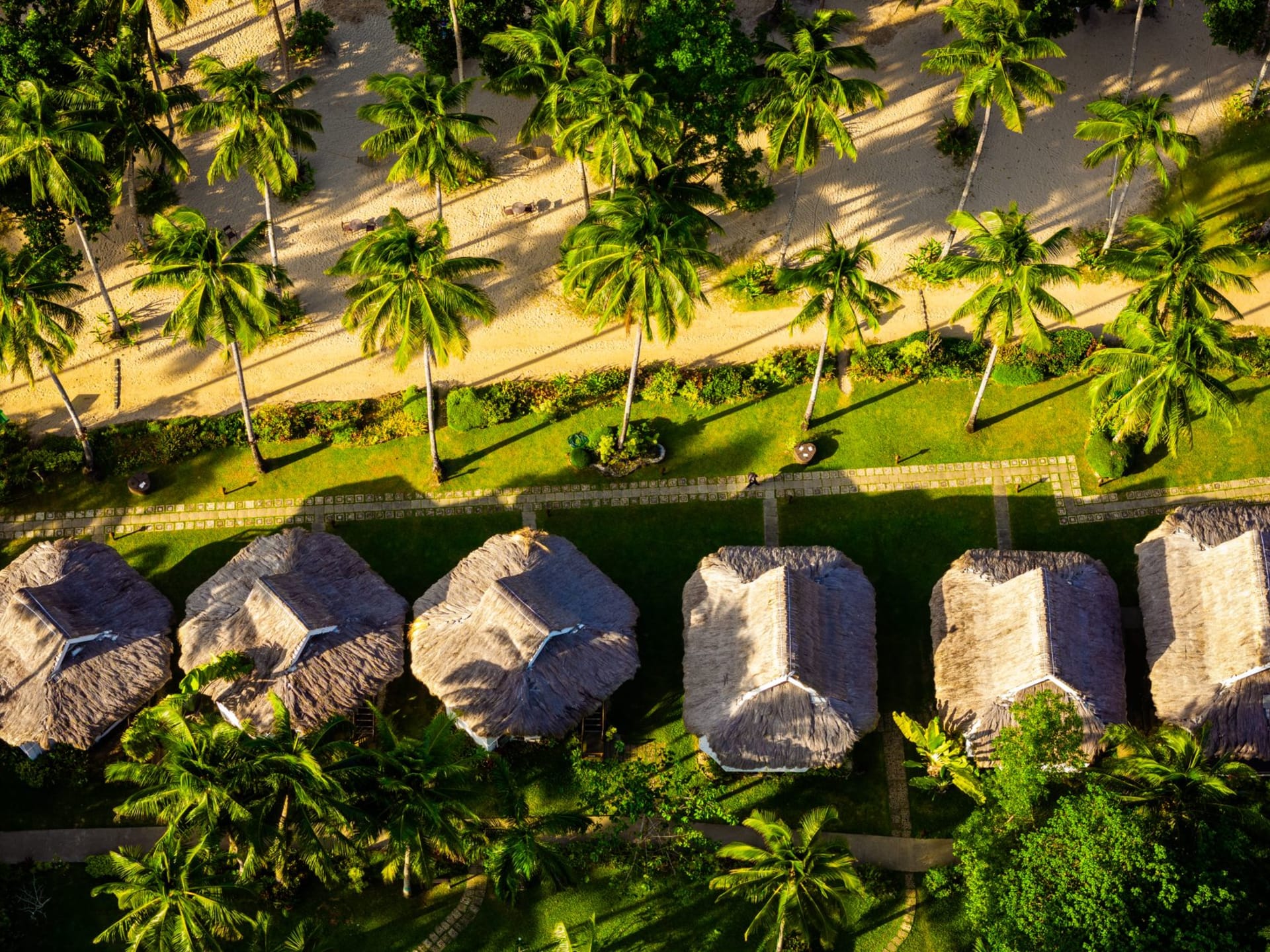
The tricycle from El Nido town takes forty minutes north on a road that begins paved and ends in dirt, threading through coconut farms and the occasional stilt house before depositing you at a curve in the road where a signboard says NACPAN BEACH and a path leads down through the palms. I came in the morning, early enough that the mist was still sitting on the water and the beach was empty except for two local women collecting shells at the tide line. The beach itself is roughly four kilometers of pale sand curving around a wide bay, the surf arriving in long, gentle lines, the water shallow and warm, the palms leaning overhead in that specific way palms have of making every scene look like a photograph taken slightly to one side of the one in the brochure.
I walked the entire length. It took forty minutes. I passed perhaps six other people — a couple of surfers at the far end, a French family eating papaya at a beach shack halfway along, a dog sleeping at the waterline who did not open its eyes when I stepped over it. This is the beach I had been vaguely hoping El Nido would be, before El Nido turned out to be magnificent in a different way.

There is almost nothing here by way of infrastructure — a few small beachfront guesthouses with nipa hut rooms, two or three restaurants that serve the same rotation of fresh fish, pancit, rice, and buko juice from young coconuts hacked open at the table. I ate grilled tanigue — Spanish mackerel, firm and slightly oily, eaten with rice and a wedge of calamansi — for both lunch and dinner on the day I stayed, and felt no need for variety. One small resort has started building more permanent structures at the southern end, which is probably the future of this place, but for now the majority of the beach remains as it is: wide, mostly empty, available to anyone willing to take the tricycle forty minutes north.
The sunset here does something El Nido proper cannot do, because at El Nido the karsts interrupt the horizon. At Nacpan, the bay faces roughly west, and the sun goes down over open water. On the evening I stayed, the sky turned orange and then pink and then a deep violet that reflected on the sand flats exposed by the retreating tide. A group of Filipino teenagers lit a small fire at the waterline and played guitar badly and cheerfully, the sound carrying down the beach in the warm air. I did not move for a very long time.

The beach continues around the headland to another bay called Calitang, which is even more remote — accessible by a twenty-minute walk over the point at low tide — and contains, when I last visited, absolutely nothing except a fishing boat drawn up on the sand and two fishermen mending a net in the shade. Worth the walk.
When to go: November through April. The beach is most empty in the early weeks of December before the holiday crowds build. February and March are particularly good — the weather is settled, the light is extraordinary, and the numbers stay manageable. Avoid May through October when the monsoon arrives and accommodation on this stretch of beach thins out considerably.