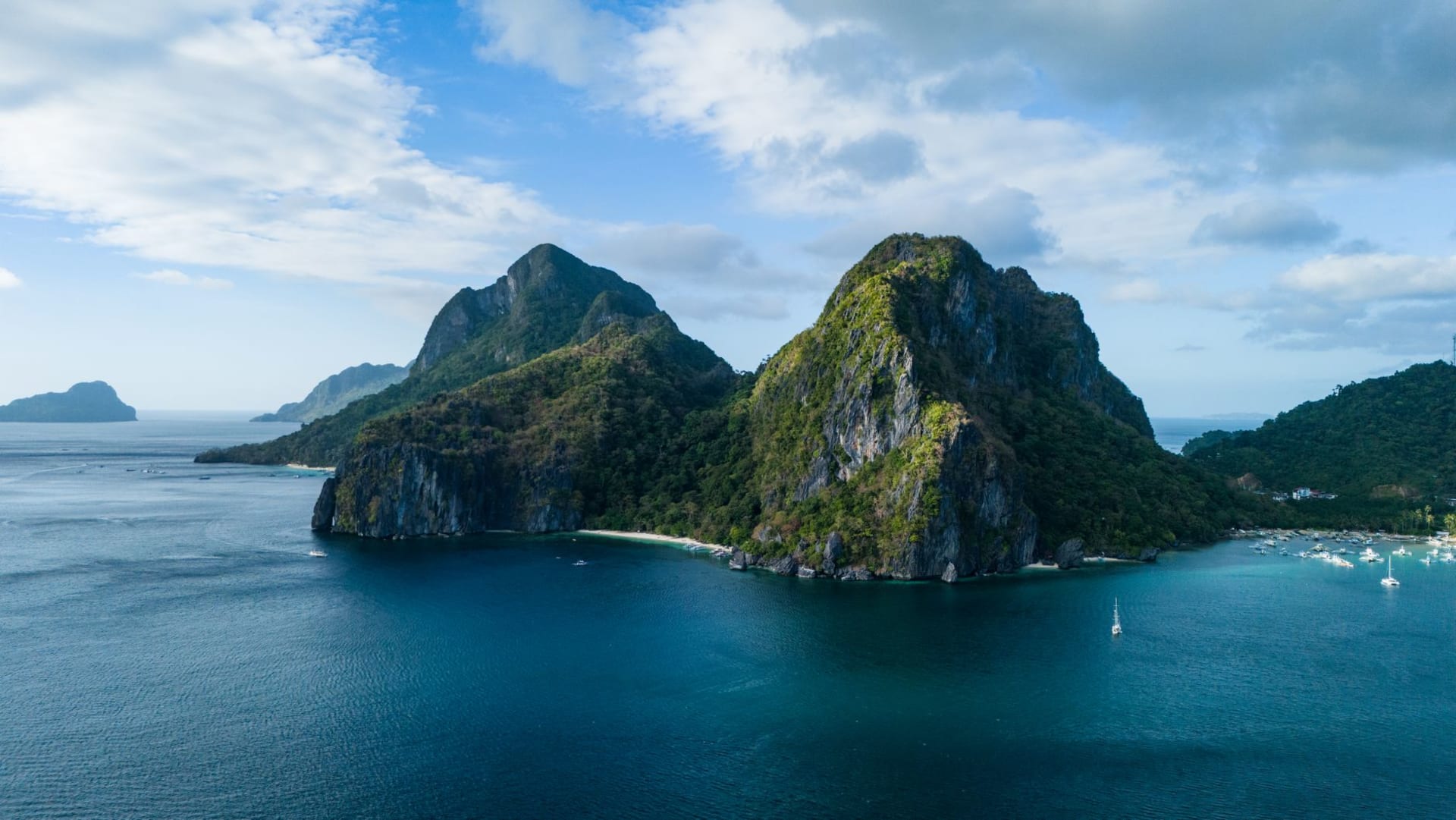
El Nido
"You spend the first hour trying to photograph it. After that you put the camera away and just float."
The van from Puerto Princesa takes seven hours on a good day, which this was not. We came up through the mountains in a coaster van stuffed with backpackers and locals and one live chicken in a bag, the road narrowing to a single lane for long stretches, and then — somewhere in the final descent — the bay appeared through the windshield, lit gold by four o’clock sun, the karsts rising black and vertical against the sky. Everyone went quiet. The chicken, too.
El Nido town is small and somewhat chaotic, the main road a strip of tour agencies and restaurants and dive shops that smells of sunscreen and diesel and frying garlic. In high season it is genuinely crowded, and the smart move is to book your island tours early, leave by seven, and be back at the dock before the second wave of bangka boats begins its afternoon lap. The lagoons — Big Lagoon, Small Lagoon, Secret Lagoon — are incomprehensible even in photographs, which is saying something. The water inside Big Lagoon is the colour of a swimming pool designed by someone who had never seen a swimming pool but had heard a very detailed description of one. You swim through a slot canyon in the karst to reach it. The boatman cuts the engine before the entrance because the sound of anything mechanical feels like a desecration.

The tours run A through C, and the locals will tell you to do them in order, which is good advice. Tour A covers the lagoons and Shimizu Island. Tour B goes to Cathedral Cave, where the karst walls form a vaulted ceiling over a shallow beach you enter by wading. Tour C takes you to Helicopter Island and Secret Beach, the latter requiring you to swim through a narrow gap in the cliff face. Each tour costs around one thousand pesos plus a small entrance fee for the Bacuit Archipelago Marine Park, and each one delivers approximately three or four moments that feel genuinely unrepeatable. Bring reef shoes. Bring more water than you think you need. Eat the fresh catch grilled at whichever beachside restaurant your boatman recommends — they always have one, and they are always right.

The town itself repays some time in the early evening. Rizal Street, one block from the beach, has two or three good restaurants serving kinilaw — local raw fish cured in coconut vinegar, thin-sliced and laced with ginger and chilies — that I ate for three consecutive nights. The beachfront at dusk has a specific quality: the karsts turn purple, the outrigger boats rock at their moorings, and the hawkers on the shore become less insistent as the light dies. If you can find a spot at the end of the beach away from the bar music, the view from this specific latitude at this specific hour is the single best argument for the plane ticket.
When to go: November through April. December to February offers the calmest seas and clearest water — ideal for the lagoon tours. March and April are slightly warmer with occasional afternoon winds but remain excellent. Avoid May through October entirely; the southwest monsoon makes island-hopping unreliable and the lagoon entrances frequently impassable.