Balabac
"There is no electricity after dark and the stars are the reason — the stars are the whole reason."
The boat from Rio Tuba, the southernmost port town of Palawan’s mainland, takes three hours to reach Balabac municipality on a good sea. On a bad sea it takes longer, and some days it does not run at all. The wooden ferry that makes the crossing sits low in the water and carries everything — gas canisters, bags of rice, motorcycle parts, a woman with three chickens, my backpack — in an arrangement that seems unsafe from outside and feels merely cozy once you are seated among it. This is how you get to Balabac. There is no other way that I know of, and I am not sure I would want there to be.
The island group sits at the southernmost tip of the Philippine archipelago, close enough to Borneo that the currents in the Balabac Strait run strong and the sea between them is a deep, improbable blue that is different from anywhere else on Palawan. The town of Balabac itself is a grid of concrete streets and wooden houses, a market where the fish arrived that morning, a generator that runs on schedule, and a community of about forty thousand people who mostly earn their living from fishing and who will, on balance, find your presence there amusing and not unwelcome.

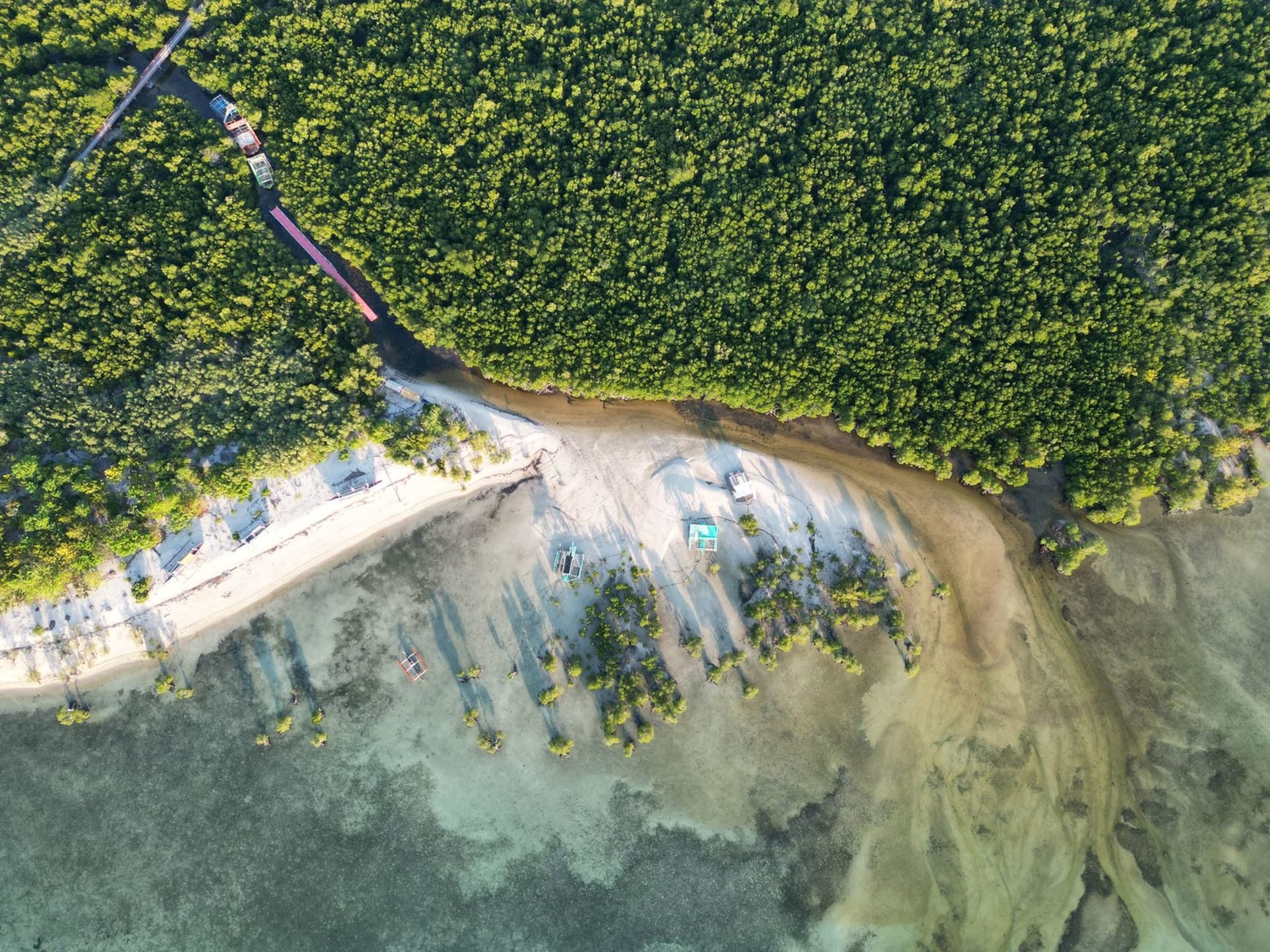
The reason to come here is the sandbars. Onuk Island, Candaraman, Bugsuk — a chain of islands and shifting sand formations surrounded by water in shades of blue and green that I have genuinely never seen reproduced in a photograph, including my own. The sand at Onuk is not yellow but white, the white of chalk or snow, and the contrast with the water is so extreme it makes your eyes adjust the way they adjust when you walk from shadow into full sunlight. Sea turtles nest here. Green turtles, hawksbills — I watched a large green turtle surface beside our banca three times in the space of an hour, apparently unconcerned with us, committed to whatever errand turtles run in the afternoon.
There are almost no tourist facilities in the modern sense. The guesthouses are basic: a mattress, a mosquito net, a bathroom that works when the water tank is full. Electricity, if it exists, is solar and intermittent. After dark, on the islands, there is no light competition for the sky, and the Milky Way is visible as a physical structure — thick, layered, three-dimensional in a way that photographs fail completely to communicate. I lay on the sand on my last night and looked at it for over an hour before I felt I had done it sufficient justice.

Food is what is available: fresh fish, rice, coconut, whatever came on the last boat from the mainland. Bring enough cash for four days plus an unexpected delay, because delays happen. Bring a headlamp. Bring a good attitude about improvisation. This is not a destination for people who need reliability. It is a destination for people who can hold the discomfort of uncertainty and have it transform, in the right light, into the exact feeling of being somewhere the rest of the world hasn’t quite finished arriving at yet.
When to go: January through April only. The Balabac Strait is rough in monsoon season and many crossings are cancelled without notice. February and March offer the calmest waters and the clearest sandbars. Plan for a minimum of three days on the islands plus transit time on either side, and always build in contingency days for weather delays.