The boat drops you at a wooden dock on Eil Malk Island and you walk fifteen minutes through dense jungle on a root-strewn path that climbs over a limestone ridge before descending to a lake you cannot see until you are almost standing on its shore. The heat in that jungle is extraordinary — sealed from any sea breeze, the air smells of soil and rotting leaves and the particular sweetness of tropical vegetation in full sugar production. By the time the lake appears through the trees, a dark mirror of water utterly calm beneath the canopy, you are already sweating through your shirt. You put on your fins and mask, and you go in.
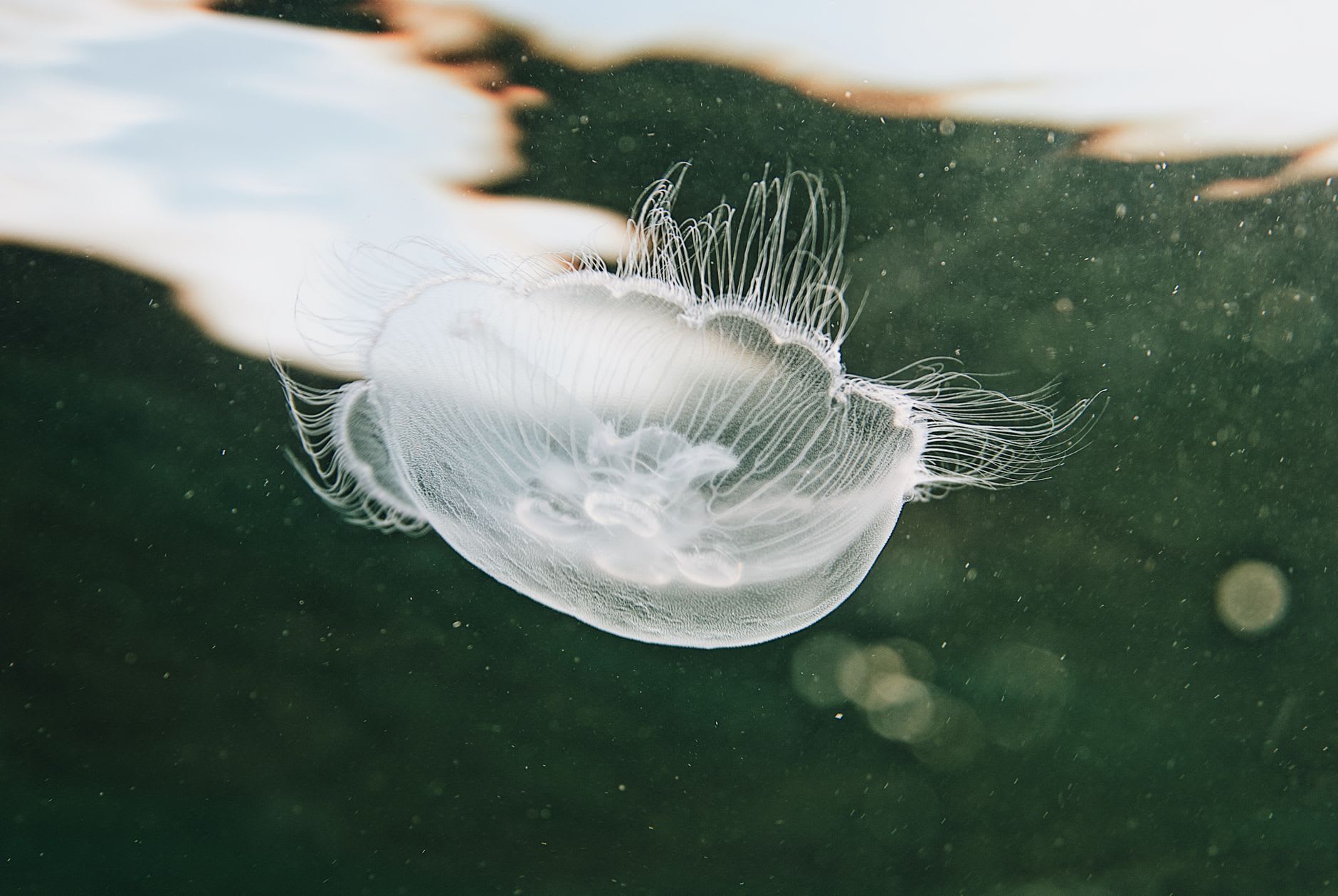
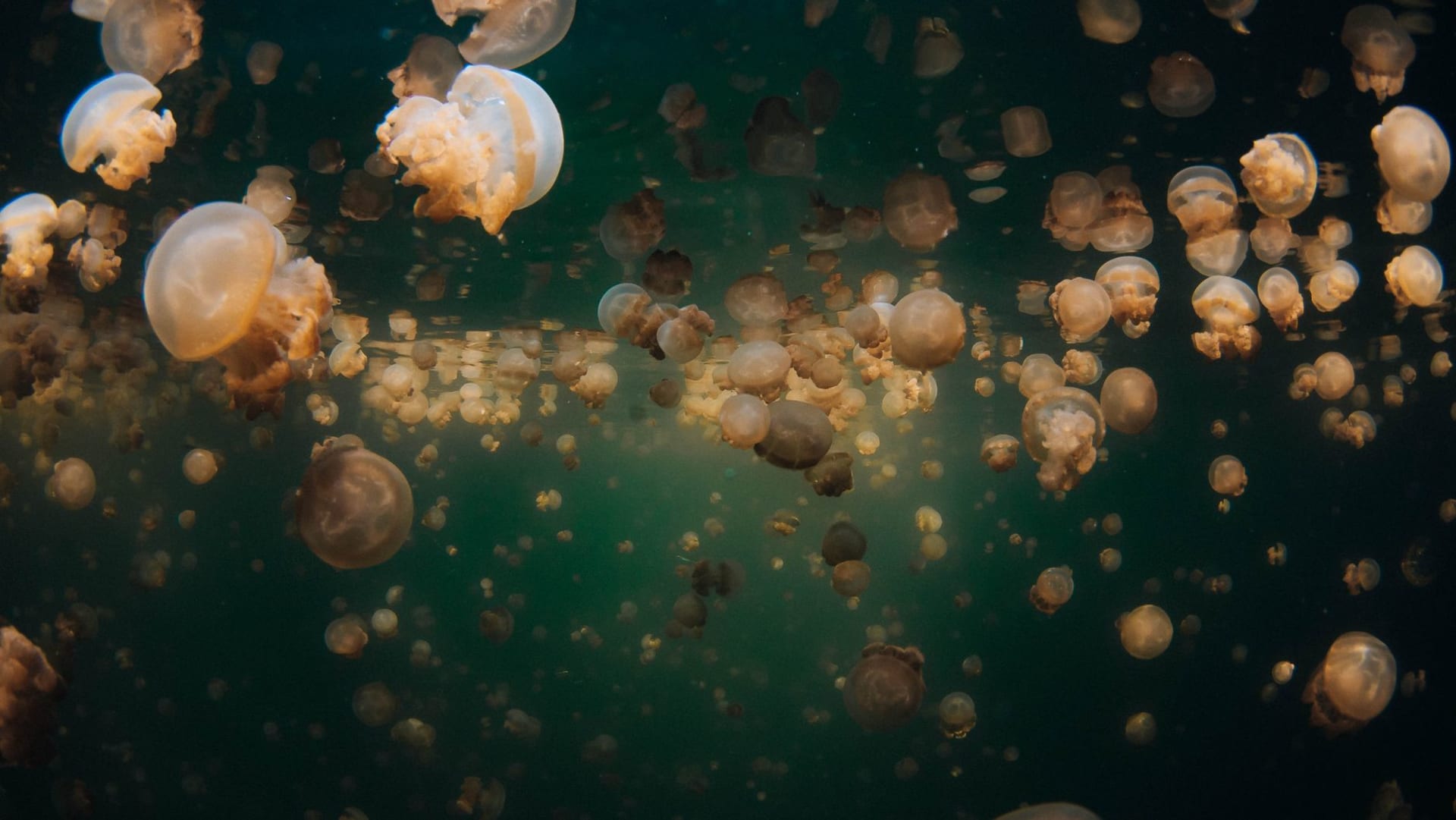
The first jellyfish appear within ten meters of the dock. A single one, then three, then suddenly you are surrounded. These are Mastigias papua — golden medusae the size of a grapefruit, their bells pulsing with a slow, rhythmic contraction that looks more like breathing than swimming. They evolved in this landlocked lake for thousands of years without predators, which means they have lost their stinging cells almost entirely. You can touch them — gently, because the slightest pressure can damage them — and what you feel is something between a soap bubble and a living thing, impossibly fragile and impossibly present at the same time.
By the time you reach the middle of the lake, there are millions of them. This is not a figure of speech. The jellyfish population in peak season numbers in the tens of millions, and they follow the sun across the lake in a vast daily migration, their amber bodies tracking the light so the algae living inside them can photosynthesize. I floated on my back for a long time in the middle of that migration, jellyfish moving past my face and under my arms and between my legs, and I tried to think of another experience that felt remotely like it. I couldn’t. The sunlight coming through the water turned the whole column of them gold, and the effect was something like floating inside a stained-glass window that was also alive.
The lake has a chemical structure that makes it dangerous to dive below about fifteen meters — a hydrogen sulphide layer that can be absorbed through the skin. This is why scuba tanks are prohibited, and why you stay on the surface. It also means the experience stays entirely accessible: you don’t need a dive certification, you don’t need to be a strong swimmer, you just need to be able to float and look. Children do it. Older travelers do it. The lake doesn’t rank you.
What I wasn’t prepared for was the sound — or rather the near-total absence of it. The jungle muffles everything directional, and the lake surface breaks the last of any ambient noise. You are left with your own breathing through the snorkel, the faint pulse of the water as jellyfish pass, and occasionally the distant call of a bird from somewhere on the ridge. It is the quietest place I have been in years, which somehow makes the density of life around you feel more intense rather than less. Floating in that silence among ten million living things, I felt something that I haven’t got a word for that doesn’t sound overcooked. Let me just say it stays with you.
When to go: The jellyfish population peaks in the wet season (roughly May through November) when nutrient levels are higher, but the lake is accessible year-round. Check current population counts with your dive operator before booking — the numbers crashed dramatically in 2016 due to drought and took two years to recover, and conditions can shift. The trek to the lake is genuinely hot; go early, before ten in the morning, when the path is still in partial shade and the lake surface is lit at a lower angle that makes the jellyfish easier to see below the surface.