
Skardu
"Skardu sits at the edge of scale — everything here is calibrated for mountains, not people."
You understand Skardu from the airplane window before you land. The plane descends through a corridor of mountains so close that the wing tips seem reckless, and then the Skardu Valley opens below: a wide, cold desert floor, sand dunes pushing up against the feet of bare 4,000-meter walls, the Indus River a silver thread through all of it. No city in the world looks quite like this from above — not desert exactly, not mountain exactly, but some third thing the geography invented for itself. Landing felt like arriving somewhere that had been waiting a long time to be seen.
Skardu town itself is modest. There’s a bazaar that sells climbing gear alongside vegetables, small hotels whose owners know the high-altitude routes the way taxi drivers know city streets, and a general atmosphere of purposeful transit — most people here are either heading somewhere higher or recovering from it. I sat in a small restaurant and ate trout from the Indus, grilled simply with salt and served with flatbread and a dish of dried apricots. The man who brought it told me the trout had been caught that morning, which I believed absolutely. It tasted like cold water and clean altitude.
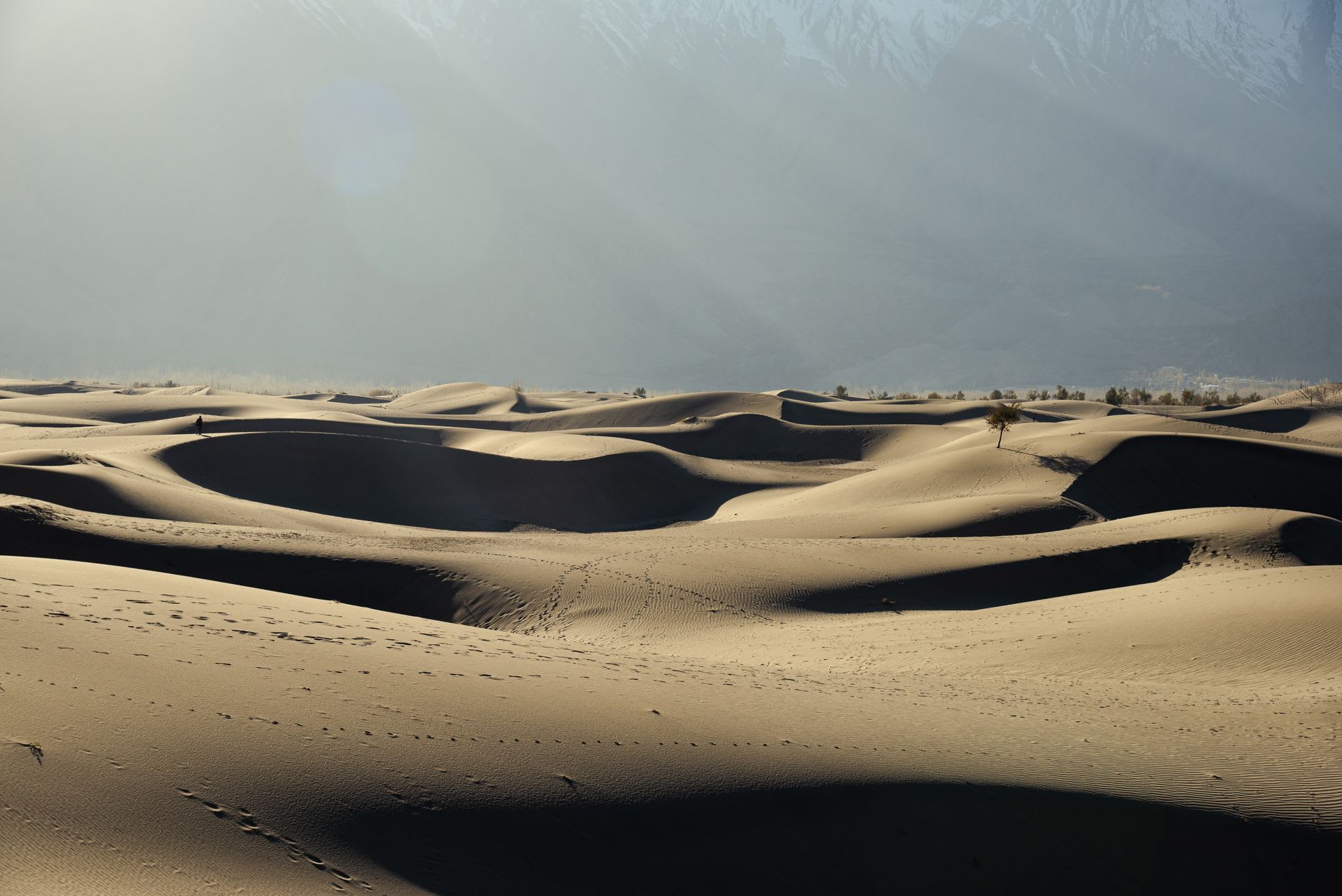
The cold desert of Katpana is perhaps the most disorienting thing close to town — actual sand dunes at 2,500 meters, rolling formations of fine sand against a backdrop of glaciated peaks. I walked into the dunes in the early morning when the light was low and the shadows long, and for a moment the conceptual collision of high Himalayan desert was too much to categorize. The Deosai Plateau, reachable in a long day’s drive from Skardu, is something else entirely: the second-highest plateau in the world, a vast high grassland at 4,000 meters where Himalayan brown bears actually exist and roam, and where in July the wildflowers come in colors that seem excessive for the altitude. The drive up to Deosai through the Astore Valley is itself half the point.
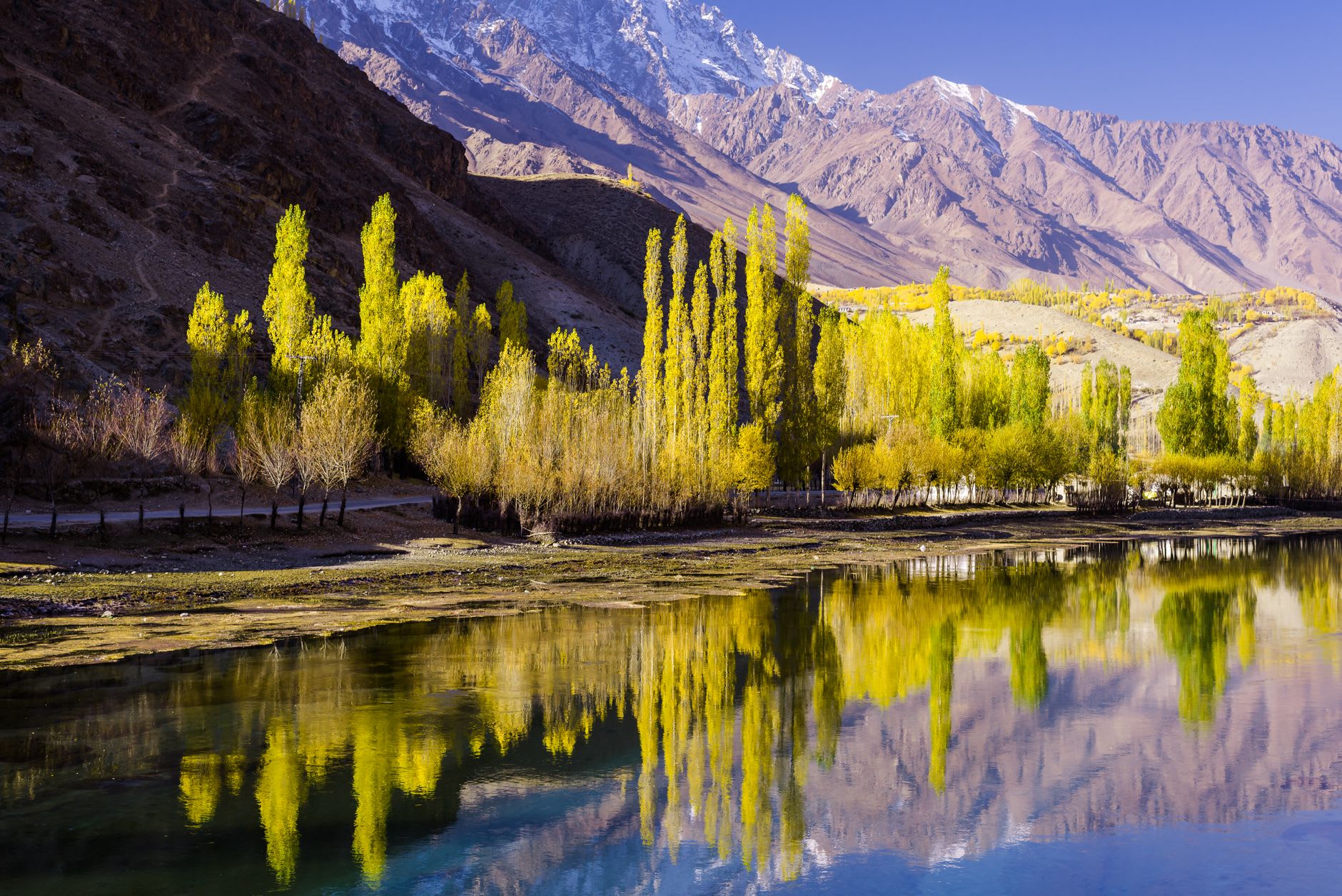
Kachura Lakes — two mirror-still bodies of water at different elevations, surrounded by poplar trees and willow groves — are where the residents of Skardu go to breathe. I went in the late afternoon when the shadows had reached the water and the reflections of the peaks were fractured by the faintest wind. I shared the bank with a family picnicking on a kilim spread with thermoses of chai and a box of sweets, and nobody tried to photograph each other. The scene simply existed, which is the highest praise I know for a landscape.
For those heading to K2 base camp — a two-week trek that is among the most demanding in Asia — Skardu is the final urban stop. Jeeps leave from here for Askole, the last village before the wilderness swallows the trail. Even without K2 as the destination, the Baltoro Glacier trek through the Karakoram takes you through a landscape of such concentrated geological drama that the word “scenery” doesn’t really do the work anymore.
When to go: June through September for trekking and access to K2 base camp. Deosai is only accessible July through September when the snow road clears. April and May are shoulder season — cool, less crowded, and the desert light has a particular quality. Winter closes most of the high routes and the airport occasionally.