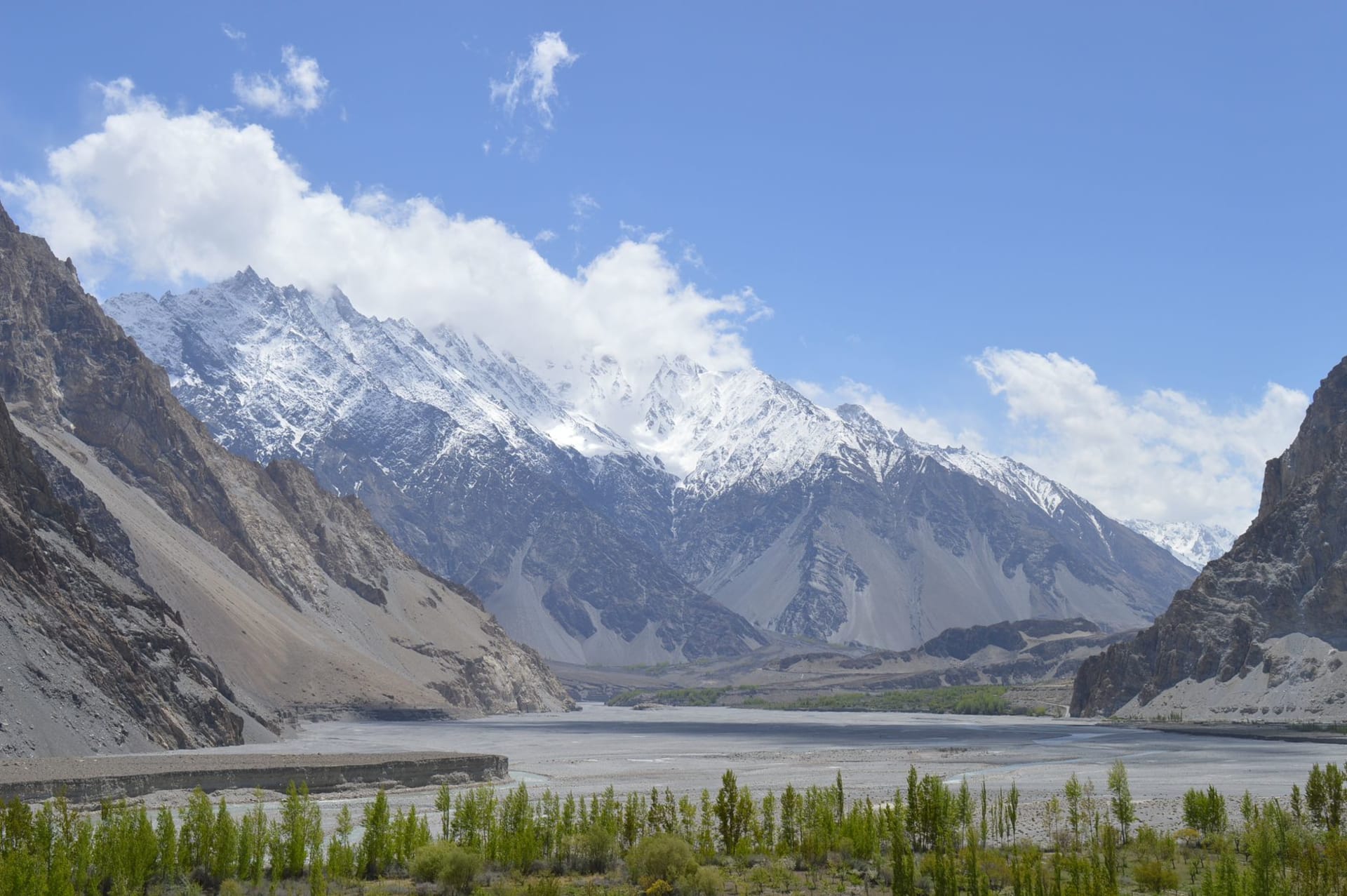
Hunza Valley
"Standing below Rakaposhi at dusk, I understood for the first time why people say mountains are alive."
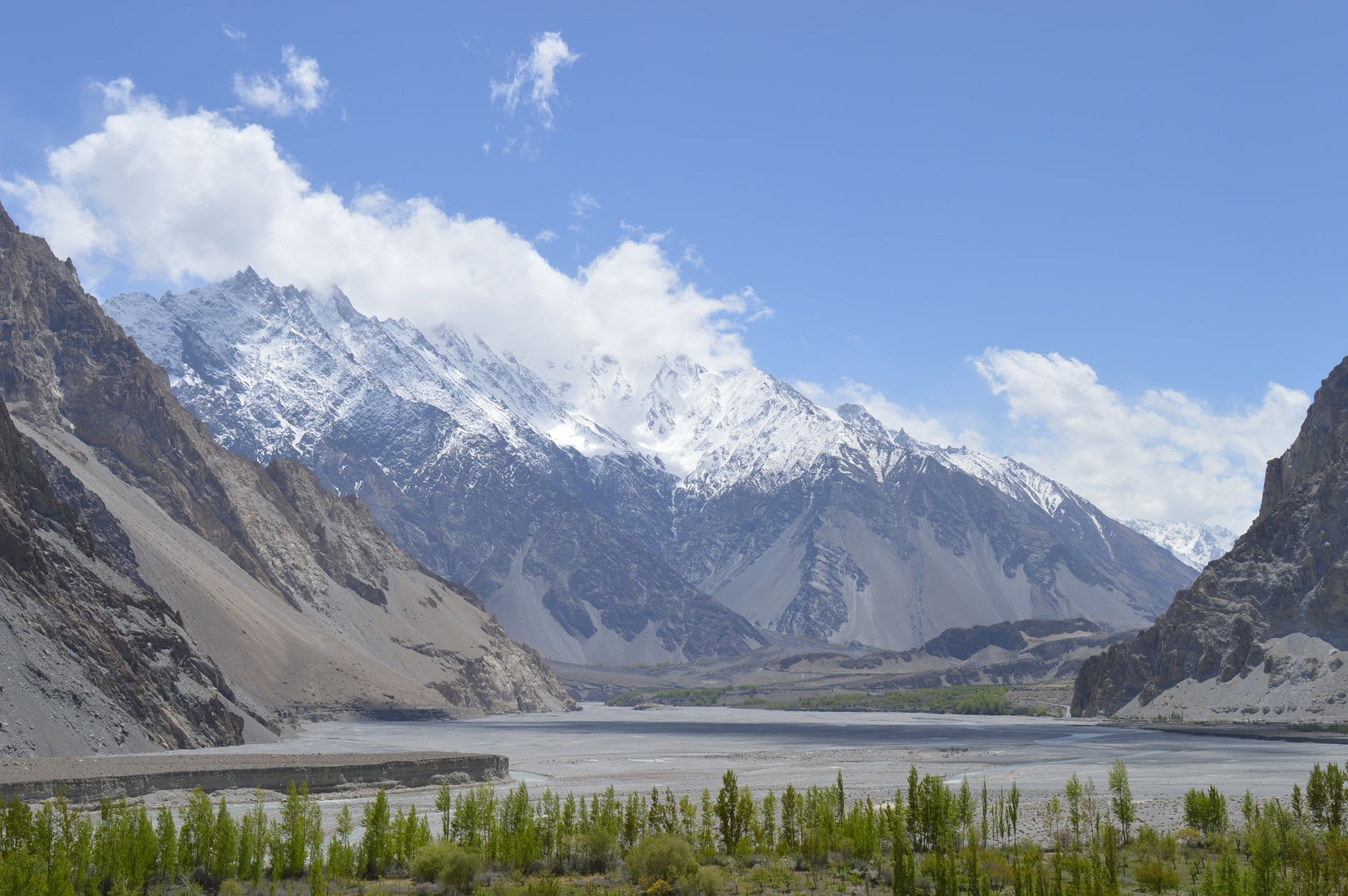
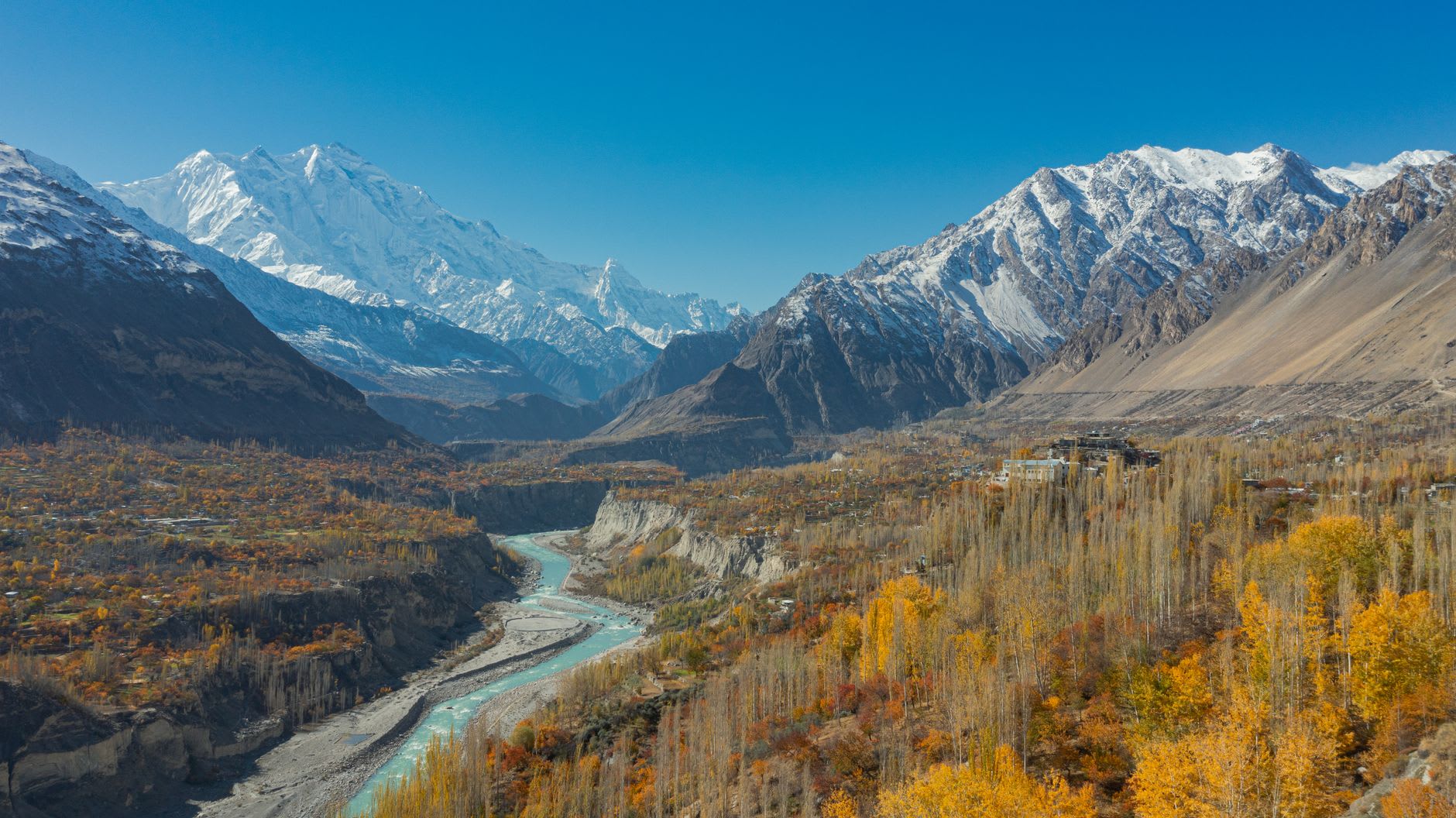
I arrived in Hunza on a shared jeep from Gilgit that spent most of the journey navigating a road carved into cliffs above a roaring river the color of glacial meltwater — that peculiar milky turquoise that tells you the water has been grinding through rock for ten thousand years. It was June. The apricot blossoms were already gone but the trees had leafed into a shade of green so saturated against the gray-white of the surrounding peaks that my eyes kept refusing to believe it. The valley floor is a narrow strip of terraced gardens, irrigated by channels cut centuries ago from glacial streams, and the mountain walls on either side simply rise and rise until they become something inhuman.
Karimabad is the main town — a stacked jumble of stone houses and guesthouses climbing the hillside, with a bazaar at the bottom that sells dried mulberries, walnut oil, locally-made cheese, and prayer beads in roughly equal proportion. I ate lunch on a rooftop terrace watching mule trains pick their way up a path I hadn’t noticed before, wondering where they were going and whether I could follow. Baltit Fort sits above everything, an eight-hundred-year-old structure that looks like it grew from the mountain rather than being built against it, its wooden balconies jutting out over a drop that makes you grab for a railing that isn’t there.
The food in Hunza runs to hearty and simple — chapshuro, a bread stuffed with meat and onions and cooked on a griddle, is the thing you eat when you’ve been walking all day and your hands are cold. Apricot oil flavors everything in season. Diram phitti, a thick mulberry porridge, was served to me for breakfast at a guesthouse by an elderly woman who spoke no English and communicated entirely through the act of refilling my bowl. I ate three helpings. The hospitality here operates on a different register — not the performative warmth of tourist-economy places but something older, more quietly insistent.
The Valley’s deeper draw is what you find when you walk away from Karimabad’s tea houses toward the Eagle’s Nest viewpoint, or north toward Passu Cones — those impossibly sharp rock needles that rise from the valley floor like something from a painter’s fever dream. Gojal, the upper Hunza region, has a different character entirely: quieter villages, higher altitude, the air beginning to thin into something that asks you to slow down. Attabad Lake, a turquoise body of water created by a landslide in 2010 that swallowed several villages, is haunting and startling at once — that color against the ochre rock walls, that history underneath.
When to go: Late May through June for the last of the spring blossoms and intense green before the summer crowds. September and October are the best months for trekking — the air is crisp, the poplars turn gold, and the light on Rakaposhi in the afternoon is something I don’t have adequate language for.