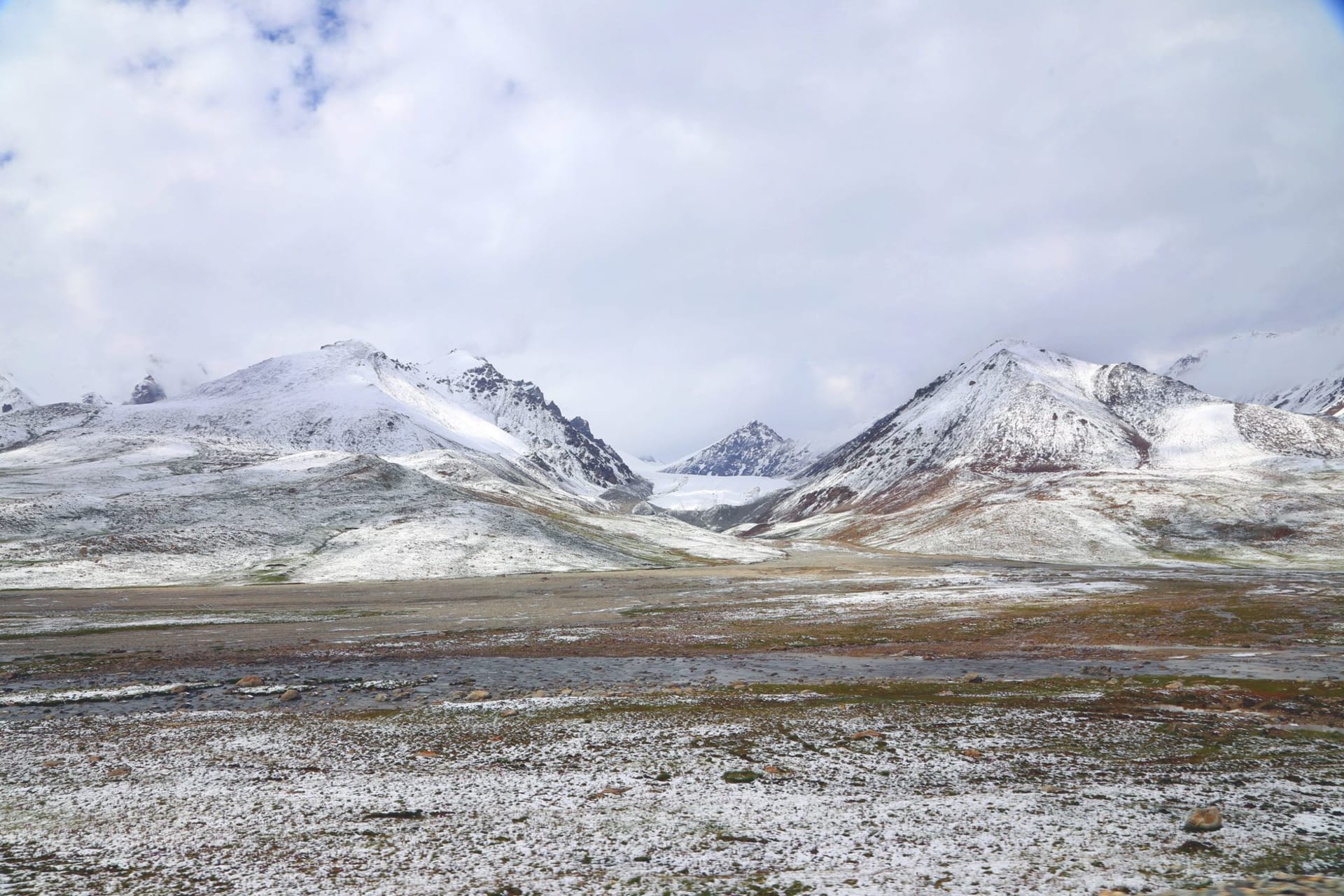
Deosai Plains
"We were over four thousand metres and there was not a single tree, not one, and I have never felt smaller or more clear-headed."
The road up to Deosai from Skardu climbs through a gorge and then, abruptly, the world flattens and opens and the trees simply stop. You come over a lip and the plateau spreads out in front of you — Deosai, the Land of the Giants, sitting at an average of around 4,100 metres and rolling to the horizon in every direction with nothing taller than a wildflower on it. It’s a national park now, a high-altitude wilderness straddling the boundary between the Skardu and Astore valleys in Gilgit-Baltistan, and it’s only accessible for a few months a year because snow buries it the rest of the time. We came in late July, when the brief summer had turned the whole plateau into a carpet of bloom, and I have rarely been anywhere that so completely rearranged my sense of scale.
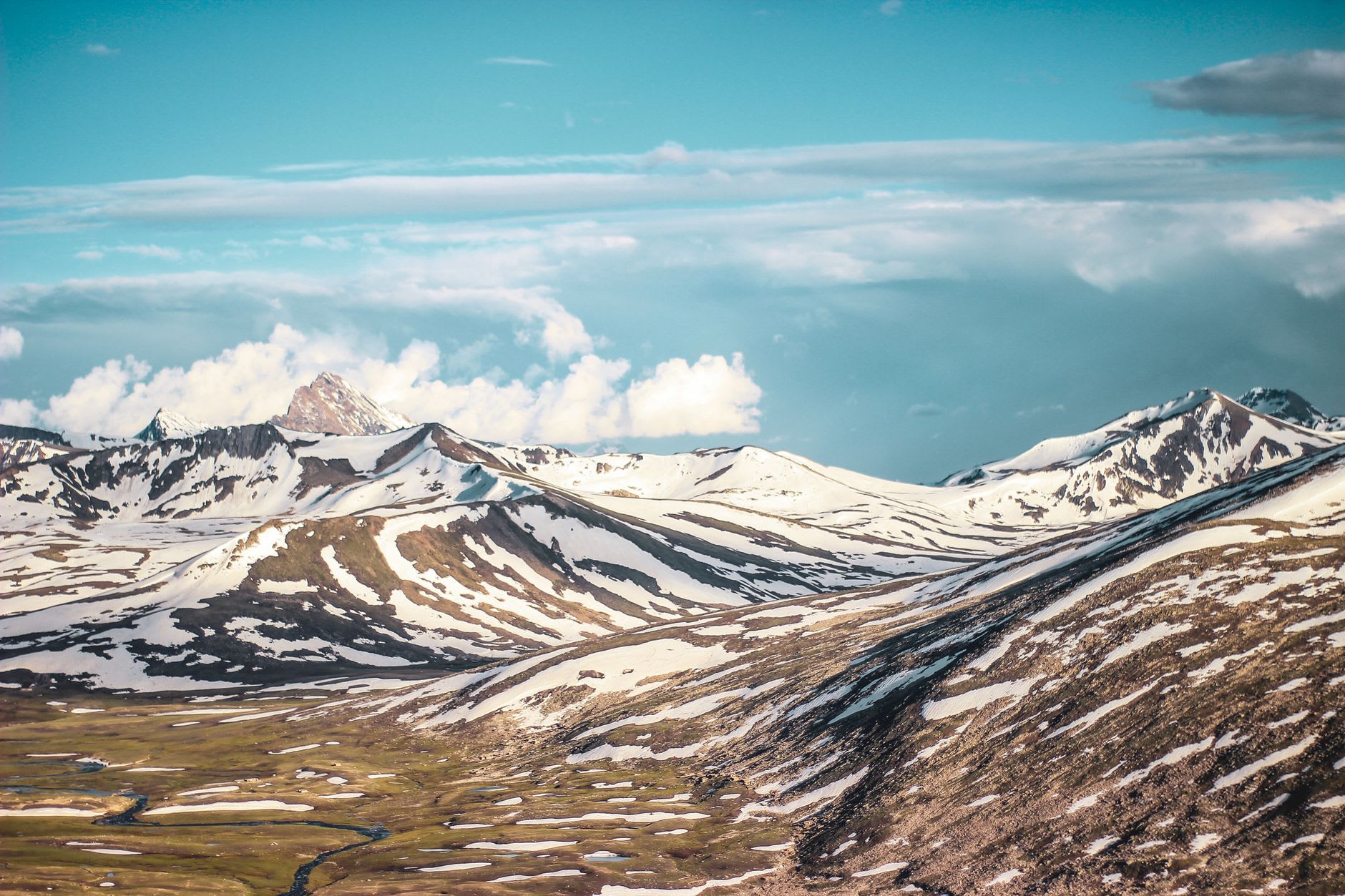
The land of the giants
The name comes from the legend that the plateau is haunted by giants, and at this altitude with this emptiness the story makes intuitive sense — it does not feel like a place built to human dimensions. The real giants are the Himalayan brown bears, one of the last viable populations anywhere, and Deosai exists as a park largely to protect them. We didn’t see a bear, which our driver assured us was the normal outcome and not a personal failing, but we saw golden marmots standing upright at their burrows, ibex on a far slope, and birds of prey riding thermals over ground that ran flat for kilometres. The plateau is cut by streams of snowmelt so cold and clear they hurt your hands, feeding into the Sheosar Lake at the Astore end — a deep blue alpine lake with the peaks of the Nanga Parbat massif visible beyond it on a clear day.
What I wasn’t ready for was the silence. At over four thousand metres, with no trees to move the air and no traffic and no settlements, the quiet has a physical weight to it. Lia and I walked a little way from the vehicle and sat, and after a few minutes the only sounds were our own breathing and, very far off, water. I’ve chased a lot of landscapes and few have shut me up like that one.
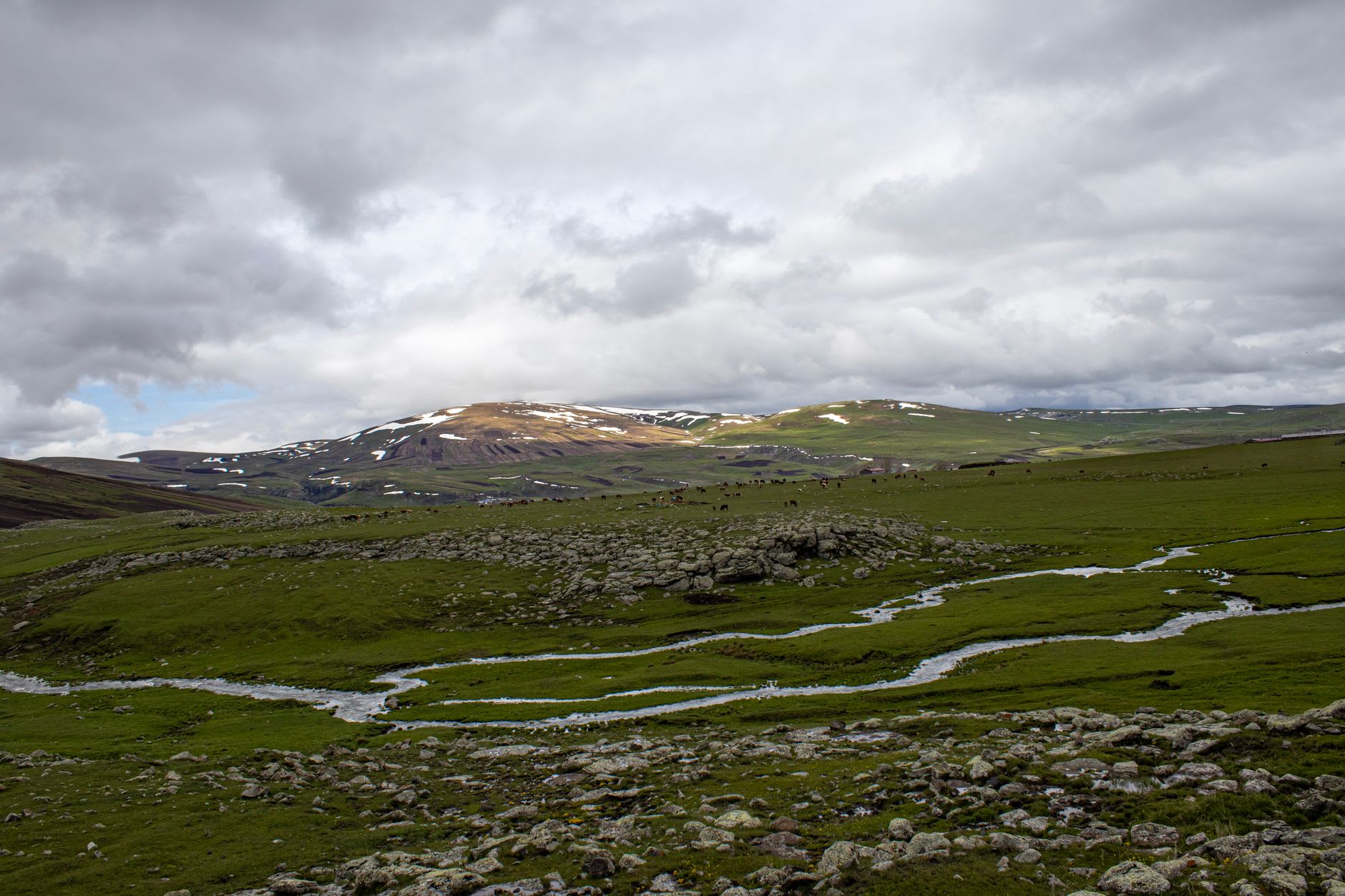
Going up there
Deosai is not a place you wander into. The access window is roughly mid-June to mid-September; outside it, snow closes the tracks entirely. You go by 4x4, usually as a long day trip from Skardu or as a crossing to Astore, and the altitude is not a rounding error — coming straight up from Skardu’s relatively modest elevation, both of us felt the thinness of the air, and anyone arriving from the lowlands should treat acclimatisation seriously. There’s no infrastructure to speak of beyond a couple of seasonal camps; you bring what you need and you carry out what you brought. That’s the whole appeal, frankly. It is one of the emptiest, cleanest, most overwhelming places I’ve stood, and I think about it more than almost anywhere else in this country.
When to go: July and August, without much flexibility. That’s when the snow has melted enough to open the tracks, the wildflowers peak, and the marmots are out. June can still be partly snowbound; by late September the cold returns fast and the window closes. Go prepared for sudden weather — sun, hail, and wind can all arrive in one afternoon.