Chitral
"The Kalash women walk with the confidence of people who have been ignoring the outside world for a very long time."
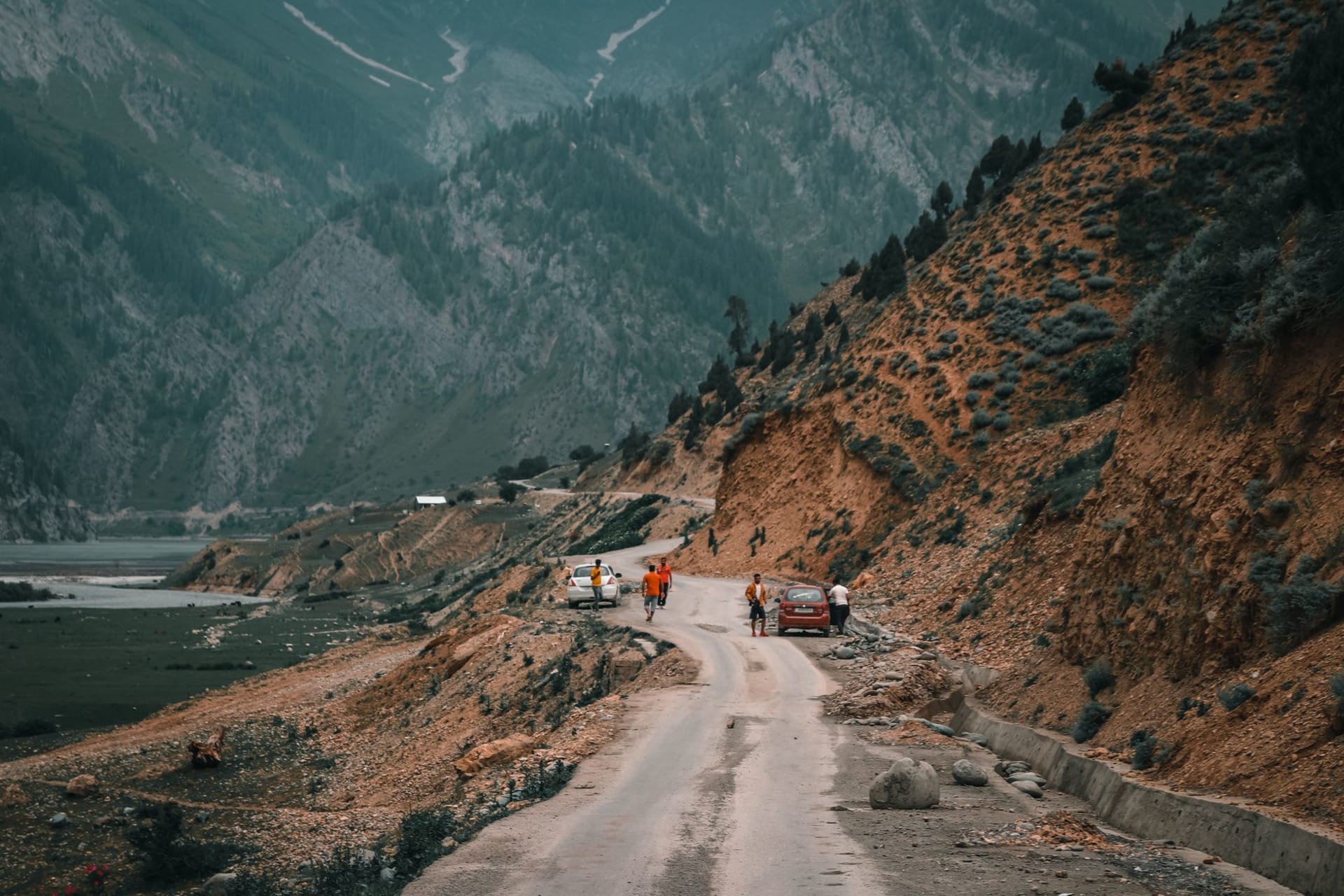
Getting to Chitral is half the experience. The road from Dir climbs through the Lowari Pass — or you take the newly-functional Lowari Tunnel if the season doesn’t allow the pass — and the Kunar River valley tightens around you until Chitral town appears: a sprawl of bazaar and mosque against a mountain wall, the Tirich Mir massif looming at 7,708 meters to the north, the highest mountain outside the Himalayan-Karakoram-Pamir complex. I arrived dusty and stiff from six hours in a van and ate kebabs in the main bazaar while a man next to me read a newspaper printed in Khowar, the local language, and a dog slept under our shared table with complete authority.
Chitral town is a crossroads place, its architecture and people showing the confluence of Central Asian, Afghan, and South Asian influences. The fort — the old stronghold of the Mehtar of Chitral — sits above the river, a mud-brick structure that looks out over a valley that has been contested between empires for centuries. The bazaar sells everything from Chinese synthetic fabrics to hand-carved wooden plates to dried apricots that the seller insists, correctly, are the best in the world. But Chitral is really the gateway. The destination is further south, up a dirt track into the mountains: the Kalash valleys.

The Kalash people are one of those facts about the world that don’t stop being astonishing no matter how many times you read about them. A community of roughly four thousand people, non-Muslim, speaking their own language, maintaining a polytheistic religion with festivals and ritual practices that have survived in these three valleys — Bumburet, Rumbur, Birir — for longer than anyone can precisely say. The women wear black robes and elaborate headdresses strung with cowrie shells and buttons and colored beads that can take years to accumulate. They meet your eye directly and without performance. I walked through Bumburet on an ordinary afternoon — no festival, no ceremony — and the strangeness wasn’t the difference in dress or custom but the quality of self-possession, the sense of a community that simply knows who it is.
I was offered wine — the Kalash make it, one of the few traditions in the region that does — and I drank a small cup of something rough and grape-dark in a wooden guesthouse while the family patriarch explained in halting Urdu that the harvest had been poor that year. The children played in the alley outside. A goat investigated my bag. The ordinary domesticity of it was exactly the reminder the place needed to deliver.

The ethical question worth sitting with in the Kalash valleys is straightforward: this is a community whose survival is partly economic and partly depends on maintaining enough outsider interest to resist conversion pressure, and partly depends on those outsiders not being overwhelming or extractive. Visiting respectfully — asking before photographing, staying in locally-owned accommodation, buying directly from makers — is the only approach that makes any sense.
When to go: May through October for the valleys, with the Chilam Joshi spring festival (mid-May) and Uchal summer festival (August) the most celebrated Kalash events. The Lowari Pass road opens in May and closes in November. Avoid the Shandur Polo Festival timing unless you specifically want the crowds it draws.