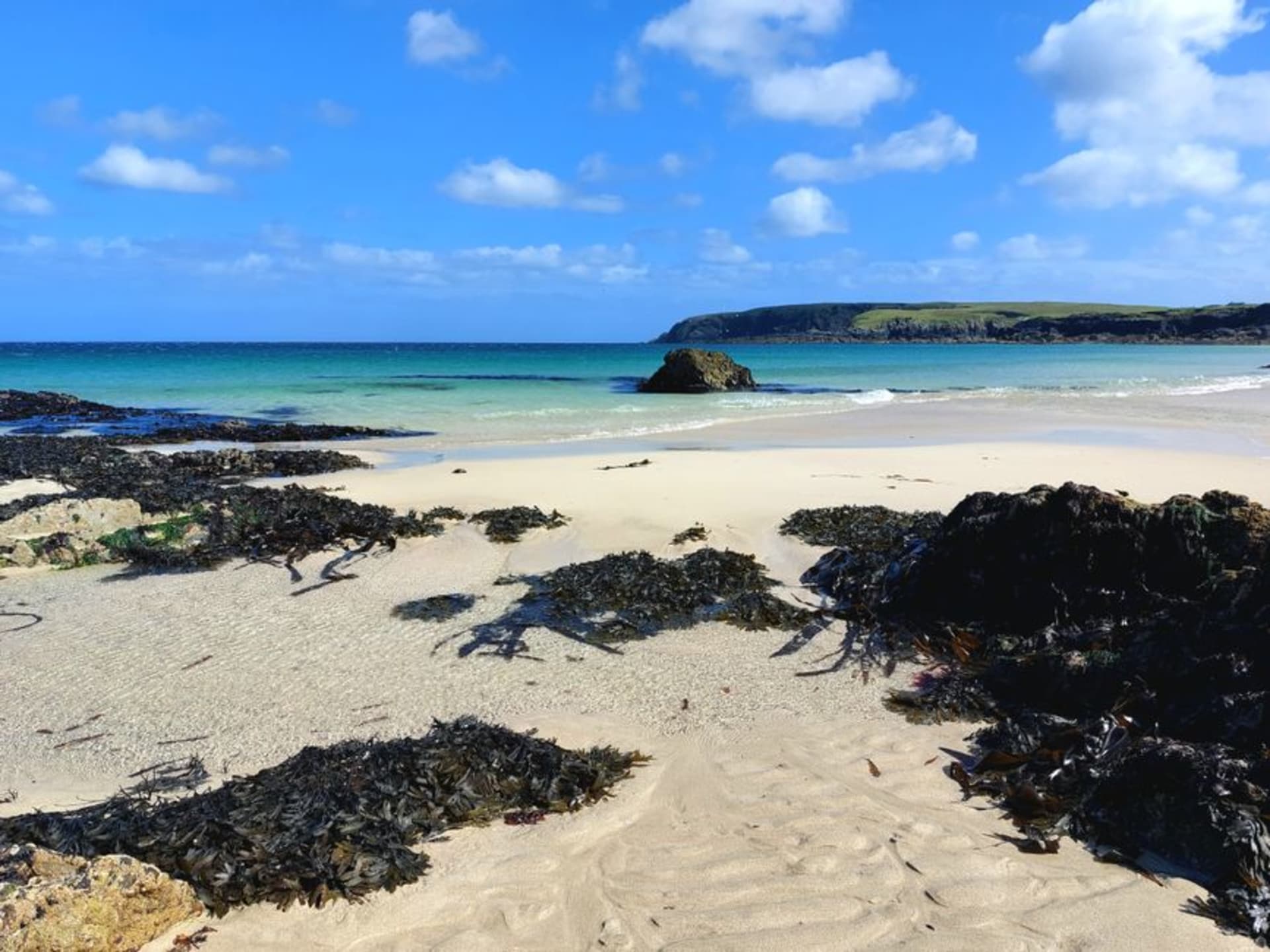
Uig, Isle of Lewis
"We drove an hour for a beach and left with the feeling we'd found the edge of the world."
A remote crofting district on Lewis's west coast, where a 12th-century chess hoard once lay buried beneath the sand.
The road to Uig is the kind that makes you question your GPS. From Stornoway it winds for almost an hour through increasingly empty moorland, the hills getting bigger and the houses fewer, until you crest a rise and the whole bay opens up beneath you. Lia grabbed my arm the first time we saw it — Uig Sands, this enormous curve of pale gold sand backed by machair, with the tide so far out it looked like the beach had swallowed the sea. We just stood there at the viewpoint for a good ten minutes before we even got back in the car.
What pulled us to Uig in the first place wasn’t the beach, though — it was the chess pieces. I’d read about the Lewis Chessmen years before I ever set foot on the island, and something about the story stuck with me: a hoard of 93 walrus-ivory and whale-tooth pieces, carved in the 12th century, found here in 1831 and then split up between museums in Edinburgh and London, an ocean and a border away from the sand they came out of. Standing near where they were unearthed, trying to picture a medieval merchant burying a fortune in chess sets on this exact remote coastline, felt almost absurd. Why here, of all places? Nobody really knows, and I think that’s part of what makes it stick with you.
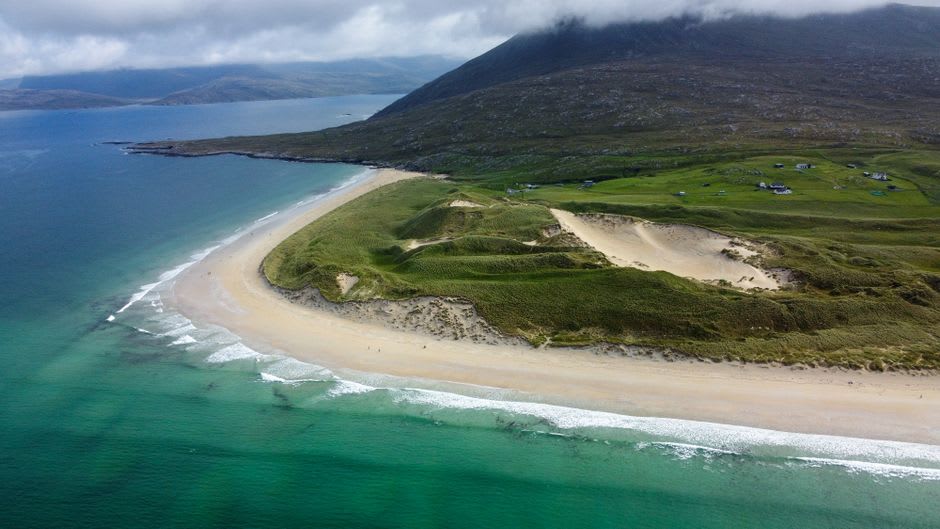
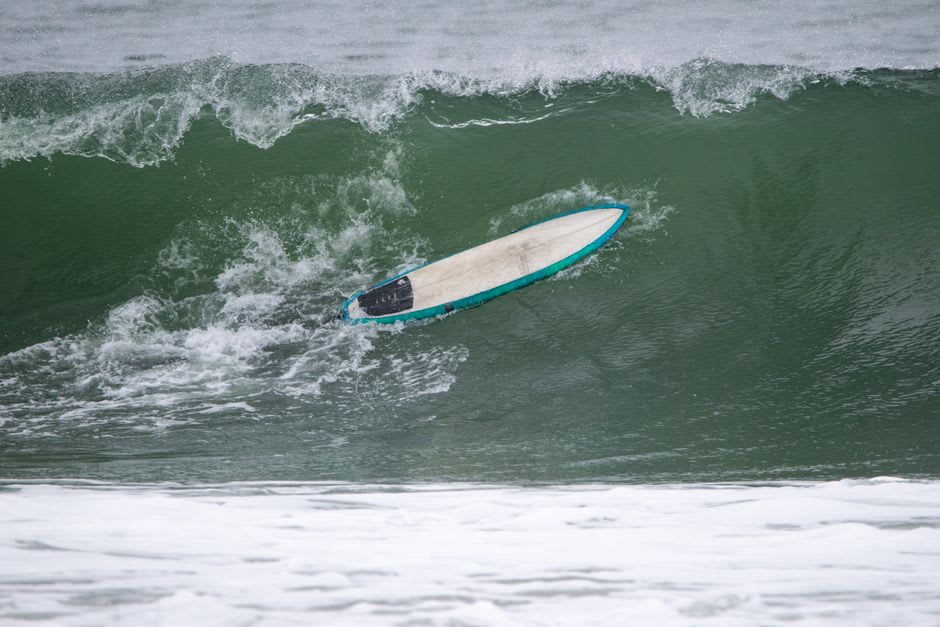
We stayed a couple of nights near Timsgarry, close to Baile na Cille, and spent an evening walking out toward Reef Beach, where a handful of surfers were still paddling out despite the chill. Lia isn’t a surfer but she loved watching them time the Atlantic swell against a sky that just wouldn’t get dark — that’s the thing about Uig in summer, the light hangs on until nearly eleven and turns the whole machair a strange, soft gold. We ate a very simple dinner of langoustines from a van near the harbour and didn’t say much, just watched the light change over the water.
Uig isn’t a place you pass through on the way to somewhere else — the single winding road in is also the only way out, and the district’s isolation is exactly what gives it its weight. There’s a rawness to the crofting townships scattered across those hills, a sense that the sea and the weather still set the terms here. We left thinking about how easily those chess pieces could have stayed buried forever, and about how little of Uig, really, has changed since they were carved.
When to go: Aim for June to August, when the long daylight and calmer weather give you the best chance to properly explore Uig Sands and the machair without the wind having the final say.